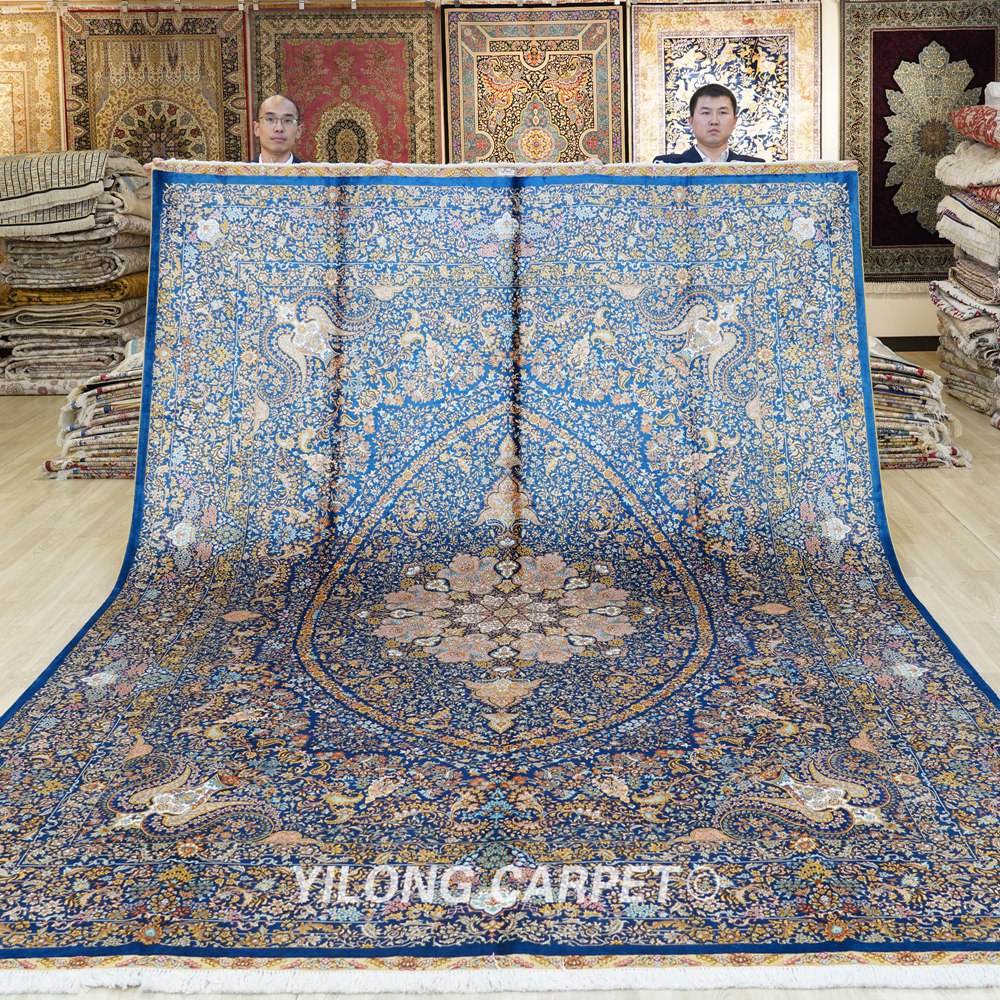
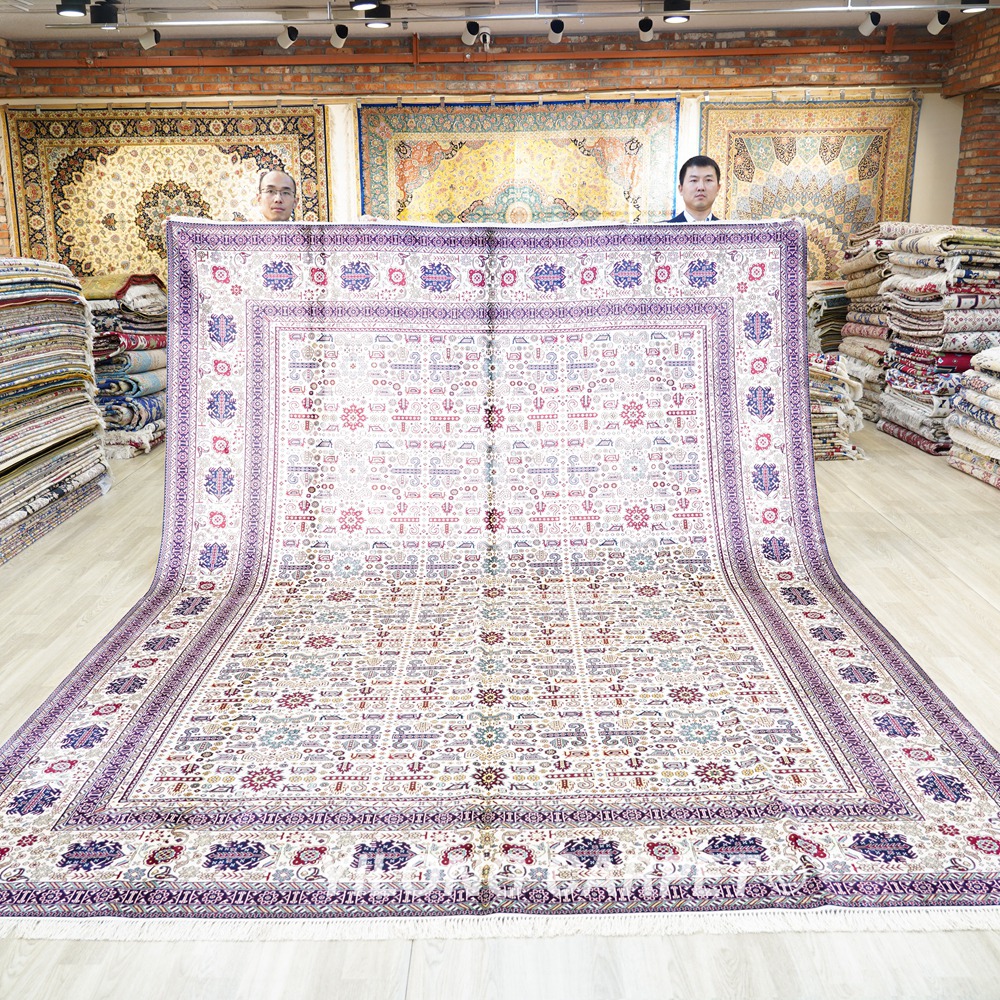
Beauty has always been part of the human story. In the richly patterned world of handmade rugs, symmetry has remained one of the most enduring and widely used design principles.
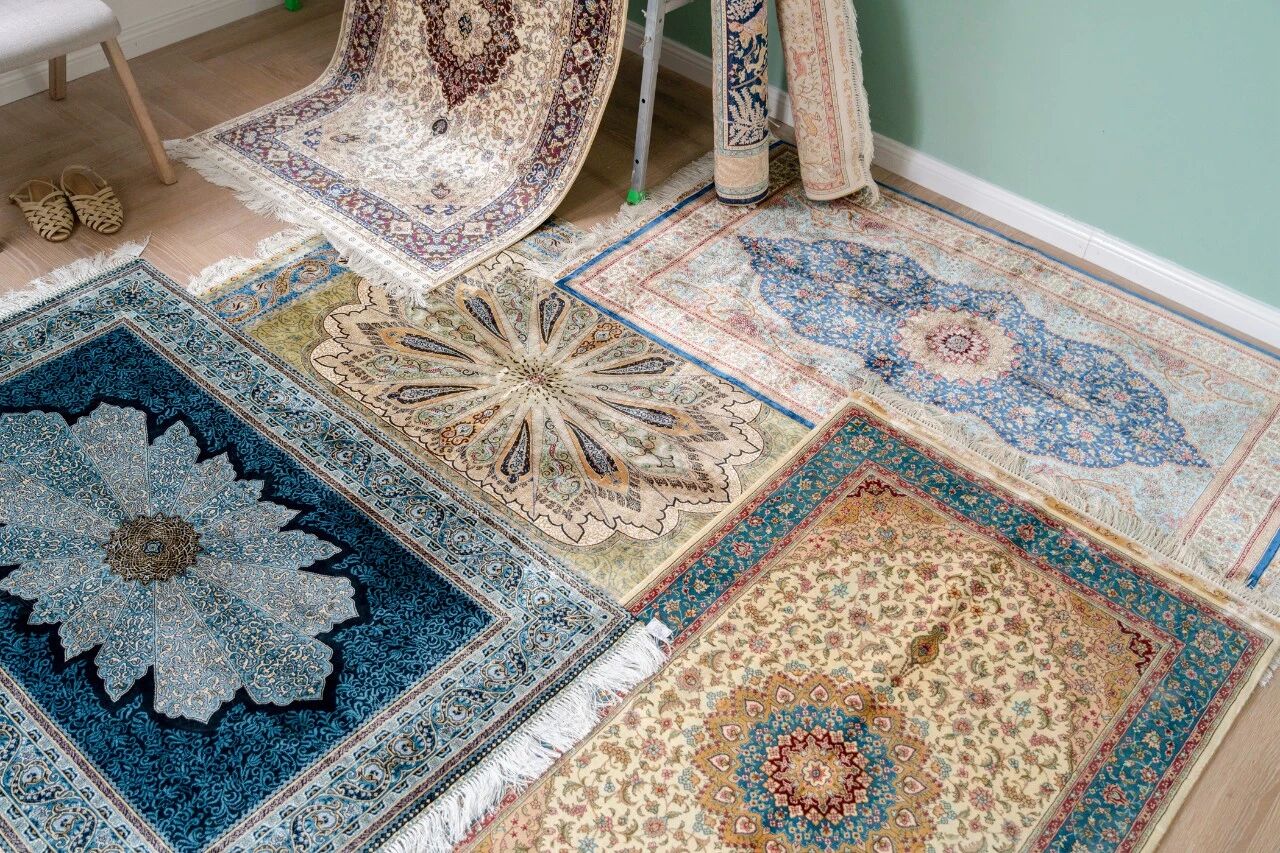
From ancient Khotan rugs along the Silk Road to treasured carpets in Renaissance palaces and elegant rugs in modern homes, symmetrical patterns have crossed cultures, borders, and centuries.
Why do these designs continue to feel so powerful?
The answer lies in more than decoration. Symmetry brings together our natural love of order, the practical needs of everyday living, centuries of craftsmanship, and the stories of different civilizations.
1. Why We Naturally Respond to Symmetry
From ancient temples in the East to grand cathedrals in the West, symmetry appears wherever people have tried to create a sense of harmony and permanence.
It can be seen in the central axis of the Forbidden City, the balanced courtyards of traditional Chinese architecture, the columns of Greek temples, and the carefully planned gardens of European palaces.
There is something deeply reassuring about balance. Symmetry gives the eye a clear path to follow. It creates order without feeling rigid and richness without becoming chaotic.
In traditional Chinese culture, symmetry often represents harmony, completeness, and stability. A classic courtyard home, for example, is arranged around a central axis, with spaces balanced on either side. This reflects the idea that family, society, architecture, and nature should exist in harmony.
Western art and architecture have also placed great importance on symmetry. The Parthenon is a well-known example. Its columns, proportions, and architectural details express the ancient Greek belief that beauty is closely connected with reason, balance, and mathematical order.
The same principle appears in handmade rug design.
Whether a rug uses bilateral symmetry, radial symmetry, or a repeating all-over pattern, its structure helps bring even the most detailed design into balance. Flowers, vines, geometric forms, animals, and borders can all be highly elaborate, yet the overall composition still feels calm and complete.
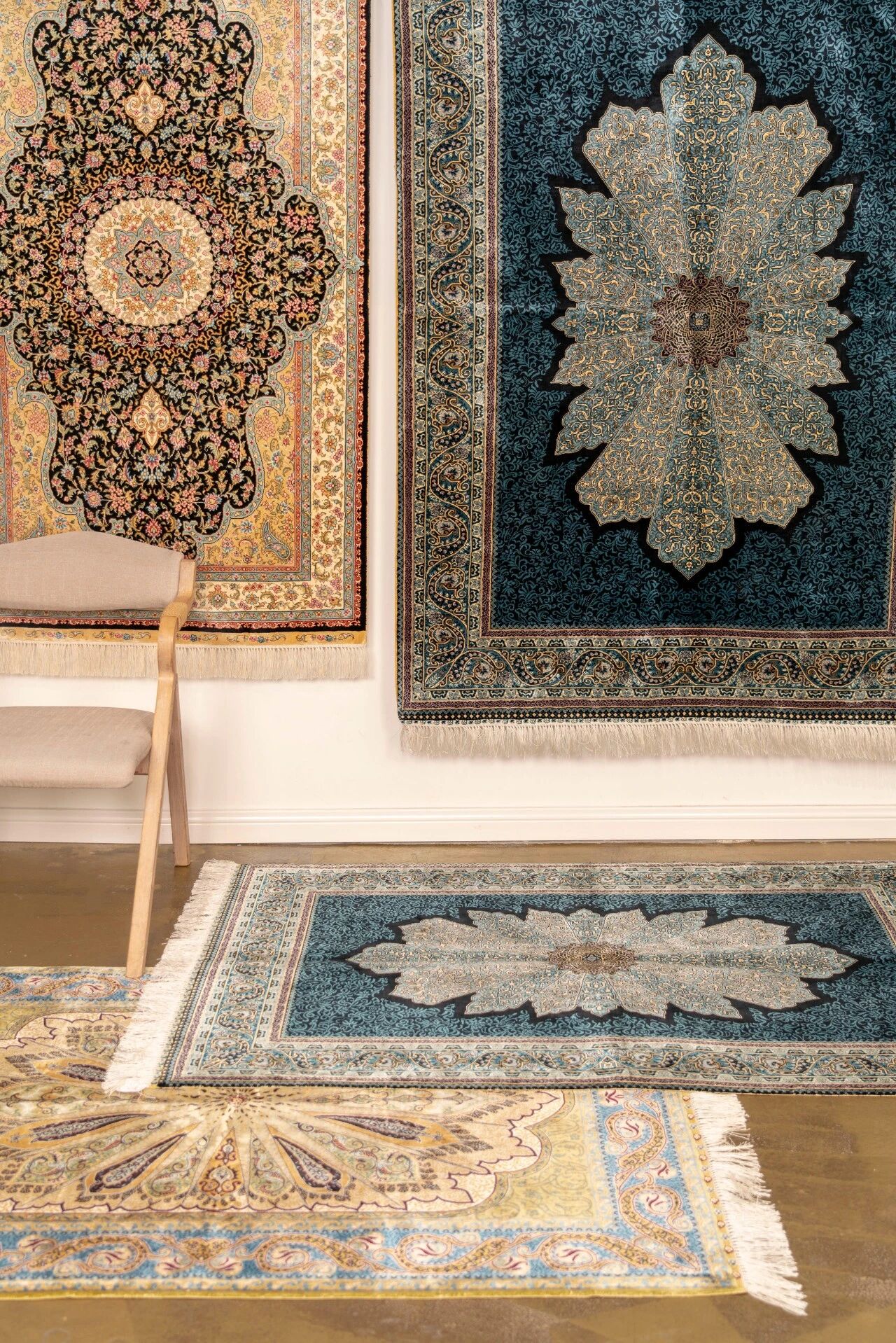
Many handmade silk rugs, for example, feature a star-shaped central medallion. From this central point, floral and leaf motifs spread outward in a carefully balanced arrangement.
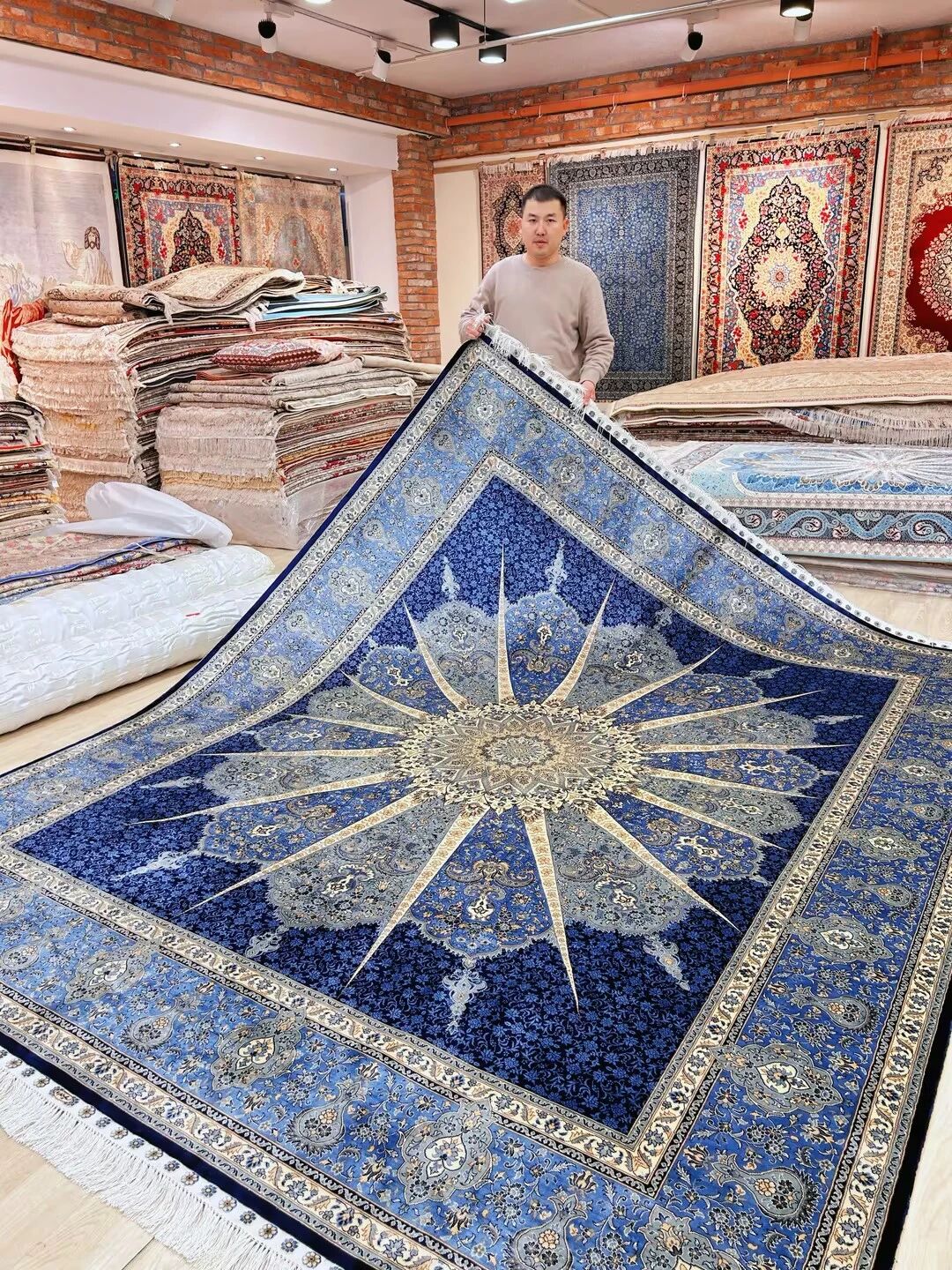
Geometric divisions guide the eye, while subtle changes in color add depth and movement. Around the edges, decorative borders, key patterns, and smaller repeating motifs frame the central design and bring the whole composition together.
The result is not simply a beautiful pattern. It is a visual world with its own rhythm and order.
2. The Practical Wisdom Hidden in Symmetrical Rug Design
A handmade rug may be a work of art, but it is also made to live in a real home.
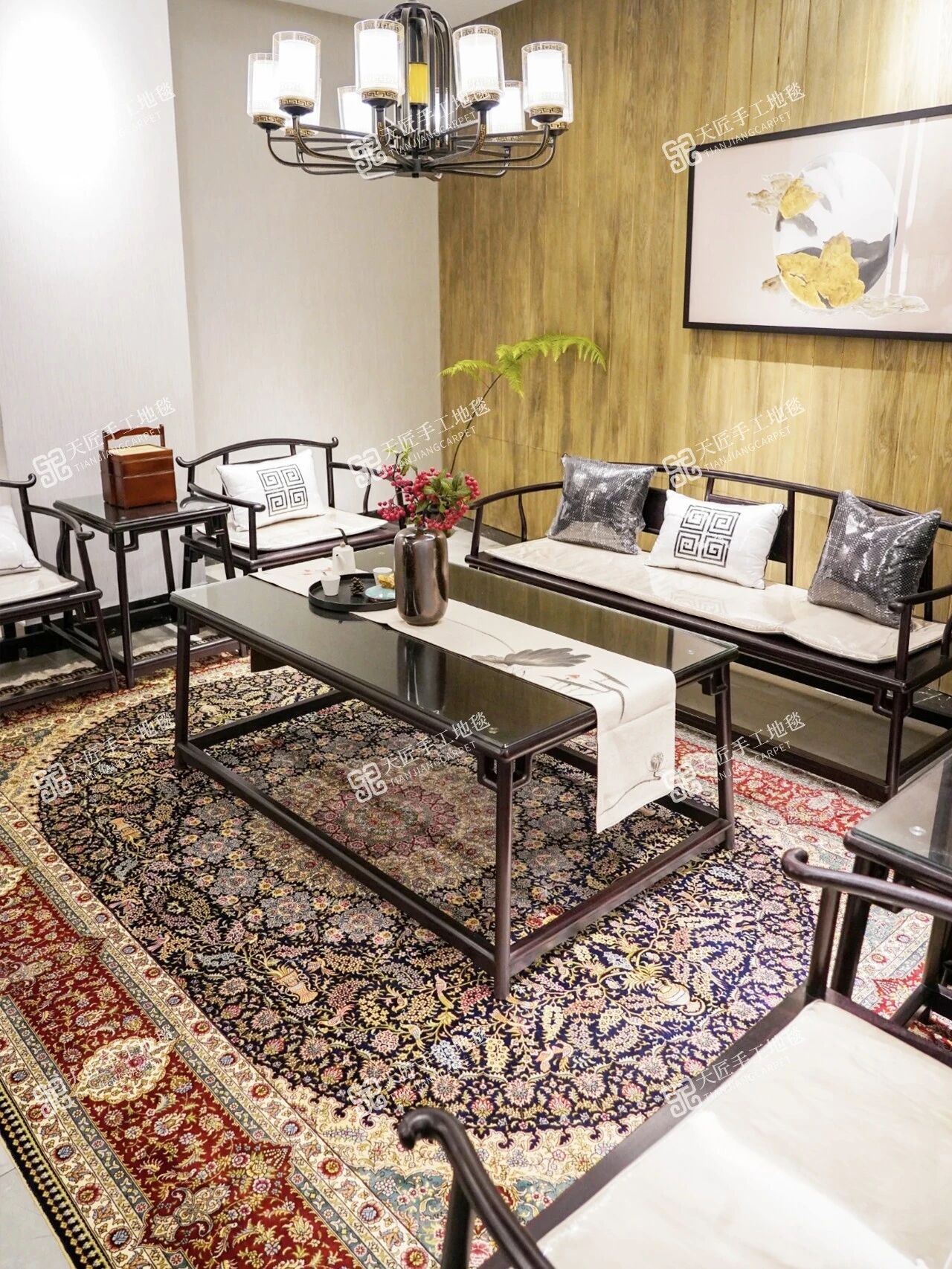
Sofas, coffee tables, beds, chairs, and cabinets often cover part of a rug. With an unbalanced or highly irregular design, this can interrupt the overall composition and make the rug feel incomplete.
Symmetrical rugs handle this challenge surprisingly well.
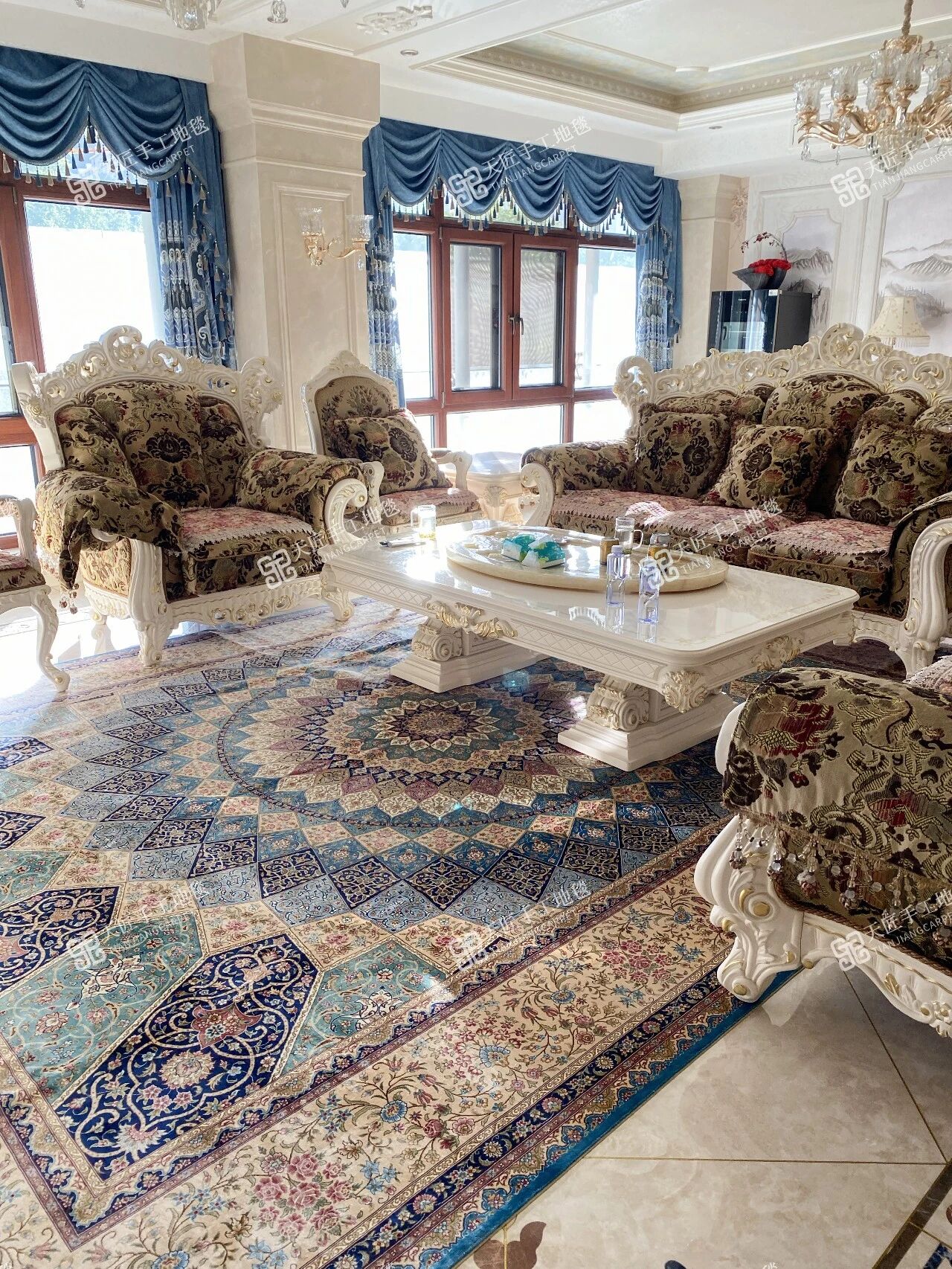
Because the pattern follows a recognizable structure, our minds can naturally imagine the sections hidden beneath the furniture. Even when part of the design is covered, the visible motifs still suggest the complete pattern.
This allows the rug to retain its visual balance in everyday use.
A central medallion may remain visible beneath a coffee table. Matching corner motifs can still frame a seating area. Repeating floral patterns continue to create rhythm, even when a sofa rests across one side of the rug.
This is one reason symmetrical handmade rugs work so well in living rooms, bedrooms, dining rooms, and formal reception spaces.
Their beauty does not depend on every inch being visible. They are designed to remain coherent while becoming part of daily life.
That balance between artistic beauty and practical use is one of the quiet strengths of traditional rug design.
3. Persian Rugs and the Legacy of the Central Medallion
Persian rugs are often described as art beneath our feet, and for good reason.
For centuries, Persian weavers have used wool, silk, natural dyes, and hand-knotting techniques to turn complex ideas into richly detailed textiles. Symmetry has played a central role in this tradition.
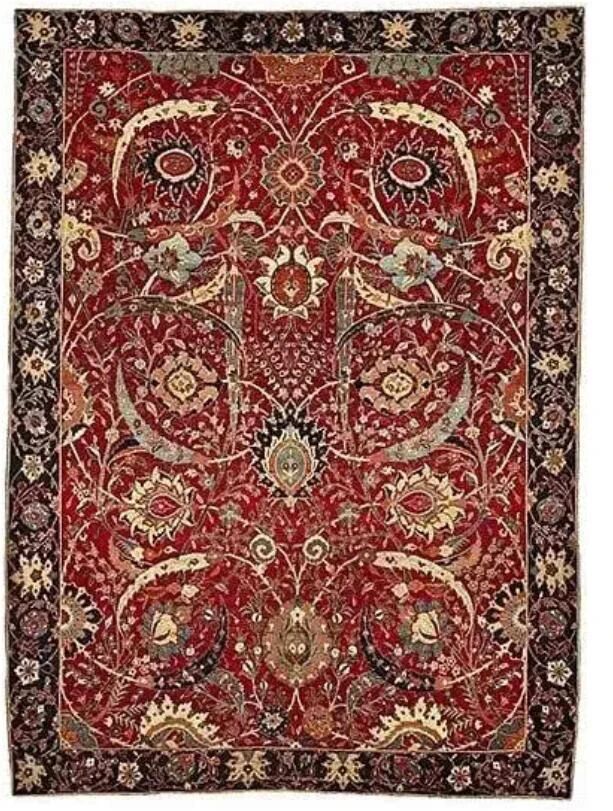
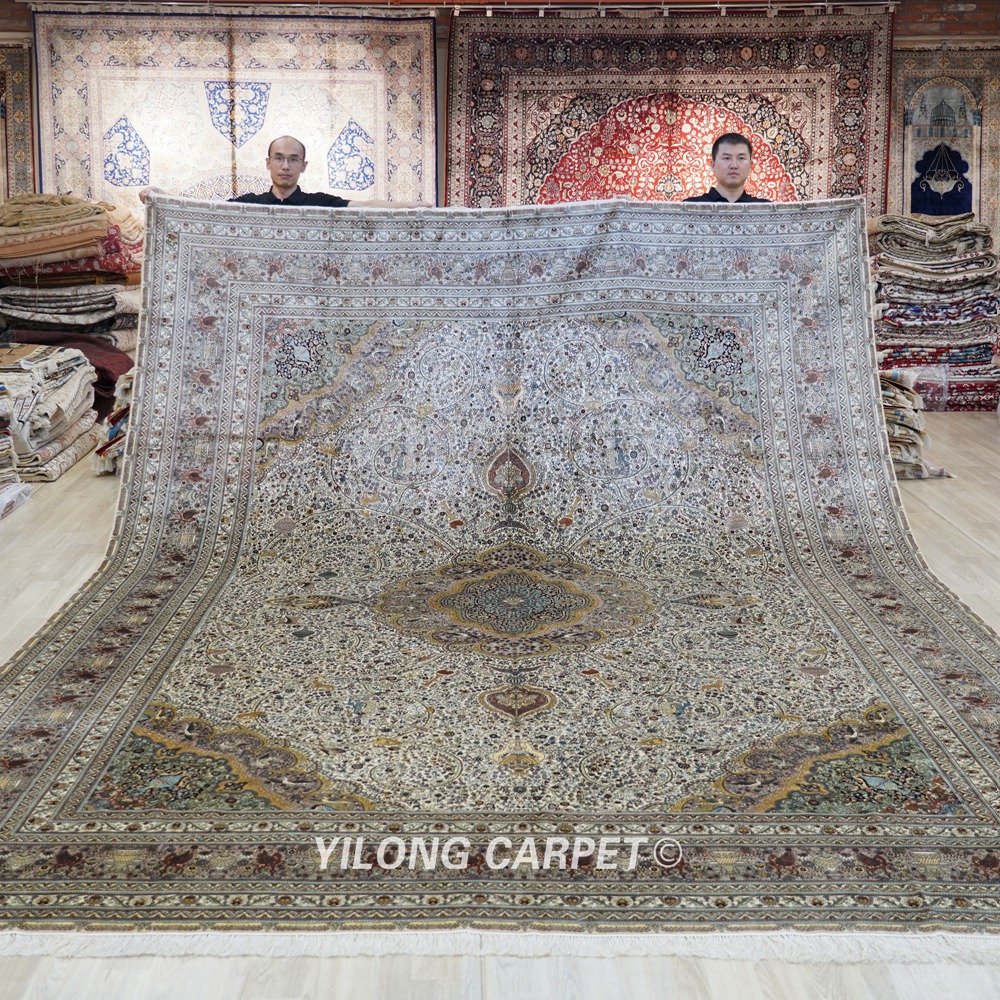
Many Persian rug designs are built around a central medallion. From this focal point, flowers, leaves, arabesques, animals, and geometric forms unfold across the field of the rug.
Each section relates to another. Every detail has a place.
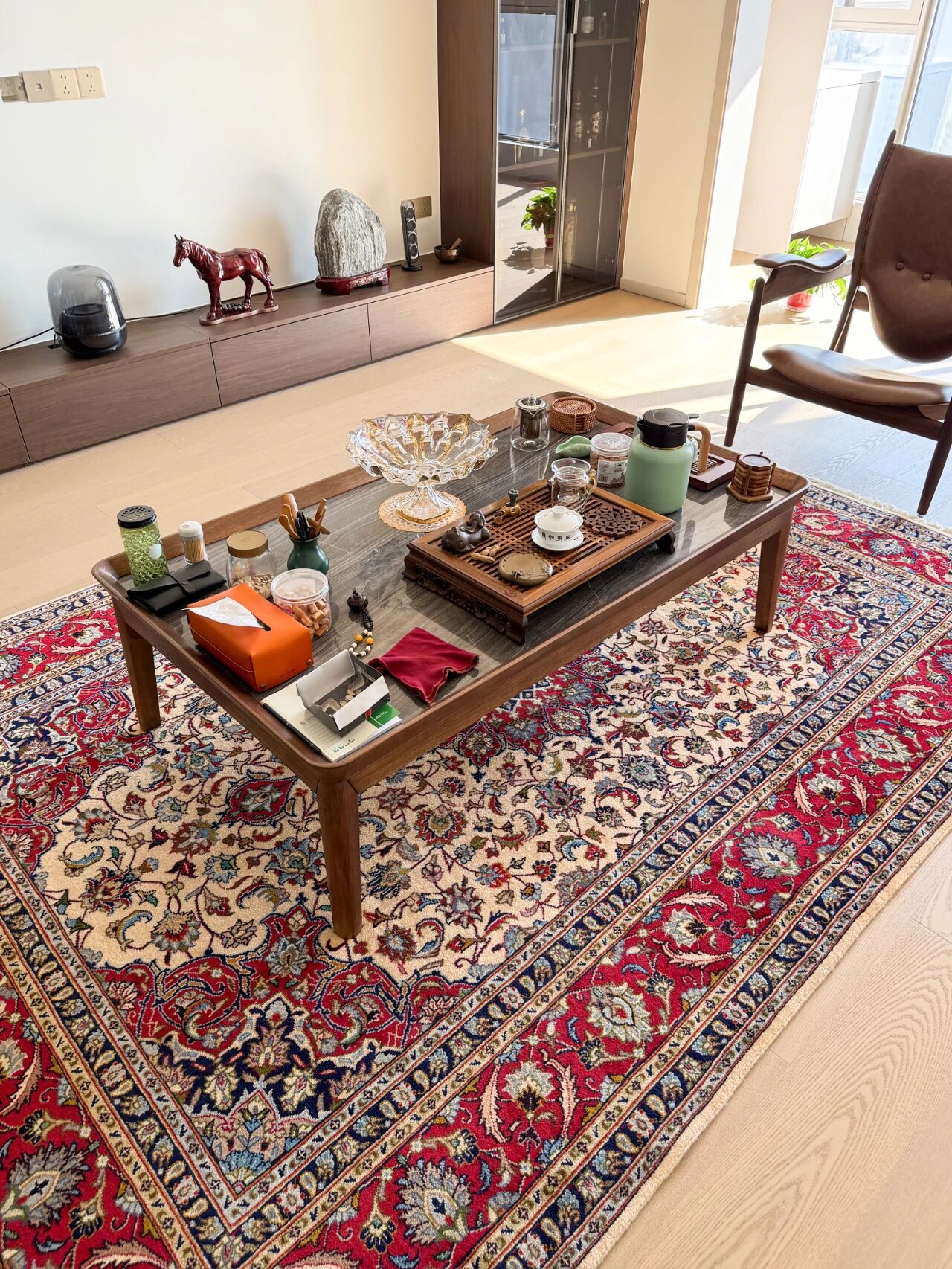
Isfahan rugs are known for their refined drawing, elegant colors, fine knotting, and carefully balanced compositions.
Many feature an ornate central medallion surrounded by scrolling vines, flowers, palmettes, and occasionally animals or garden-inspired elements.
The medallion often opens outward in layers, almost like a flower seen from above. Each layer is carefully proportioned, with colors and shapes repeating across the design.
The result feels formal and graceful, but never lifeless. Fine curves and natural motifs bring softness and movement to the structure.
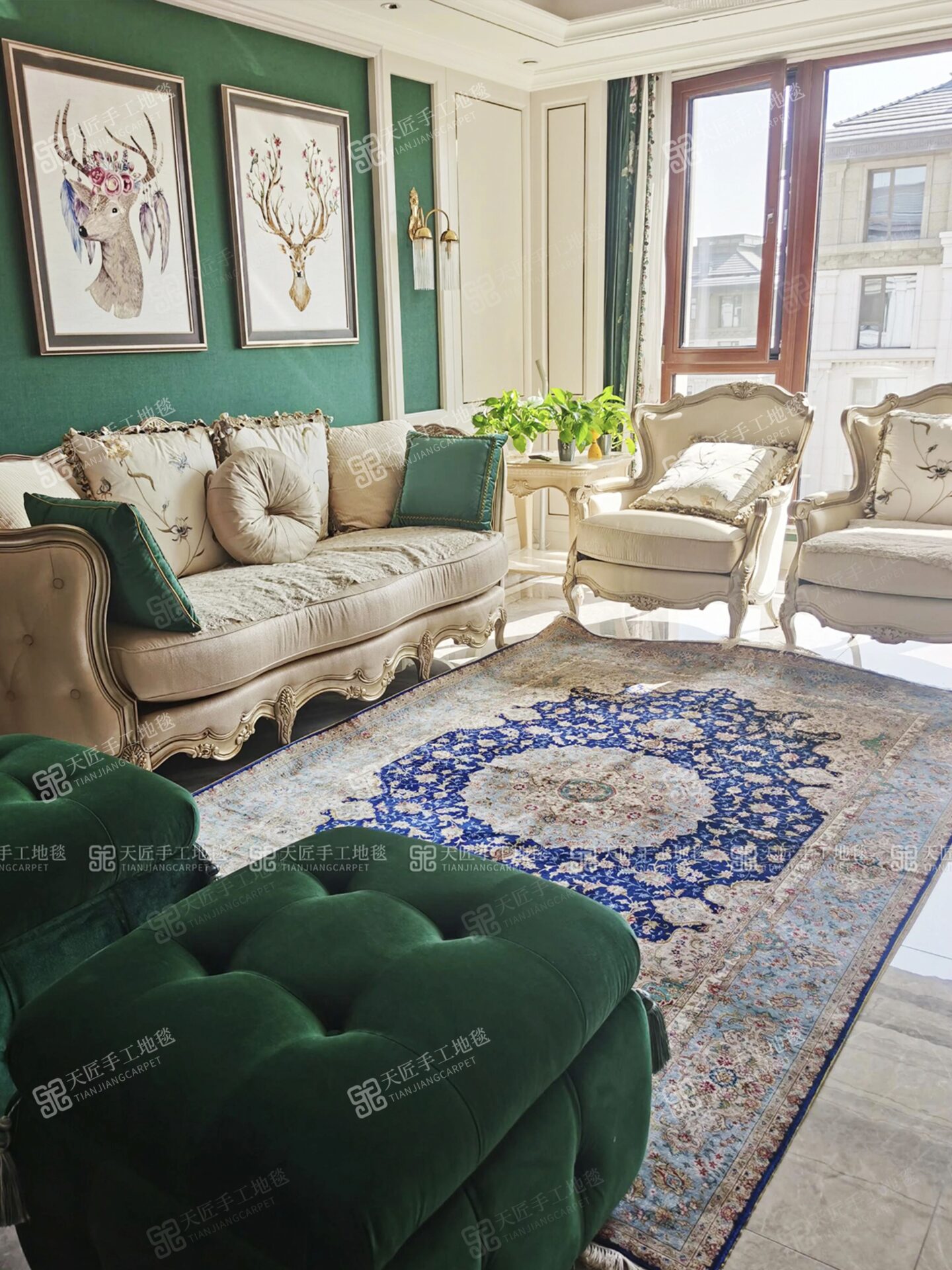
Tabriz rugs are equally celebrated for their intricate patterns and remarkable variety.
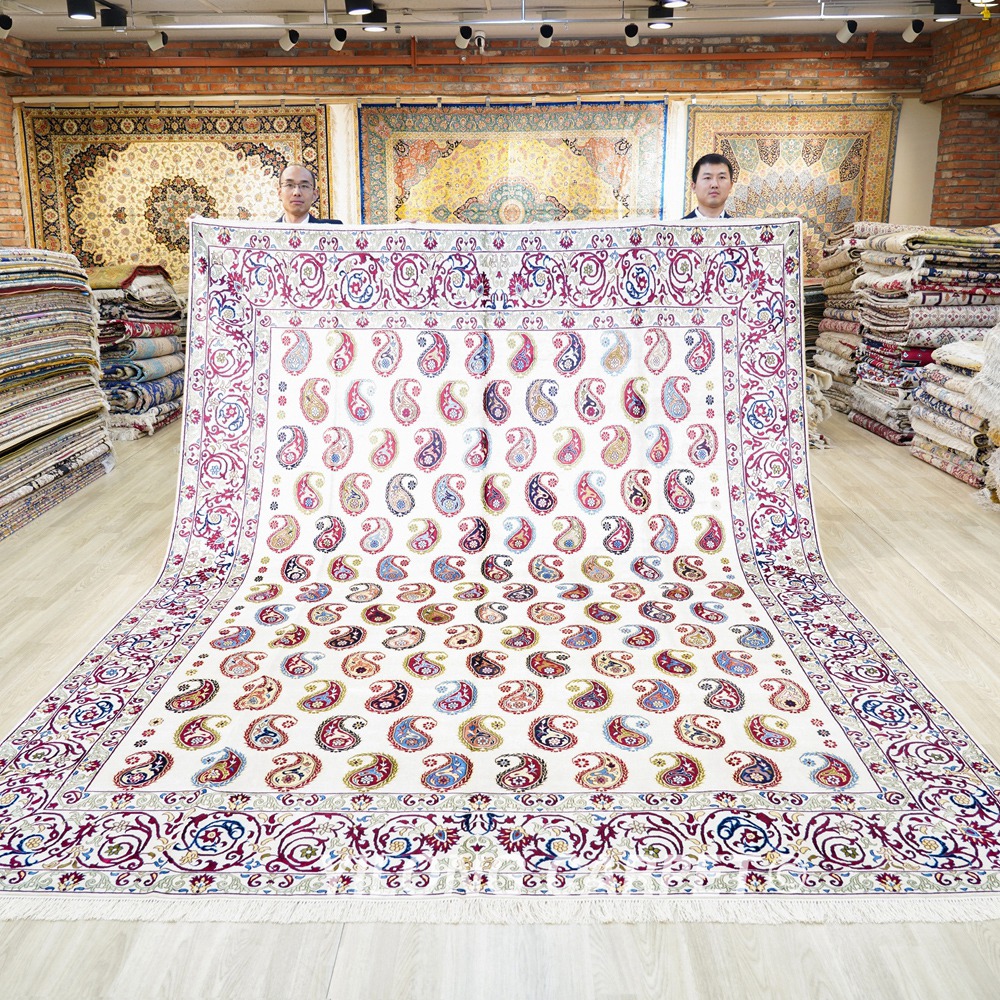
Some feature large central medallions, while others use all-over floral arrangements. Roses, palmettes, leaves, vines, and garden motifs may spread across the rug in a balanced composition.
Color plays an important role in these designs. Deep reds may meet rich blues, warm ivory may soften darker outlines, and touches of green, gold, or soft pink can bring the pattern to life.
Even when the palette is bold, symmetry keeps the design grounded.
A finely made hand-knotted Persian rug can last for generations when properly cared for. Over time, it may develop a softer surface, a richer character, and a deeper emotional value.
It becomes more than a decorative object. It carries the memory of the hands that made it, the home that lived with it, and the culture that shaped its design.
In this sense, a Persian rug is also a quiet historical record, written not with ink, but with knots, color, and time.
4. How Symmetrical Rugs Work in Modern Interiors
Traditional and modern design are not opposites. In the right space, they can bring out the best in each other.
Today, symmetrical handmade rugs are finding a new place in contemporary homes. Their colors may be simplified, their scale may be adjusted, or their traditional motifs may be reinterpreted, but the underlying sense of balance remains.
In a minimalist living room, a detailed Persian-style rug can add warmth and character.
In a modern dining room, a symmetrical rug can visually anchor the table and chairs.
In a bedroom, a balanced floral design can make the room feel calmer and more complete.
Even highly traditional rugs can feel surprisingly fresh when placed beside clean-lined furniture, natural wood, stone, metal, or contemporary artwork.
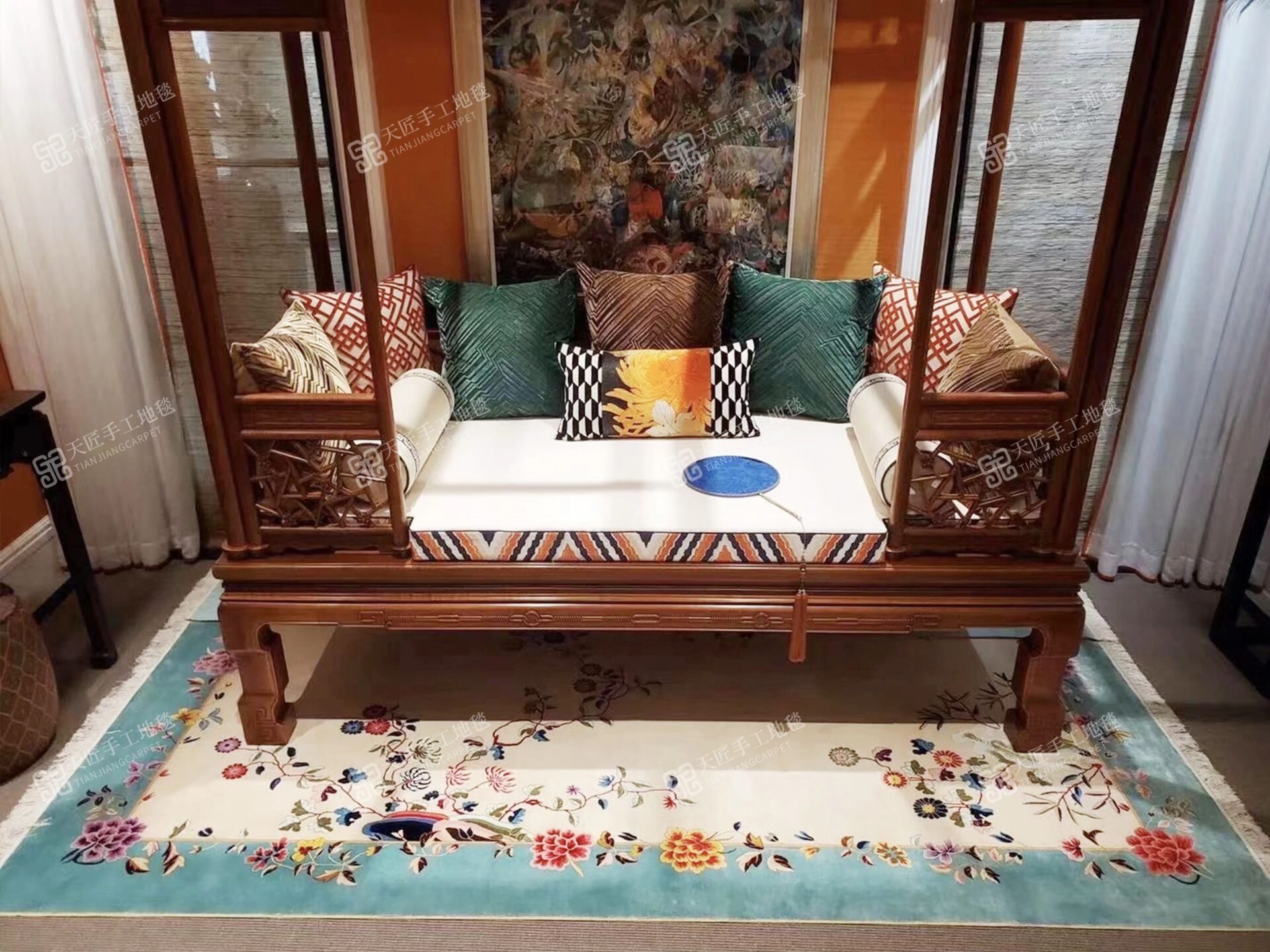
Yilong Carpet’s Chinese-inspired rug collection explores this meeting point between heritage and modern living.
Created in collaboration with experienced Chinese designers, the collection draws inspiration from traditional landscape painting, including its sense of distance, rhythm, movement, and poetic space.
Rather than simply copying classical motifs, the designs reinterpret Eastern artistic ideas through the structure of a handmade rug. Symmetry brings order to the composition, while landscape-inspired details give it atmosphere and emotion.
The result is a rug that carries a distinctly Chinese spirit while remaining suitable for a contemporary interior.
5. Natural Materials and a Slower Way of Living
The renewed interest in handmade rugs is also connected to a broader change in the way people think about their homes.
More homeowners are choosing natural materials, long-lasting objects, and products made with visible human skill. They are paying closer attention to how something is made, how long it will last, and whether it can remain meaningful beyond a passing trend.
Hand-knotted rugs are often made from natural wool, silk, or a combination of both.
Wool offers warmth, resilience, and a soft, comfortable texture. Silk brings delicacy, luminosity, and exceptional detail. In the hands of skilled weavers, these materials can become rugs that are both practical and deeply expressive.
A handmade rug is not produced in a matter of minutes. Depending on its size, knot density, and level of detail, it may take months or even longer to complete.
That slower process gives each rug a different kind of value.
It is not simply purchased for one season. It is chosen to live with a family, shape a room, gather memories, and perhaps one day be passed on.
This is where traditional craftsmanship meets the modern desire for more thoughtful and lasting interiors.
Symmetry Is More Than Repetition
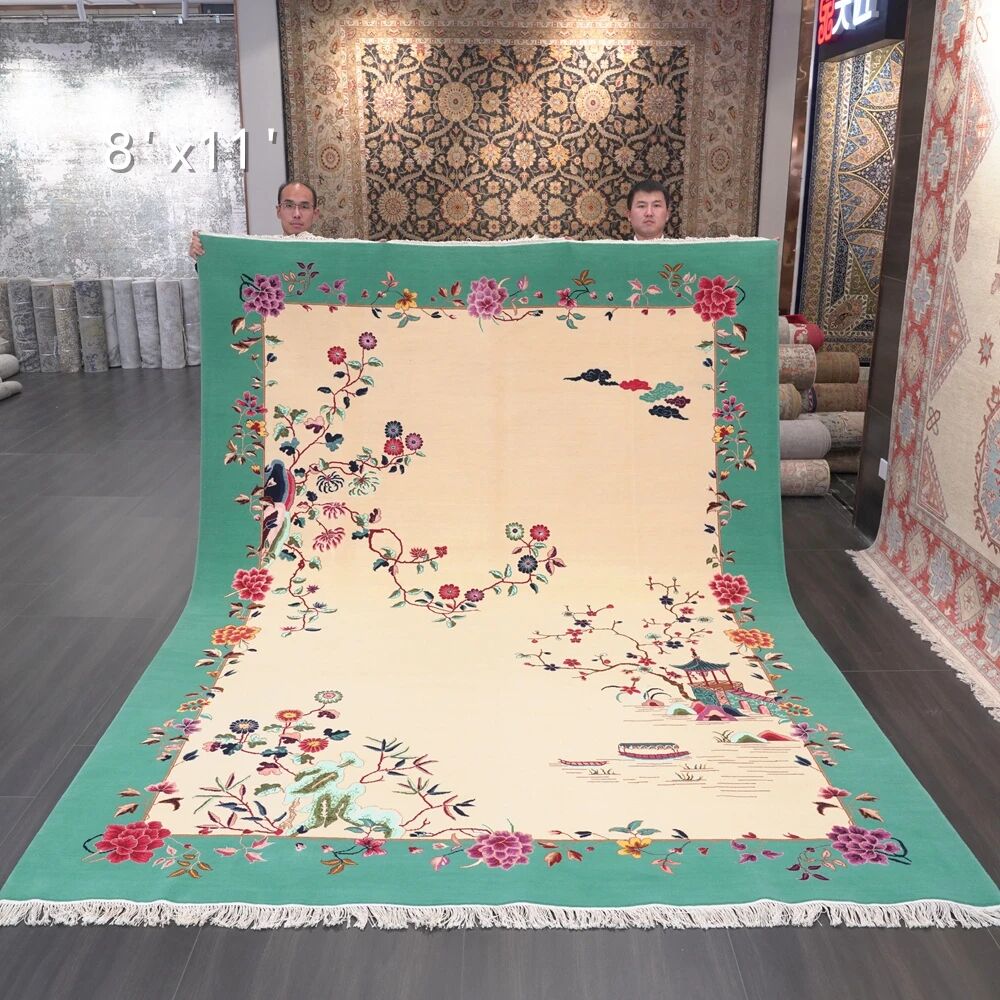
The symmetry found in handmade rugs is never just a matter of copying one side onto another.
It is a meeting of beauty, function, culture, mathematics, patience, and human imagination.
For centuries, symmetrical rug designs have travelled from ancient workshops and trade routes into palaces, galleries, family homes, and modern apartments.
They have changed in color, scale, material, and style, yet their appeal remains.
Perhaps that is because symmetry gives us something we continue to look for in our lives and our homes: a feeling of balance, connection, and completeness.
Woven knot by knot, these handmade rugs remind us that true beauty does not need to chase time.
Sometimes, it simply learns how to outlast it.