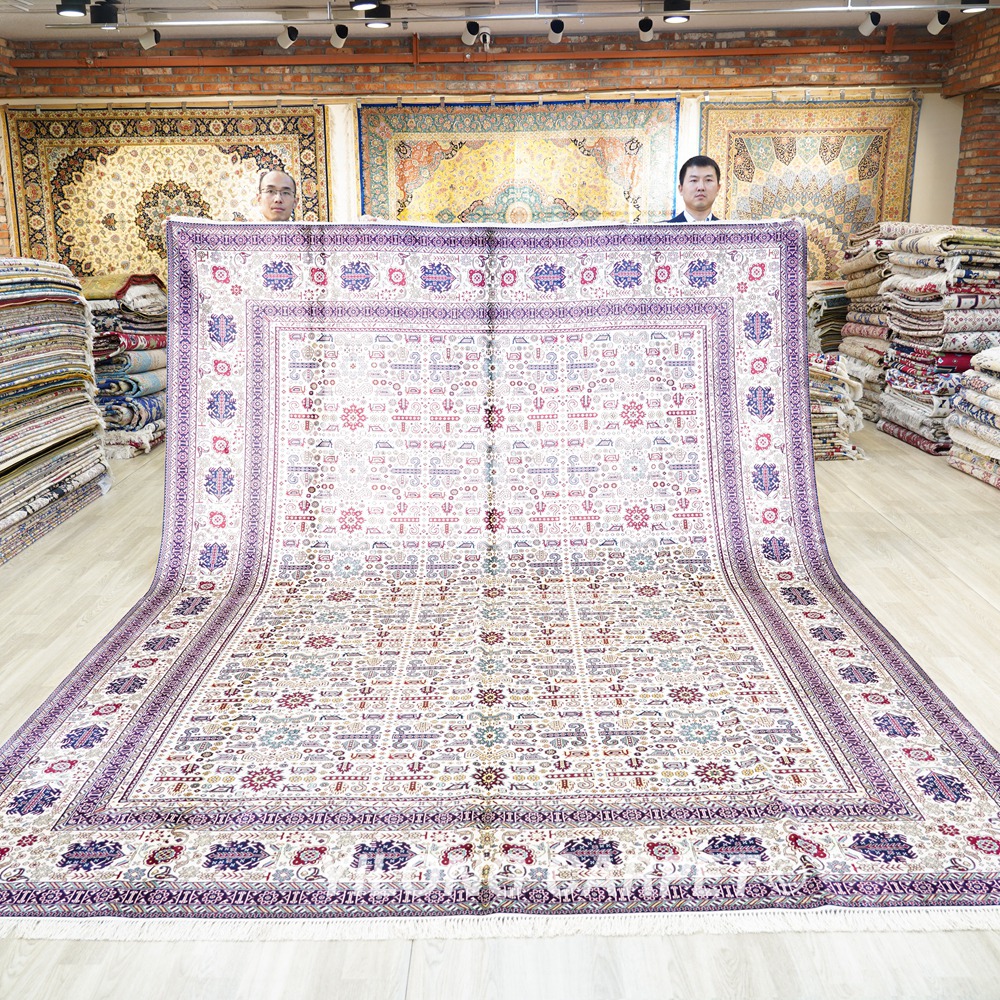
In everyday life, rugs are often seen as part of interior design—soft furnishings that make a space more comfortable. But in auction houses, the same rug can be treated as a work of art. This shift in identity is exactly what makes antique rugs so worth looking at again.
In home decoration, people usually choose a rug based on how well it fits the space: Does the color match the sofa? Is the size right for the living room? Will the pattern overpower the furniture? Is it soft underfoot? Is the price reasonable? All of these matter, of course. Because a rug usually enters life through daily living.
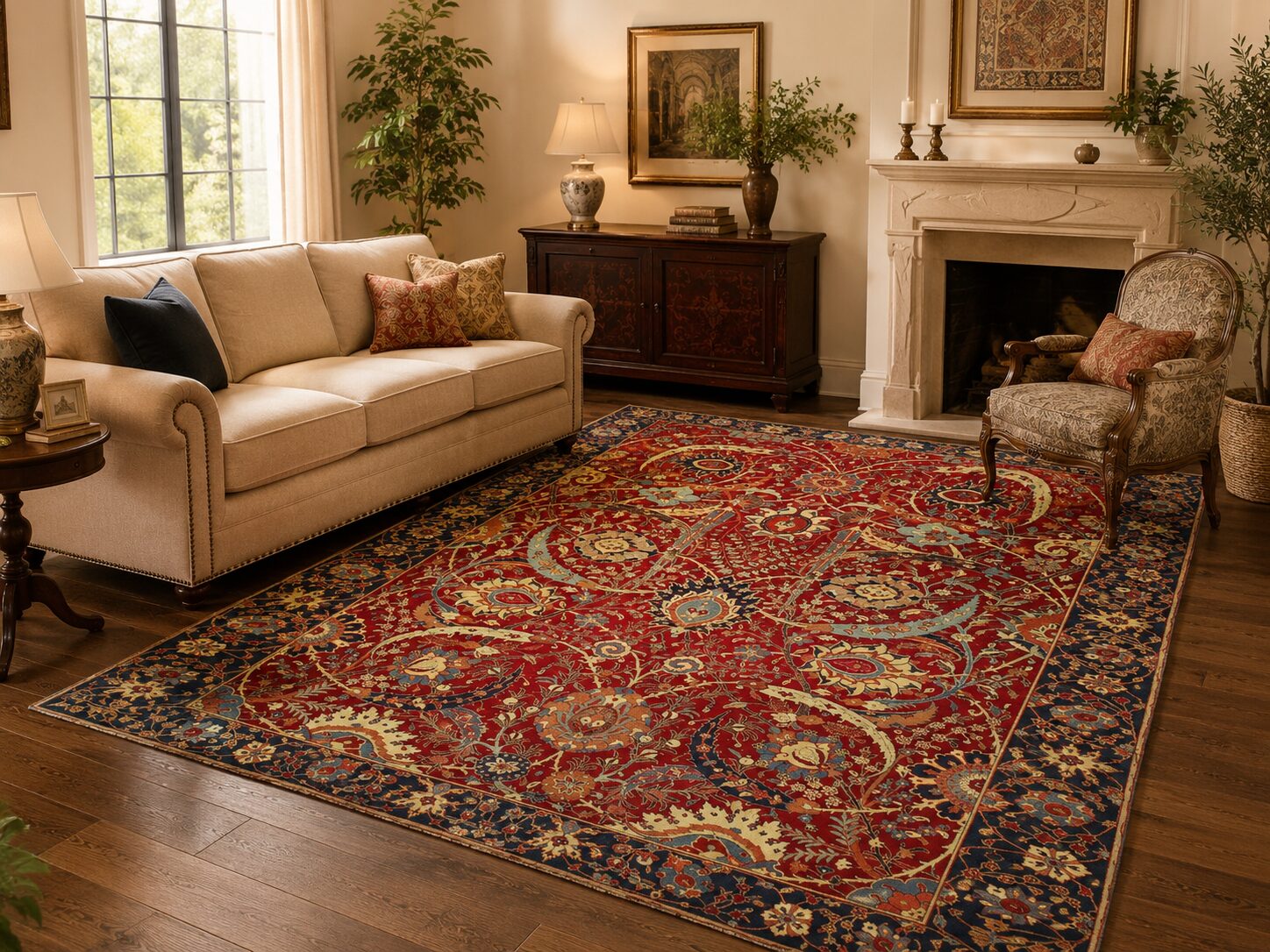
But once an antique rug enters an auction catalog, it’s no longer just something that “fits under furniture.” It gets documented by origin, age, material, craftsmanship, condition, and provenance. It is then placed into the larger context of art history, craft history, and collecting history. It may still lie on the floor—but it no longer belongs only to the floor.
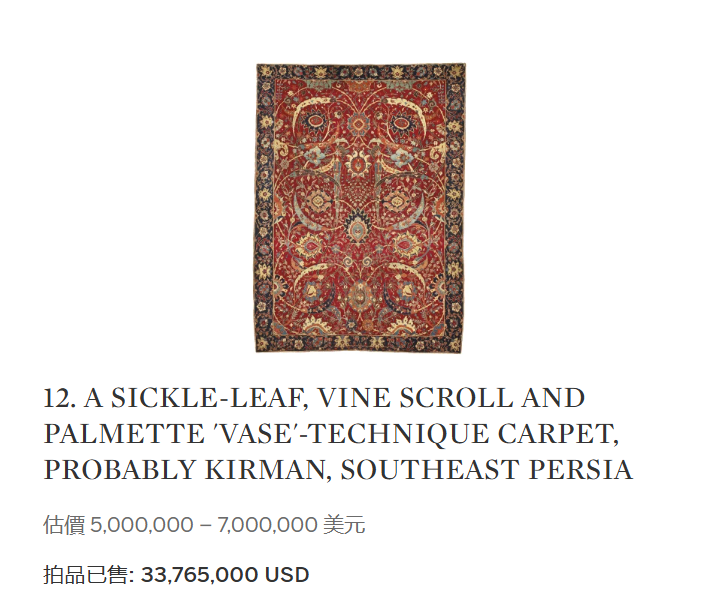
It is connected to life, but also to civilization. It is something you can use, but also something you can collect, study, and pass down.
So why can a rug enter major auction houses in Europe and the U.S.?
The answer is not simply because it is expensive. It’s because in the language of auctions, antique rugs carry a value system that ordinary home textiles rarely have: origin, time, handcraft, pattern, and irreplaceable historical information.
01 | From Soft Furnishing to Art: How Auctions Change the Way We Look at Rugs
In modern interiors, rugs are often functional. They define zones, soften hard surfaces, add comfort, and visually connect furniture. In a living room, a well-chosen rug can bring sofas, coffee tables, and chairs together into one complete seating area instead of separate pieces.
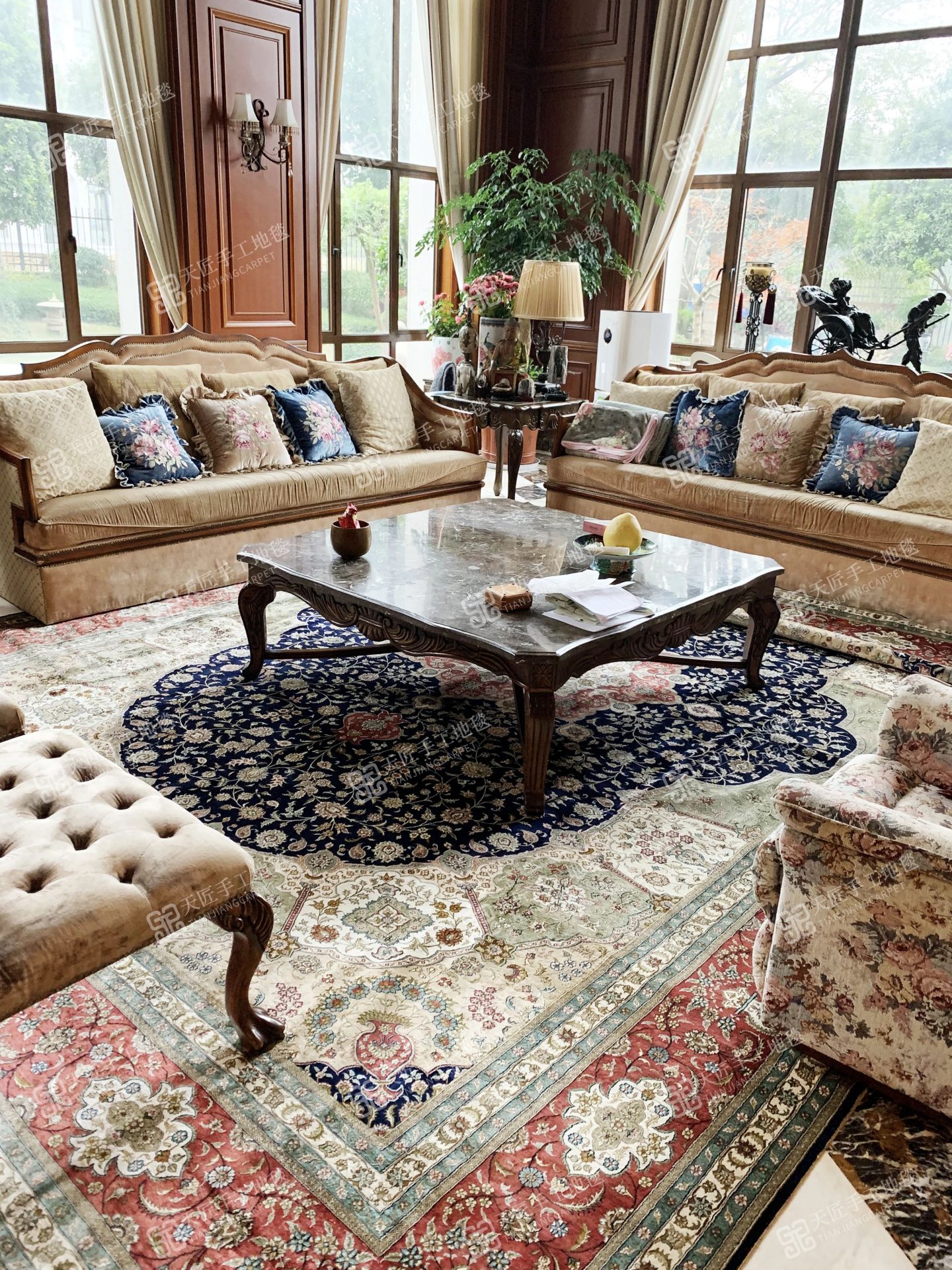
From this perspective, rugs are clearly part of soft furnishing. But the problem is also here: when we only see rugs as “soft decoration,” they easily become reduced to styling tools.
A light-colored rug feels “clean.” A muted pattern doesn’t “steal attention.” A larger size “anchors the room.” This way of looking isn’t wrong—but it is limited.
Because a true hand-knotted rug with history, craftsmanship, and aesthetic structure is never just a background element. It is not meant to quietly disappear into the corner. In many cases, it is the center of the space—the element that defines the entire atmosphere.
Especially antique rugs.
When a rug survives decades, or even over a century, while still preserving its pattern, natural colors, and structural clarity, it carries something beyond “beauty.” It carries time.
That is why auctions look at rugs differently from everyday buyers. A homeowner may focus on style, color, size, and price. An auction house looks at origin, period, material, weaving technique, pattern system, condition, provenance, and rarity within its category.
Behind all of this is a complete collecting logic.
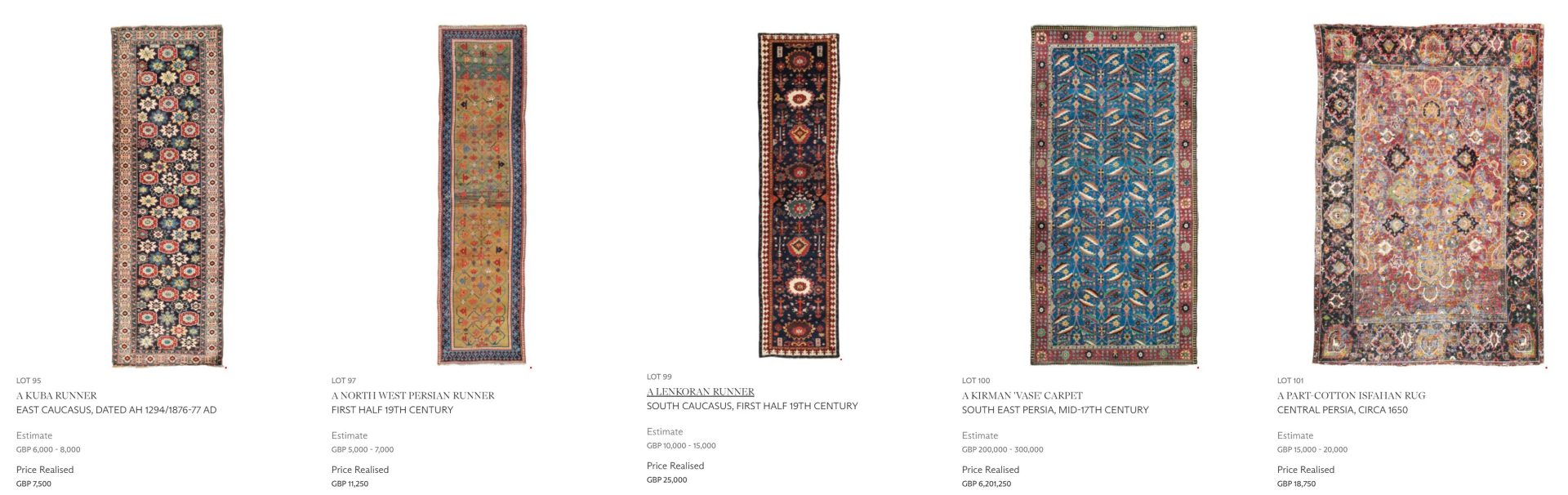
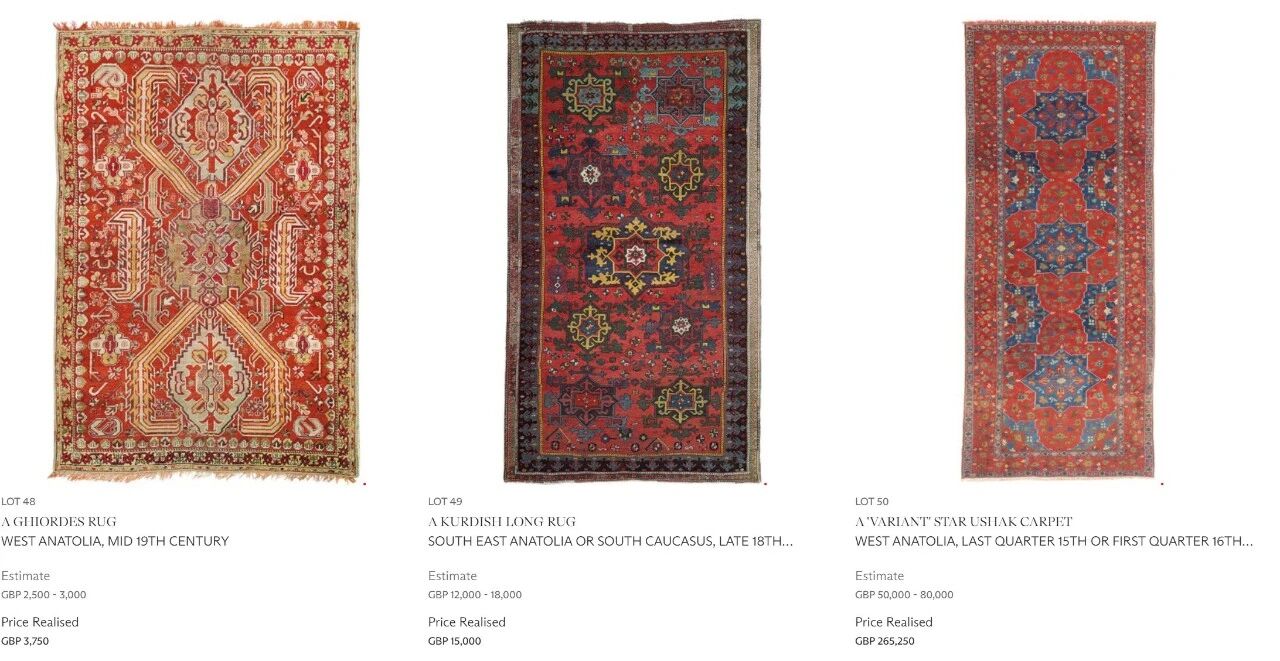
In an auction room, an antique rug is not an isolated object. It is something that can be classified, traced, and compared. Like furniture, ceramics, or paintings, it enters a system of evaluation. The difference is that its language is not brushwork or glaze—it is warp, weft, knots, dye, pattern, and time.
That is also why major auction houses in Europe and the U.S. often present important rugs within broader art categories such as Islamic art, Eastern art, or decorative arts. Sometimes they appear in collections from aristocratic homes or important private estates.
What this really means is simple: the value is not just that “this rug is expensive.” It is that it meets the basic requirements of an artwork—clear cultural origin, identifiable craftsmanship, irreplaceable historical character, and research value.
Once these conditions come together, a rug is no longer just a household item. It becomes textile art.
02 | The Value of Antique Rugs Is Not Just “Old”
One of the most common misunderstandings is assuming that age alone equals value.
In rug collecting, “old” is only the entry point—not the answer.
An old rug is not automatically valuable. It may be worn out, poorly preserved, visually ordinary, or made with low-grade materials. In that case, age adds wear—but not meaning.
What matters is whether the “age” contains information.
A good antique rug should tell you something:
Where it came from. What weaving tradition it belongs to. Whether its pattern represents a regional style. Whether its structure matches the period it claims to be from. And whether it still holds aesthetic integrity after years of use and movement.
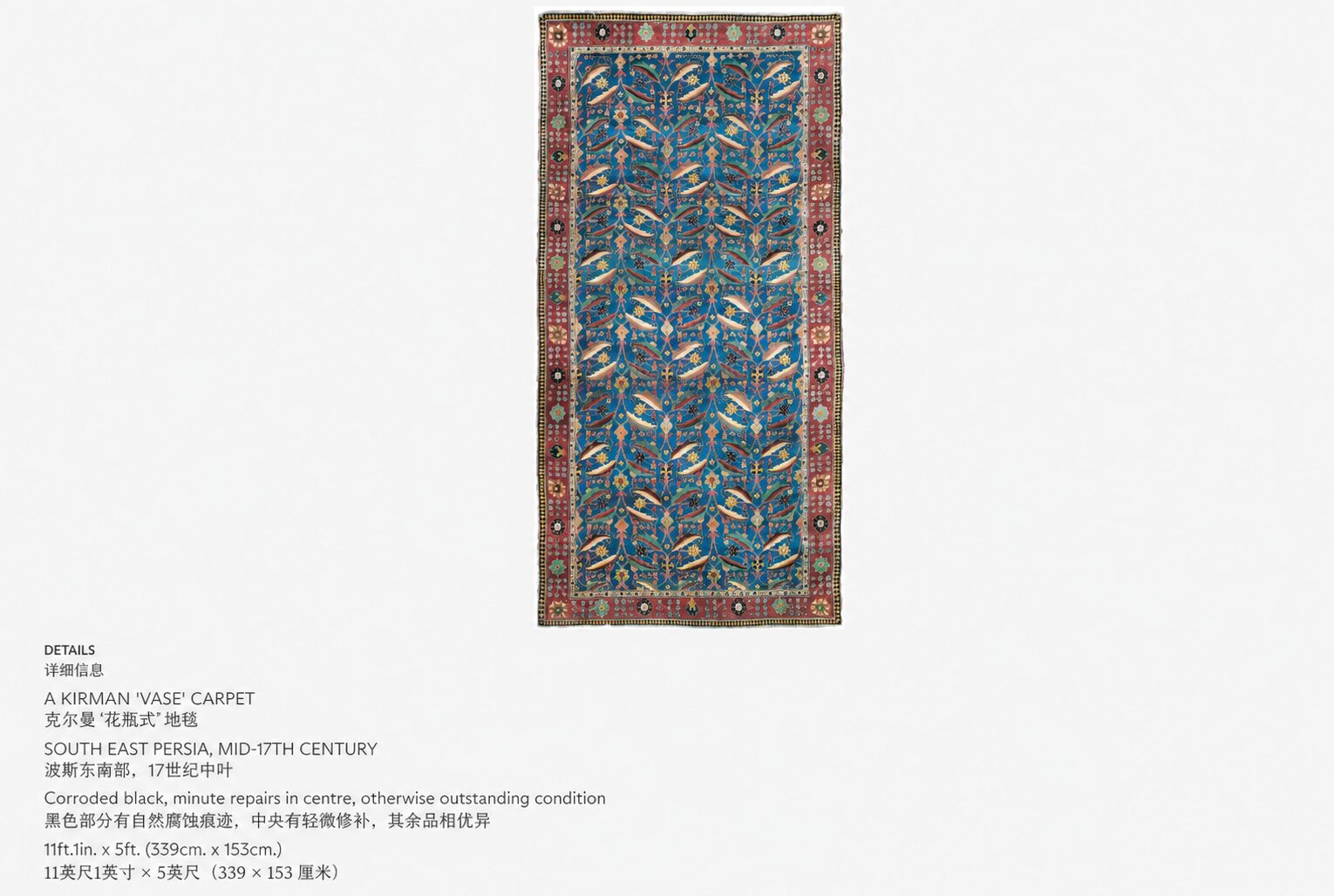
So the value of antique rugs is never a simple equation of “older equals better.”
Auction markets care more about four things:
Rarity. Some regions, eras, or patterns simply no longer exist in quantity.
Condition. Textiles are fragile—survival itself is rare.
Representativeness. Does it clearly reflect a regional or historical style?
Identifiability. Can it be placed into a known cultural and historical context?
This is the key difference between an antique rug and a “used rug.”
One preserves history. The other only keeps traces of use.
03 | Caucasian, Persian, Turkish: Three Major Collecting Traditions
In the Western antique rug market, three traditions stand out consistently: Caucasian, Persian, and Turkish rugs.
They are not just geographic labels. They represent three completely different visual languages.
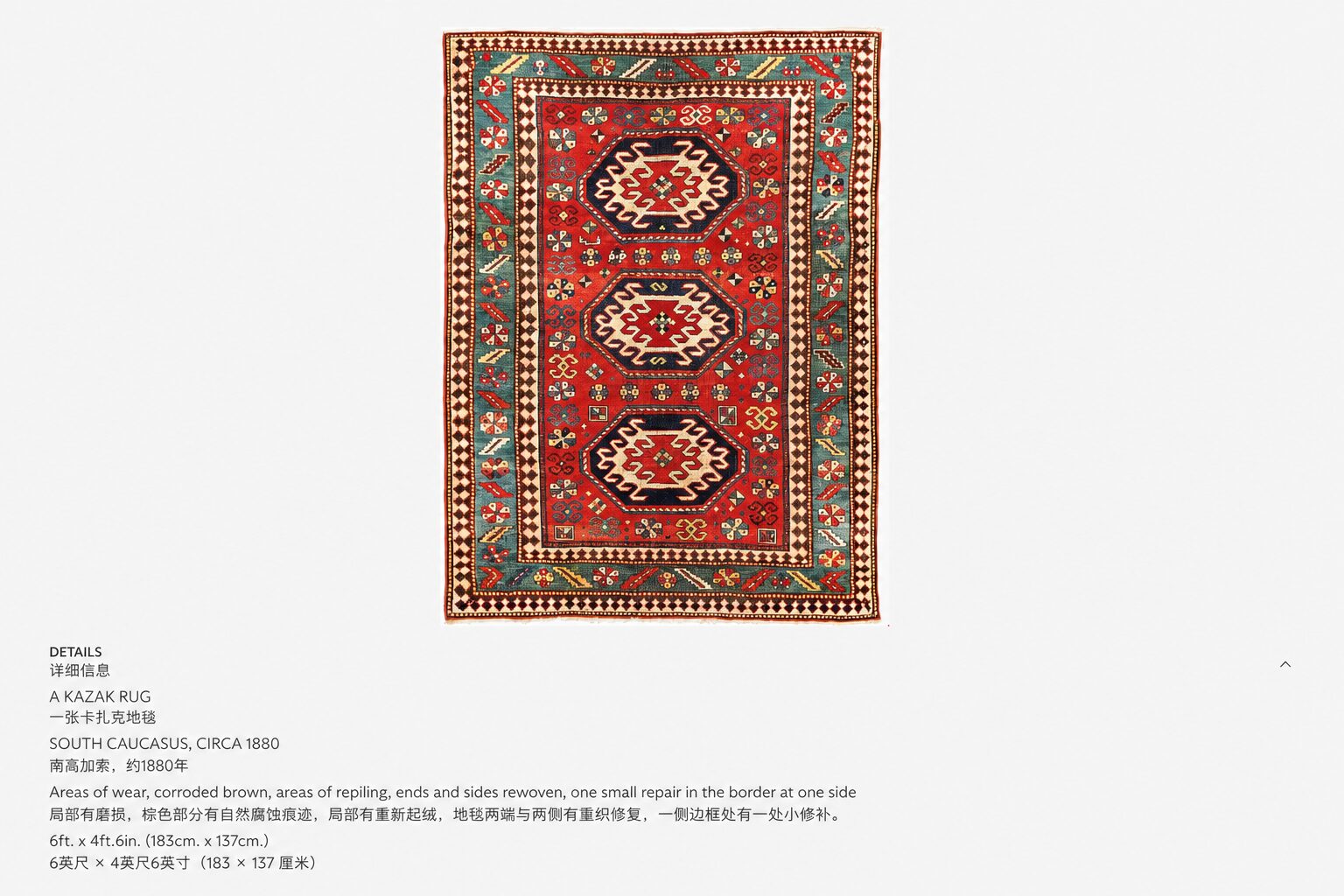
Caucasian rugs are known for geometric strength and symbolic intensity. They often feel direct and powerful, with bold shapes like stars, diamonds, animal motifs, and protective symbols. Their beauty is not soft—it is sharp, structured, and almost primal.
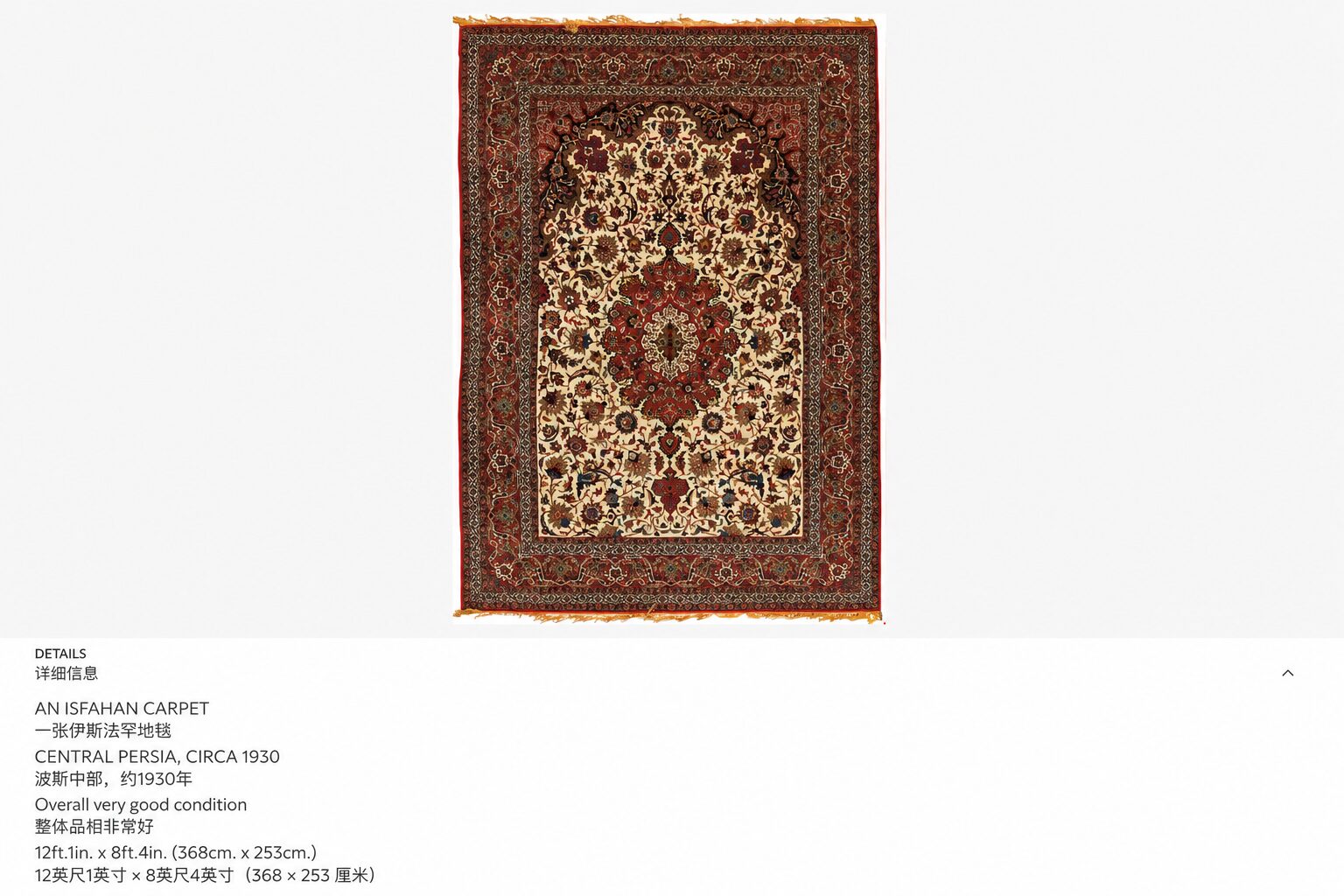
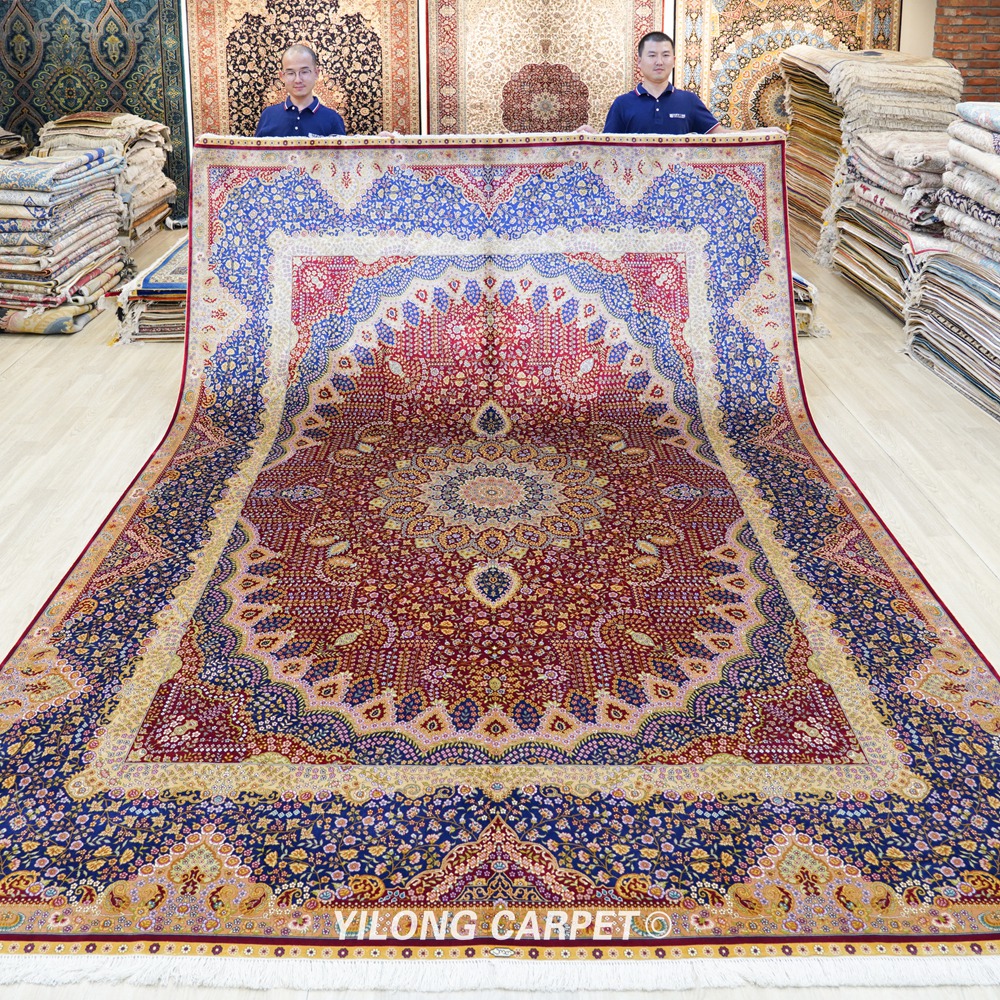
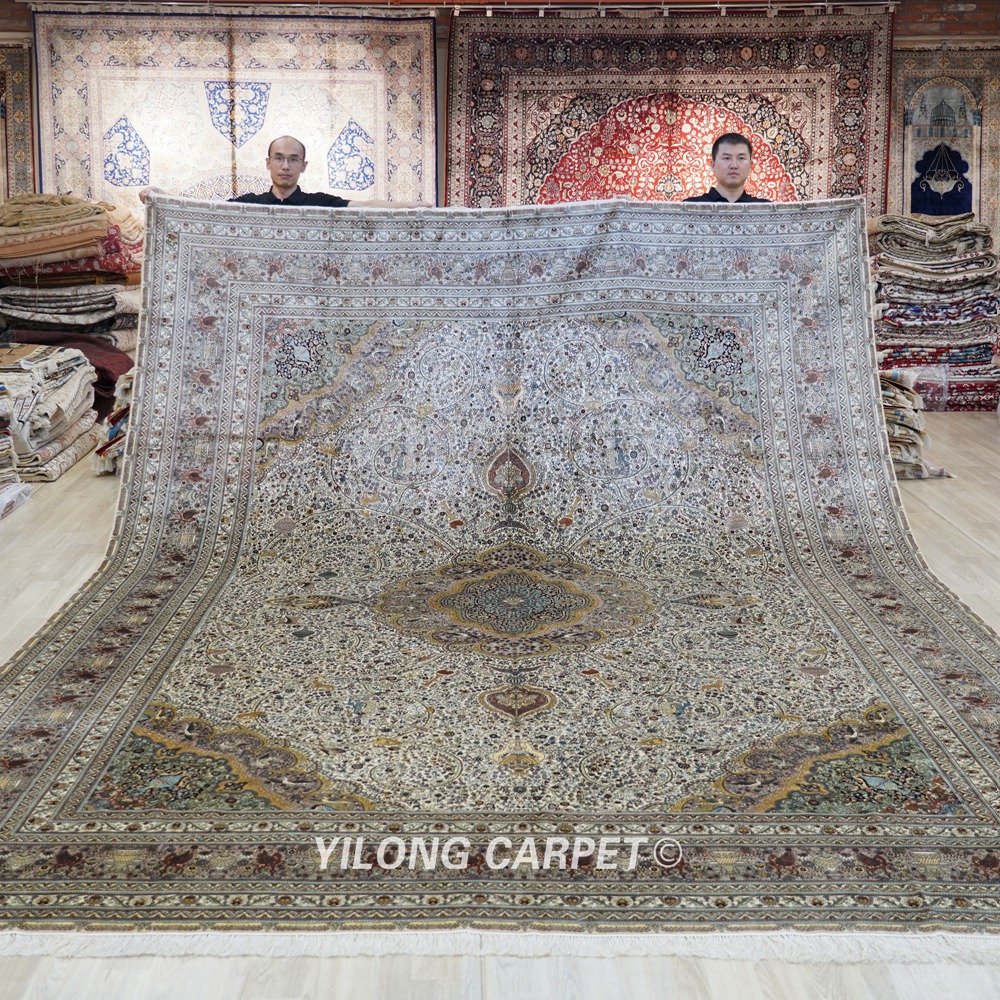
Persian rugs represent another system entirely. They are refined, complex, and highly ordered. Central medallions, floral gardens, vine patterns, and symmetrical compositions create a sense of a woven architectural space. Even in complexity, there is clarity and balance. It feels like a palace built from thread.
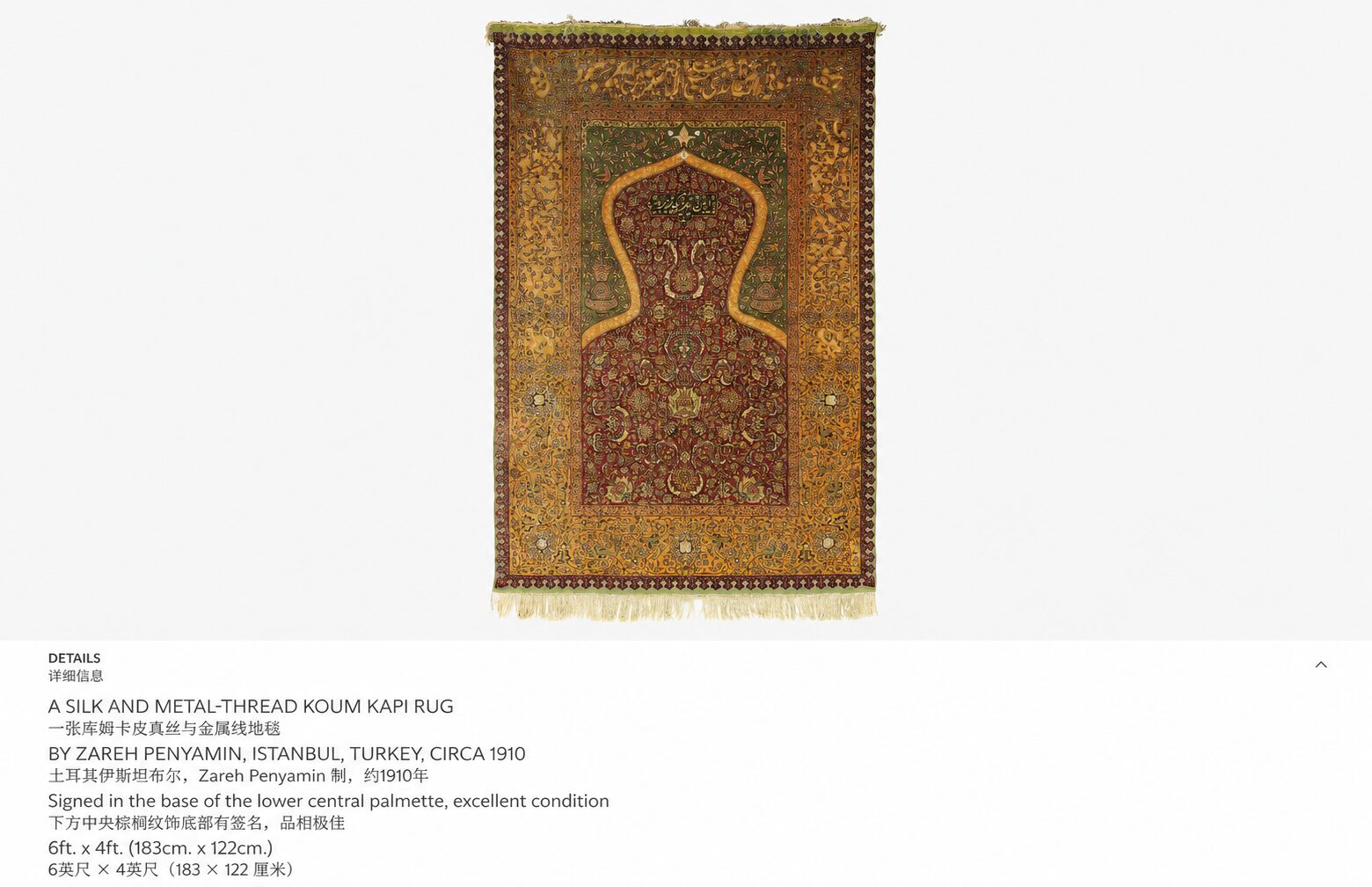
Turkish rugs, especially those from Anatolia and the Ottoman tradition, often carry a deeper historical and spiritual atmosphere. They are tied to religious spaces, palaces, and also European collecting history. You’ll find them not only in mosques and courts, but also in Western paintings and aristocratic interiors.
Together, these three traditions represent different directions of textile aesthetics:
Geometric power (Caucasian)
Floral order (Persian)
Sacred and historical depth (Turkish)
When these rugs enter auction houses, what is collected is not only material or age, but entire cultural systems.
04 | Why High-End Interiors Still Use Antique Rugs
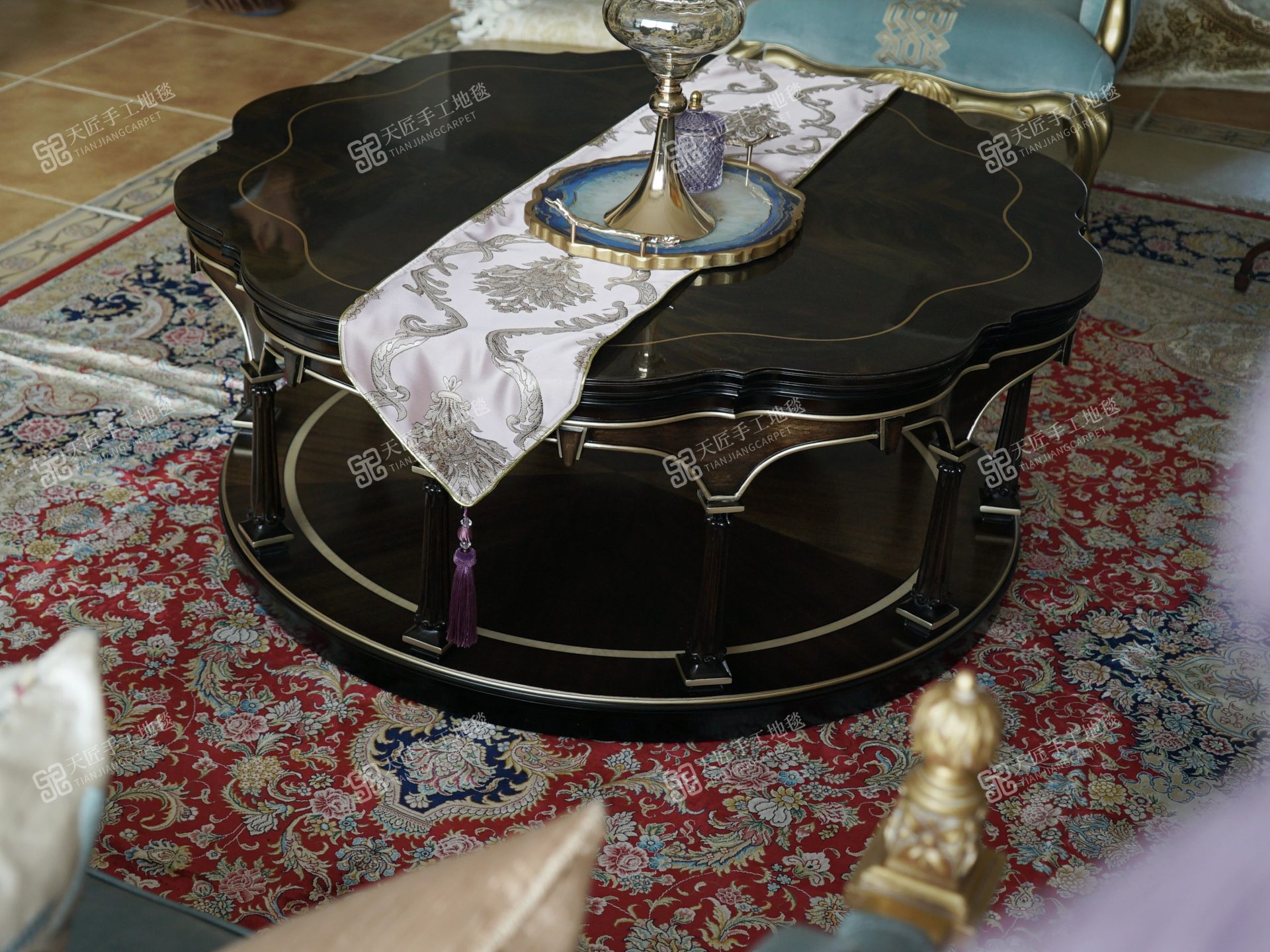
Antique rugs are not limited to auction rooms. They also appear in luxury homes, designer interiors, and high-end hospitality spaces in Europe and the U.S.
They are not used as ordinary floor coverings, but as visual anchors of a space.
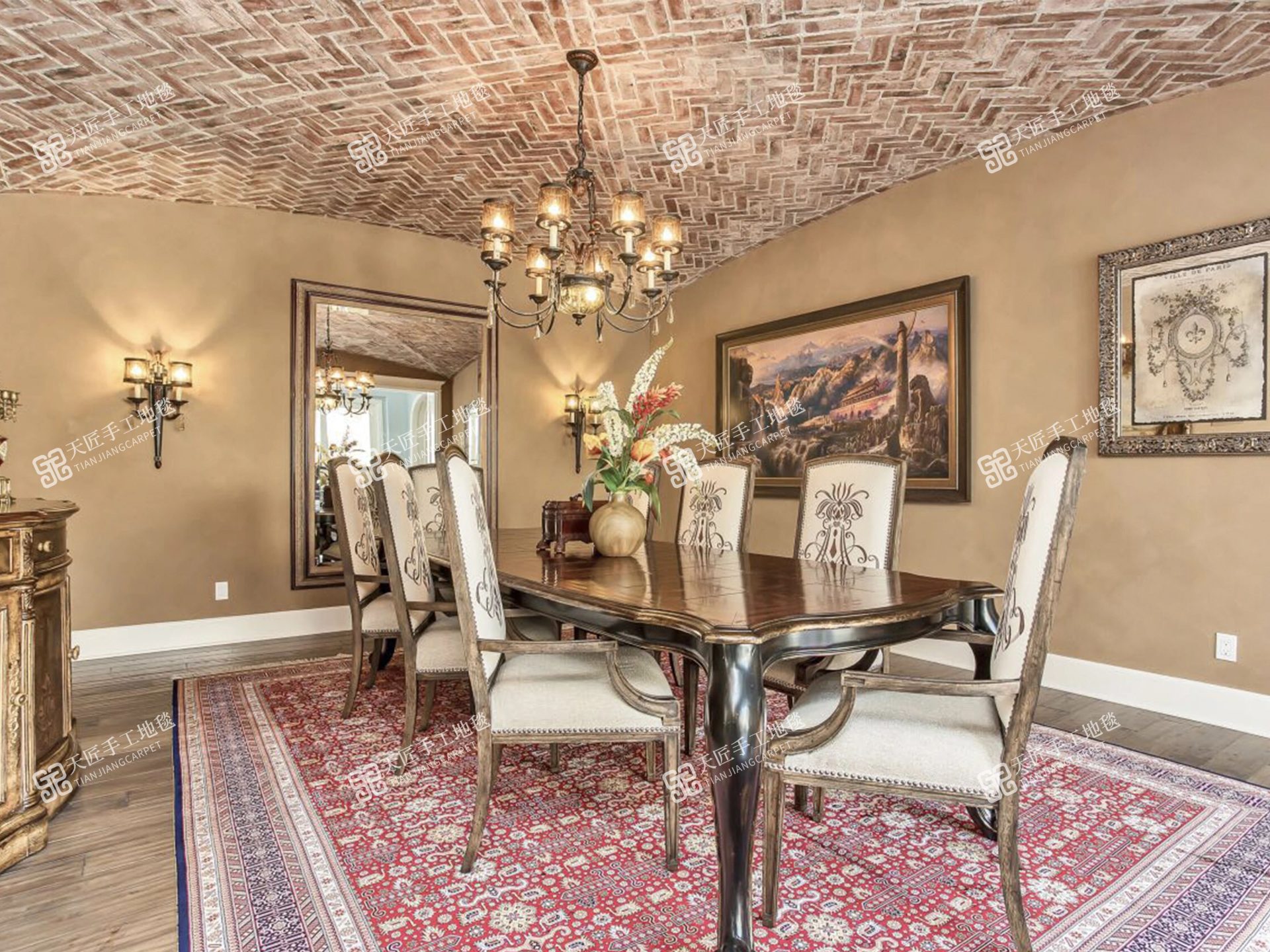
The reason is simple: antique rugs bring qualities that new products often cannot replicate immediately.
First: a sense of time.
Modern interiors are often clean, minimal, and precise. Beautiful—but sometimes too new, too perfect. An antique rug introduces warmth and depth. It makes a space feel lived-in, not staged.
Second: spatial grounding.
A strong rug organizes furniture. Sofas, tables, chairs, and lighting all start to relate through it. In large living rooms, villas, or reception spaces, a rug can literally “hold” the room together.
Third: non-standard beauty.
Machine-made products are often too perfect—too symmetrical, too repeatable. Antique and handmade rugs are different. Slight irregularities, natural dye variations, and time-softened textures make them feel more human.
This imperfection is exactly what makes a space feel real.
That is why high-end interiors are not afraid of complex antique patterns. In fact, they often rely on them to balance the calmness of modern design.
Because a truly refined home doesn’t only need new materials—it also needs a sense of old time.
05 | Looking at Today’s Handmade Rugs Through Antique Value
Once we understand why antique rugs enter auction houses, we start to see modern handmade rugs differently.
We no longer ask only: Does it match the room? What style is it? How much does it cost?
Those questions still matter—but they are only the surface layer.
A deeper set of questions begins to appear:
Is this rug made to last? Does its craftsmanship hold up under close inspection? Does its design come from a real aesthetic tradition? Can it become the visual center of a space? Can it stay with a home for years instead of being replaced quickly?
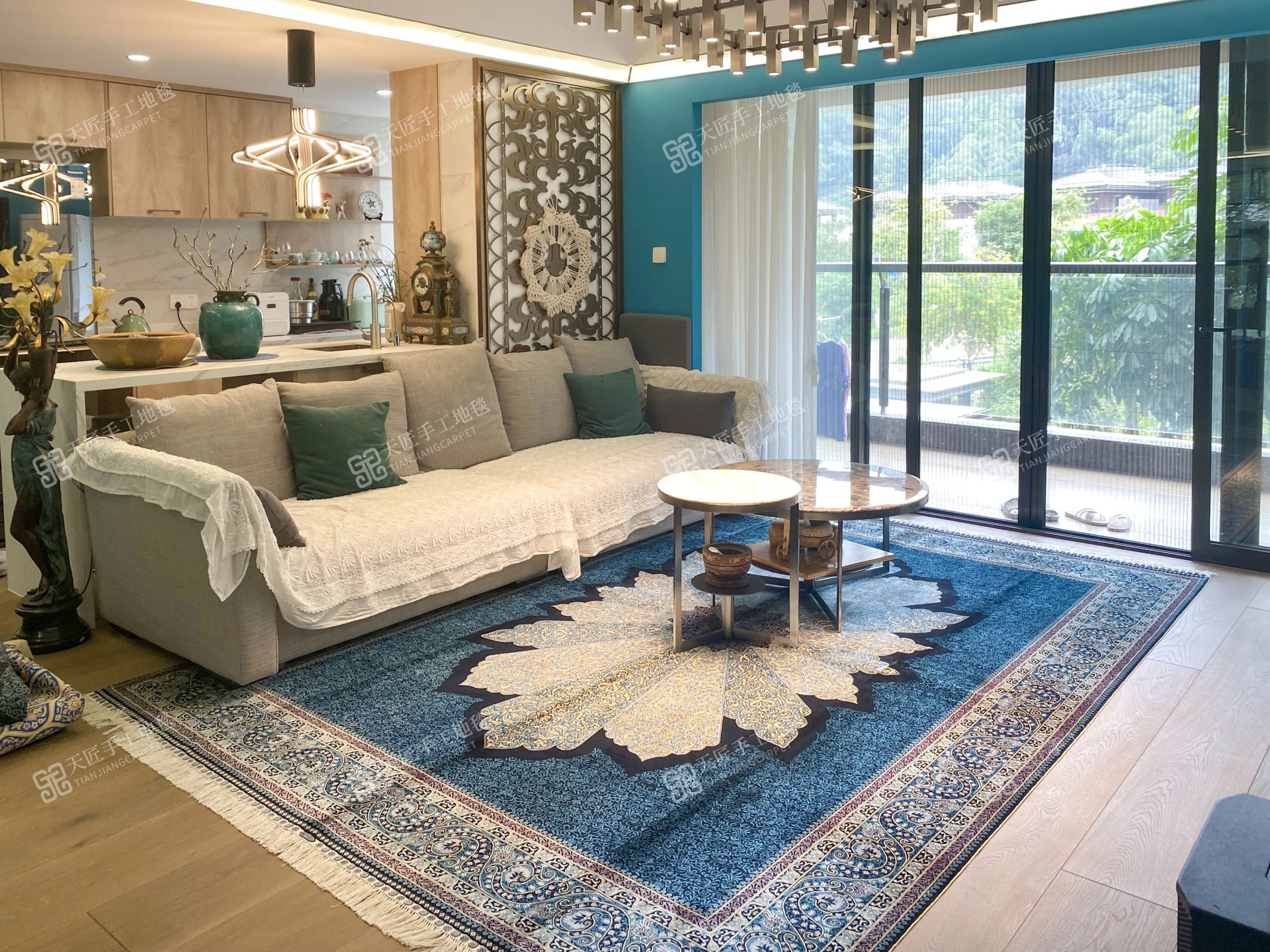
This is the real difference between a handmade rug and a decorative item.
Trendy décor follows fashion cycles—soft minimalism, mid-century, French vintage, modern luxury. Styles change, and products come and go with them.
But a truly well-made handmade rug should not be tied to short-term trends. It should have a longer life.
It should live with a home, and evolve with it—changing meaning as furniture, light, and daily life change around it.
Whether silk or wool, the most valuable part of a handmade rug is never just the surface design. It is the material choice, the weaving time, the stability of the artisan’s hand, and the aesthetic judgment behind every pattern and color.
This is also the value we always try to stand for.
A handmade rug is not just something placed on the floor. It is not only decoration. It is an object that can carry time.
Final Thoughts
Antique rugs enter European and American auction houses not because auctions “upgrade” them—but because their value was always there.
Auction rooms simply make that value visible.
Caucasian geometry, Persian gardens, and Turkish solemnity were all woven into rugs long before they entered museums, collections, or high-end homes. They moved through trade routes, families, and centuries of use before arriving in today’s design world.
So when we look at a truly good rug, its value is never only on the floor.
It is in the material, in the knots, in the colors, in the patterns—and in the quiet presence that remains after time has passed through it.
And that is what makes handmade rugs timeless.