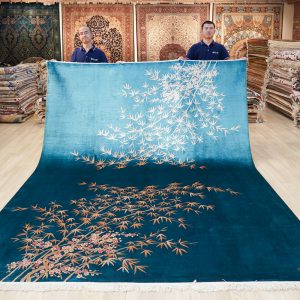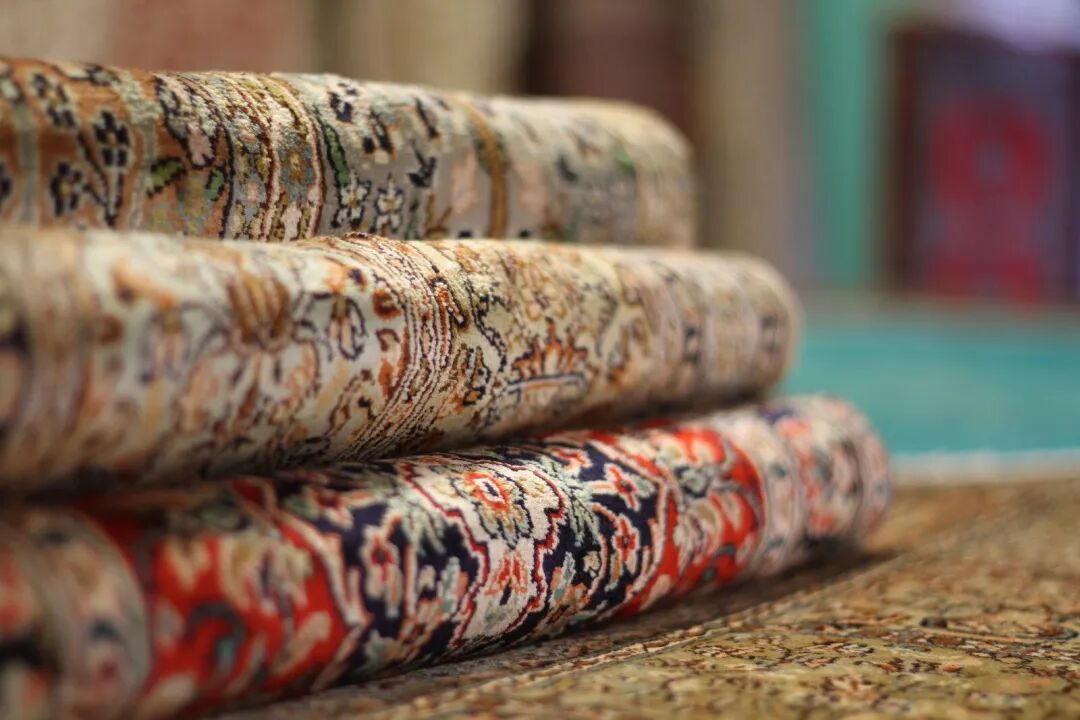
Compare the actual rugs—not just the material labels—because pattern, pile, and construction can all differ.
Choose a hand-knotted wool rug if everyday comfort and a busy household are your main priorities. Choose a hand-knotted silk rug if you love a smooth feel, fine pattern detail, and a soft sheen that changes with the light. Both can be beautiful floor coverings. The better choice depends on your room, your budget, and how you live.
Think about a normal evening at home. Is everyone gathered around the sofa, with snacks on the coffee table and the dog nearby? Or are you choosing a rug for a quiet sitting room where you enjoy the colors and details?
That picture tells you more than a price tag alone.
Silk vs. Wool Rugs at a Glance
This comparison focuses on hand-knotted rugs. Individual rugs vary, so always check the actual materials, construction, and care instructions.
| What matters to you | Hand-knotted silk rug | Hand-knotted wool rug |
|---|---|---|
| Appearance | Noticeable luster; colors can look lighter or deeper from different directions | Usually a softer, more matte appearance; some wool also has a sheen |
| Feel | Smooth and often closely clipped | Often cushioned and springy, depending on the pile |
| Pattern detail | Fine silk yarn allows very small, intricate details | Can have bold or fine patterns, depending on yarn and weaving |
| Everyday use | Often a better fit for controlled, lower-traffic spaces | Usually the more forgiving choice for busy living areas |
| Care | Needs particular care with spills and cleaning | Still needs careful cleaning; not stain-proof |
| Price | Often higher for comparable size and workmanship | Often more accessible, though exceptional wool rugs can cost more |
What Makes Silk Rugs Look Different?
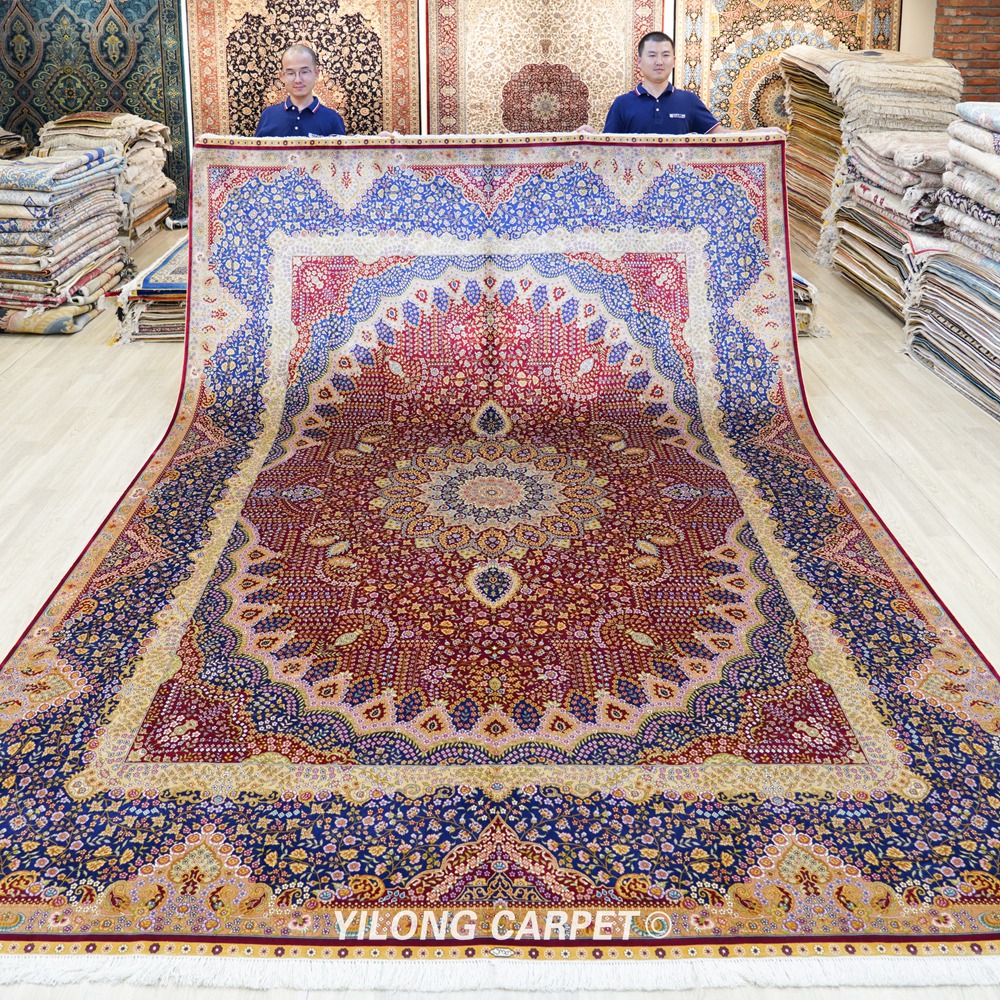
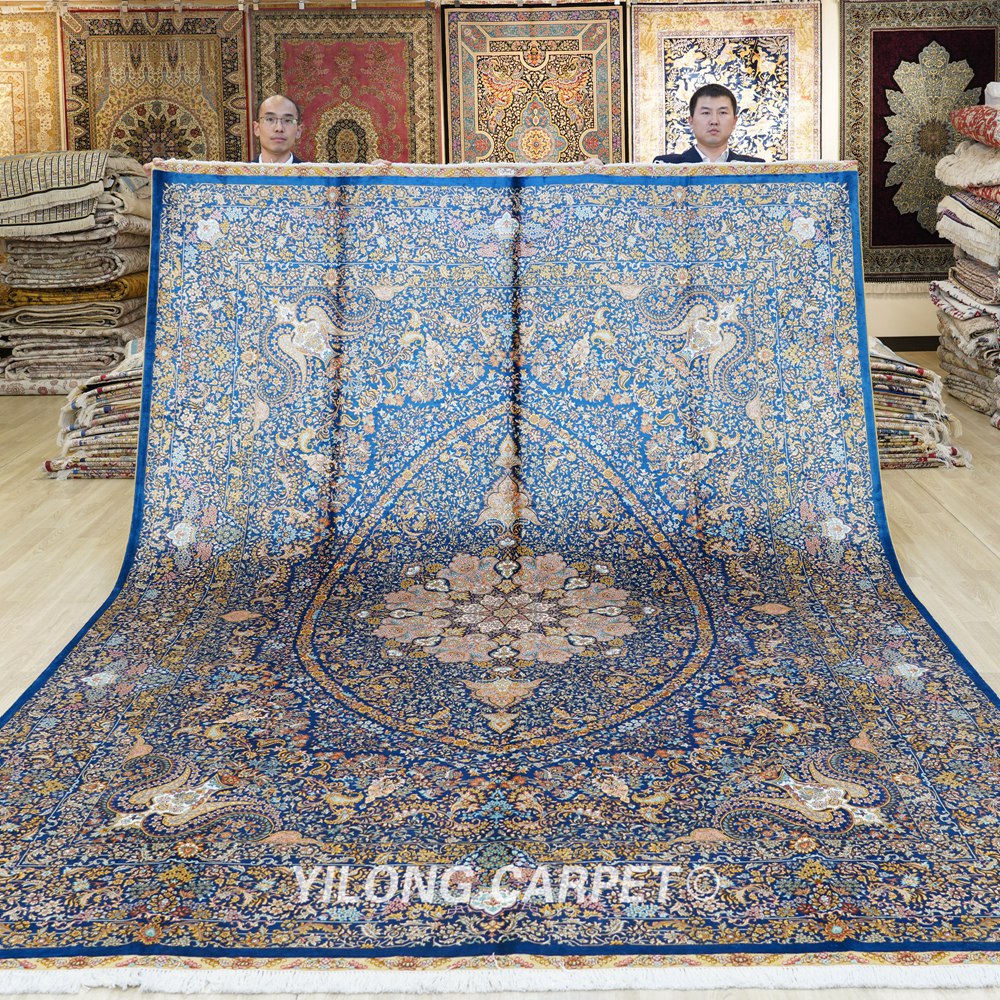
Silk catches the light in a way that can be hard to show in one photograph. Walk around a silk rug, and the same area may look pale and bright from one end, then richer and deeper from the other.
This comes from the way light meets the fibers and the direction of the pile—the yarn you see and touch on the surface. It does not mean the dye is changing.
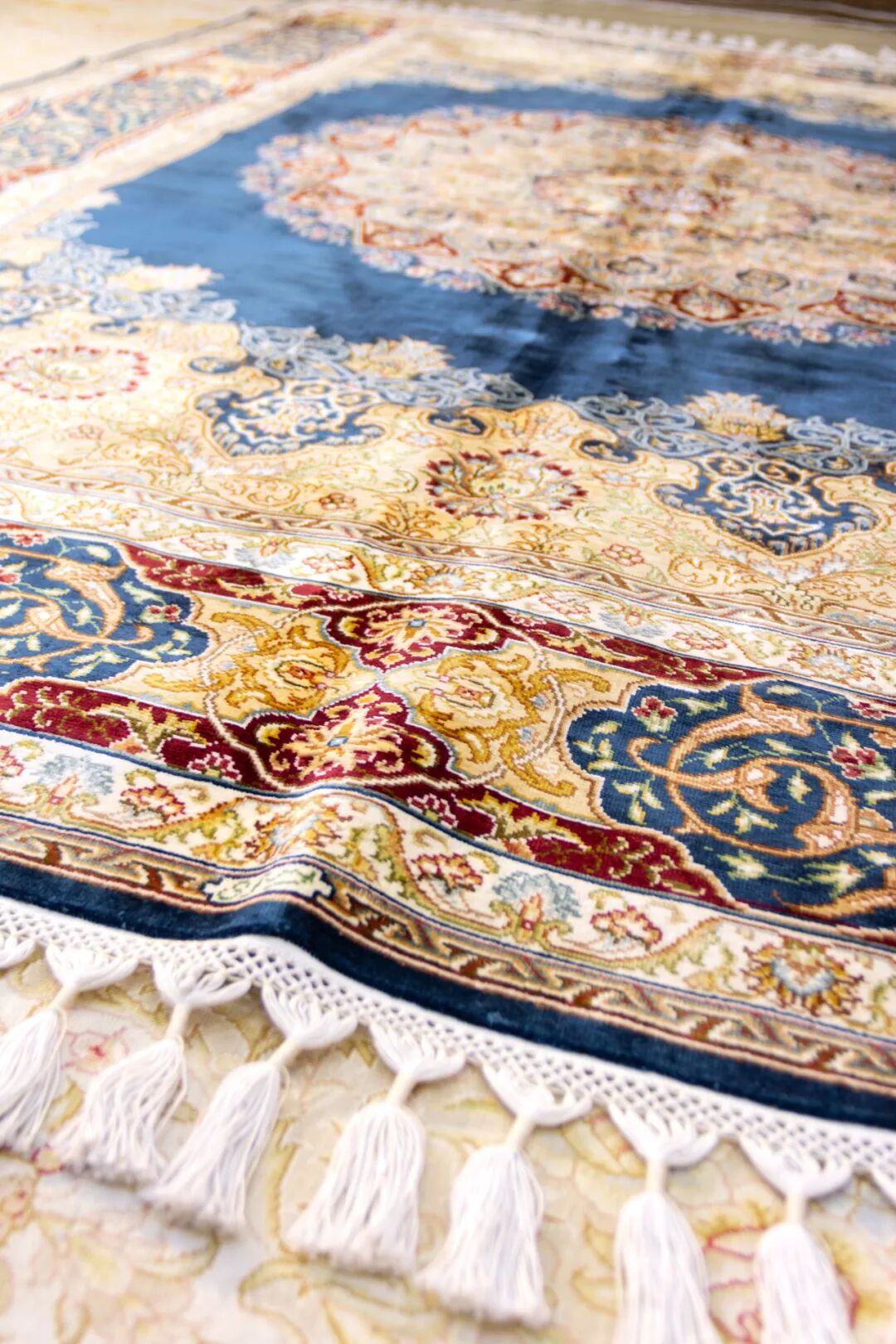
A close-up taken across the surface can help reveal luster, pile direction, edge finishing, and fringe.
Wool rugs can show directional shading too. The effect is often more noticeable in silk.
Before buying a silk rug online, ask for a short video taken from both ends in the same lighting. If you are matching a sofa or curtains, seeing both views is much more useful than choosing from one bright close-up.
You can browse YILONG's hand-knotted silk rugs to compare the colors and patterns you are drawn to.
Which Feels Better Underfoot?
Silk usually feels smooth when you run your hand across it. Many finely woven silk rugs have a relatively short pile, which helps keep tiny flowers, leaves, and curved lines clear.
Wool often feels fuller and more cushioned. Its natural resilience helps it respond to everyday use, one reason it is widely used in home interiors. Woolmark discusses wool's resilience here.
Still, “silk” and “wool” do not tell you everything about comfort. Yarn quality, pile height, construction, and a suitable rug pad all affect the feel.
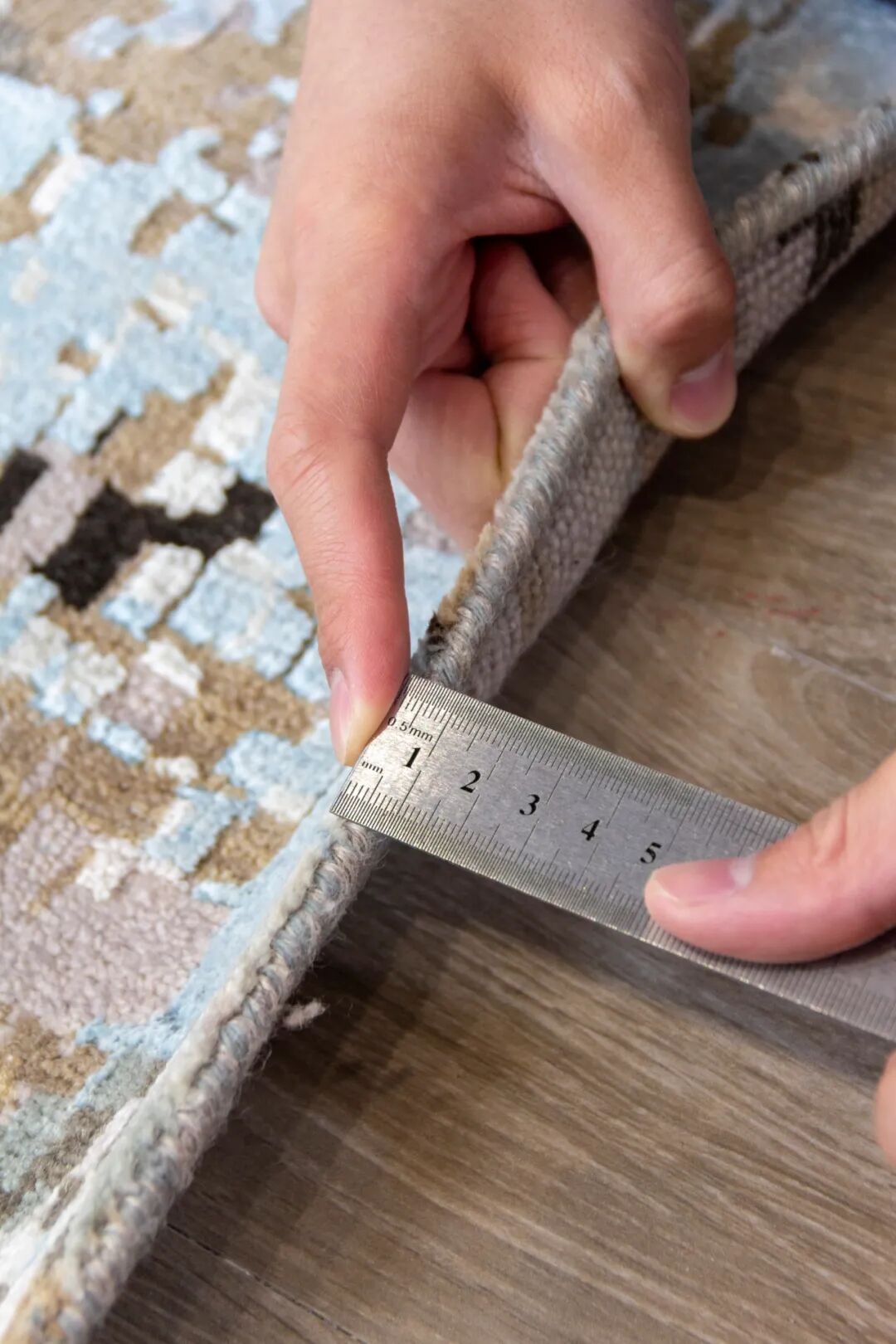
If thickness matters, ask for a clear edge photo with a ruler rather than estimating from a room scene.
If you want a soft spot for bare feet beside the bed, ask about the actual pile. A close-up of the edge can help you judge its thickness.
Is a Silk Rug Better Quality Than a Wool Rug?
Not automatically. Silk and wool are different materials, not quality grades.
Fine silk yarn allows weavers to make small knots and detailed patterns. But a beautifully made wool rug with a simple design can be an excellent rug in its own right.
Knot density describes how many knots fit into a given area. You may see it listed as KPSI, meaning knots per square inch. Higher density can help a weaver draw finer details, but it does not tell the whole story. Materials, the evenness of the weave, finishing, and condition matter too.
Ask for clear photographs of the front, back, edges, and fringe. Then ask what the pile and foundation are made from. The foundation is the structure the knots are tied onto; it may be a different material from the surface.
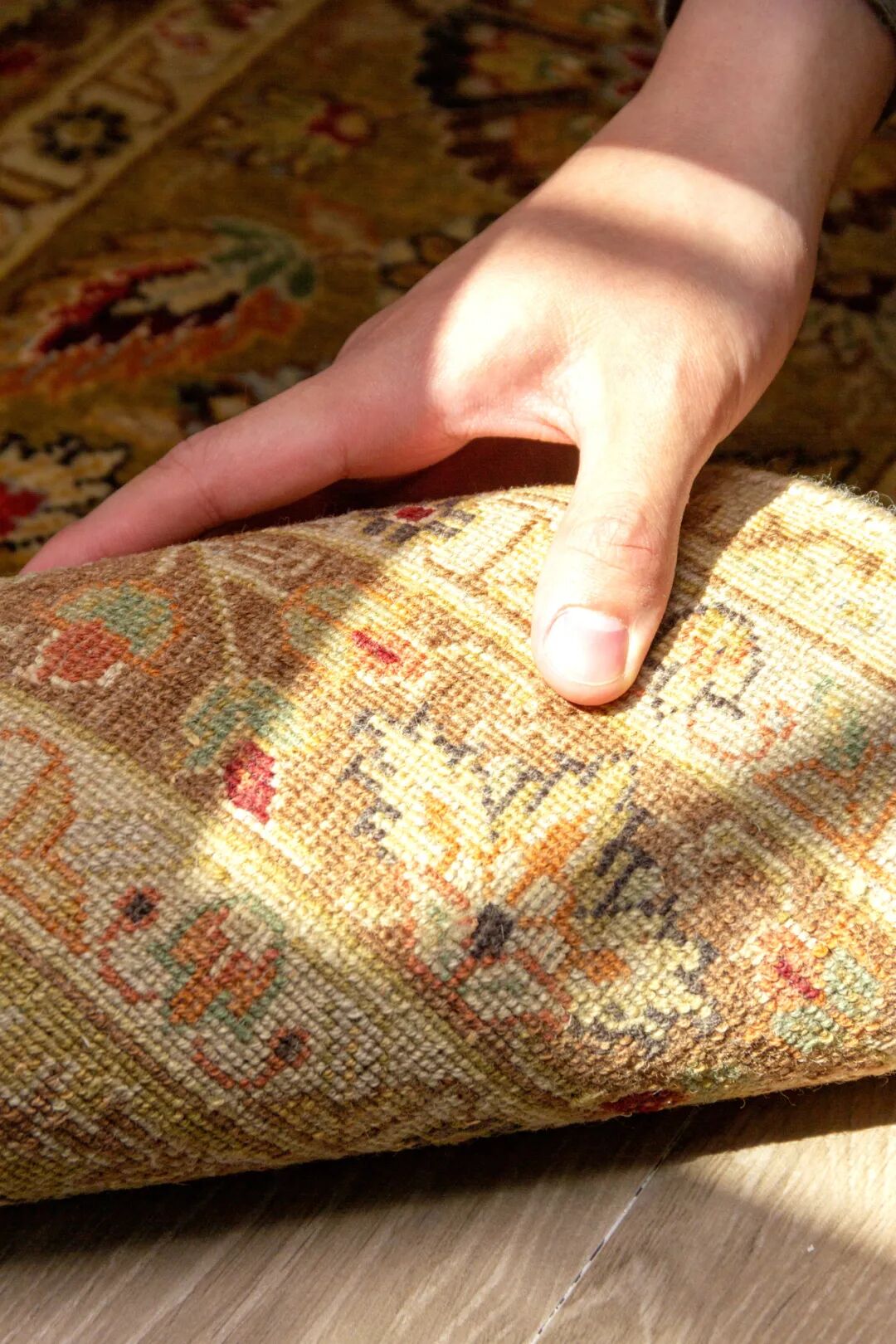
Photos of the actual rug's front, reverse, edge, and fringe reveal more than a material label alone.
Also confirm that the rug is hand-knotted. “Handmade” is a broader term and can include hand-tufted rugs, which are made differently.
Which Rug Works Best in Your Room?
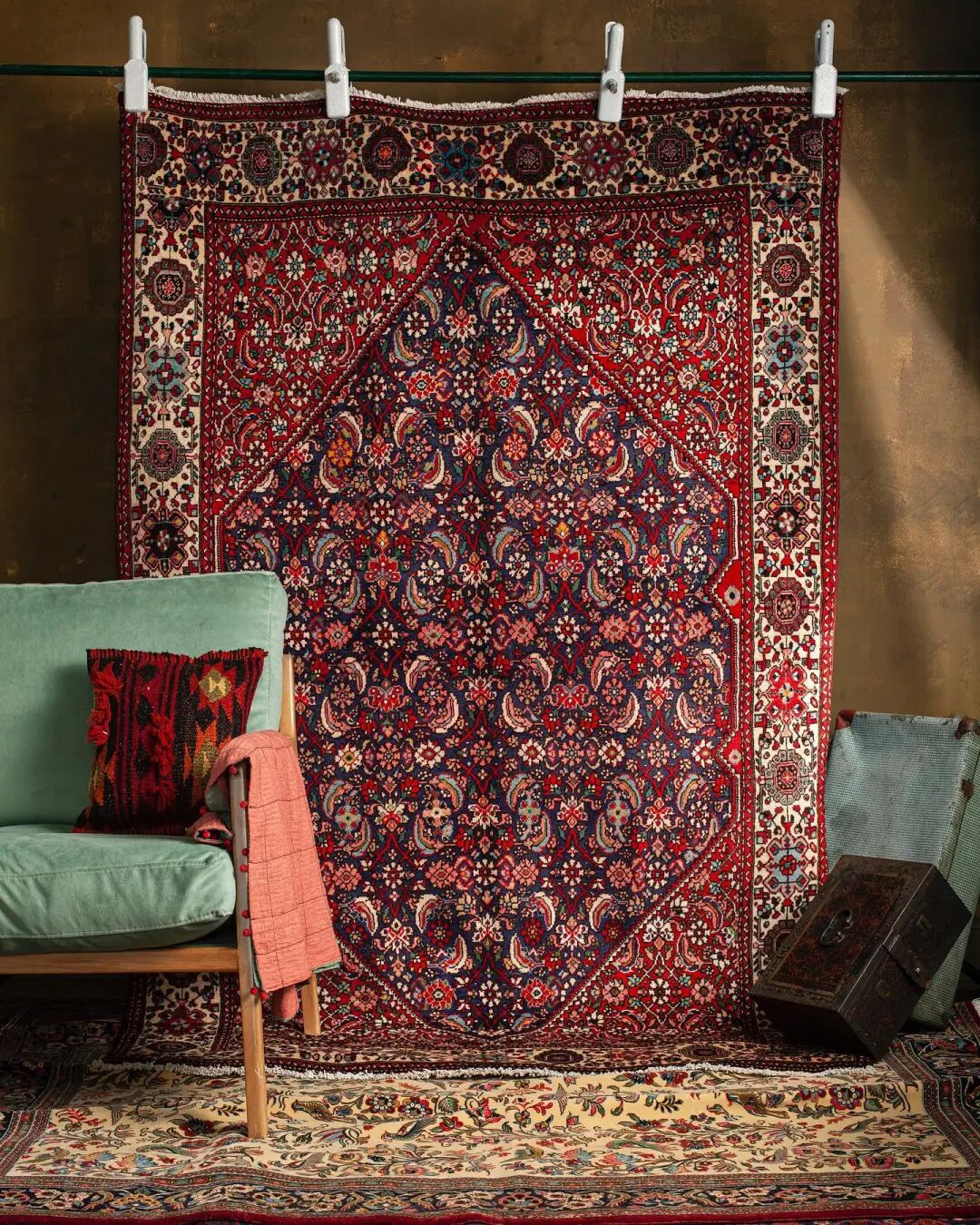
Consider where people walk, sit, eat, and relax before choosing a rug for the room.
A busy family living room
Wool is usually a sensible starting point when a room gets steady foot traffic. If children play on the floor or pets share the sofa, think about everyday wear and the possibility of spills before choosing a delicate surface.
A patterned wool rug may also make small bits of everyday dirt less noticeable. It still needs regular care.
A quiet living room or sitting area
Silk can be a lovely choice where you can enjoy its changing sheen and fine details. It can be used on the floor; it does not have to be kept as a wall hanging.
Look at the actual walking routes. A quiet seating area and the main path through the house put very different demands on a rug.
A bedroom
Either material can work. Choose wool if you prefer a cushioned feel, or silk if you enjoy a smooth surface and a little light catching the pattern. Consider where your feet land when you get out of bed, rather than judging only how the rug looks beneath it.
A dining room or entrance
Frequent food spills, outdoor grit, and damp shoes make care especially important. Wool is generally the more practical of these two materials, but neither should be treated as waterproof or maintenance-free. For a wet entrance, start with an appropriate doormat and keep a valuable handmade rug farther inside.
Why Do Silk Rugs Often Cost More?
Natural silk is a costly material. Fine, densely knotted designs can also take substantial skilled labor. These factors often make a silk rug more expensive than a comparable wool rug.
But material is only part of the price. Size, workmanship, design, age, and condition can all matter. Some wool rugs cost more than some silk rugs.
Compare rugs of similar size and construction before deciding which offers better value for you. Include the cost of suitable care, too.
Choose a rug because you want to live with it. Neither material guarantees a future resale profit.
What Should You Know About Cleaning?
Both materials need care, and a silk rug deserves particular caution with moisture and cleaning products.
For a spill on silk, gently blot with a clean, dry white cloth. Avoid rubbing, soaking, household stain removers, and home steam-cleaning machines. A specialist should assess the fibers, dyes, and construction before deeper cleaning. These precautions reflect professional silk-rug care guidance.
For wool, follow the rug's own instructions rather than assuming any carpet cleaner is suitable. The WoolSafe carpet and rug care guide provides further guidance and access to specialist services.
Ask your seller for a care routine for the exact rug you choose. There is no single cleaning interval that suits every home.
Five Things to Check Before You Buy
- The room: How often will people walk across this spot? Are spills likely?
- The size: Mark the rug outline on your floor and check it against your furniture.
- The materials: Confirm the pile fiber, foundation, and any blend percentages.
- The actual rug: Request full views from both ends, plus back and edge details.
- The practical details: Check care instructions, availability, return terms, and delivery arrangements for your order.
At YILONG Carpet, our range includes both handmade wool rugs and hand-knotted silk rugs. You can compare both materials before settling on a style.
Frequently Asked Questions
Is silk or wool better for a living room?
Wool is usually more practical for a busy family living room. Silk can suit a quieter living room where its sheen and pattern detail are priorities. Choose based on foot traffic, spill risk, and the individual rug.
Can you walk on a hand-knotted silk rug?
Yes. A hand-knotted silk rug can be used as a floor covering. Choose an appropriate location and follow its care instructions; avoid treating it like a washable utility rug.
Are wool rugs always thicker than silk rugs?
No. Many wool rugs have a fuller pile, but thickness varies with the design and construction. Ask for the actual measurement if door clearance or underfoot comfort matters.
Does “bamboo silk” mean real silk?
No. The name commonly refers to a regenerated cellulose fiber, not natural silkworm silk. Ask for the exact fiber composition. A shiny appearance alone does not establish that a rug is natural silk.
Is a wool-and-silk rug a good compromise?
It can be. Wool may provide a fuller texture while silk highlights parts of the pattern. Check the percentages and where the silk is used; a blend still needs care suitable for its more delicate fibers.
Need Help Choosing Between Silk and Wool?
Send us a photo of your room, your preferred size, and your budget. Tell us how you use the space, too—even a simple detail like “our dog sleeps here” helps.
Contact Alice at YILONG Carpet for help comparing suitable options and checking current availability. You do not need to know every rug term before asking. A photo and a few questions are a good place to start.