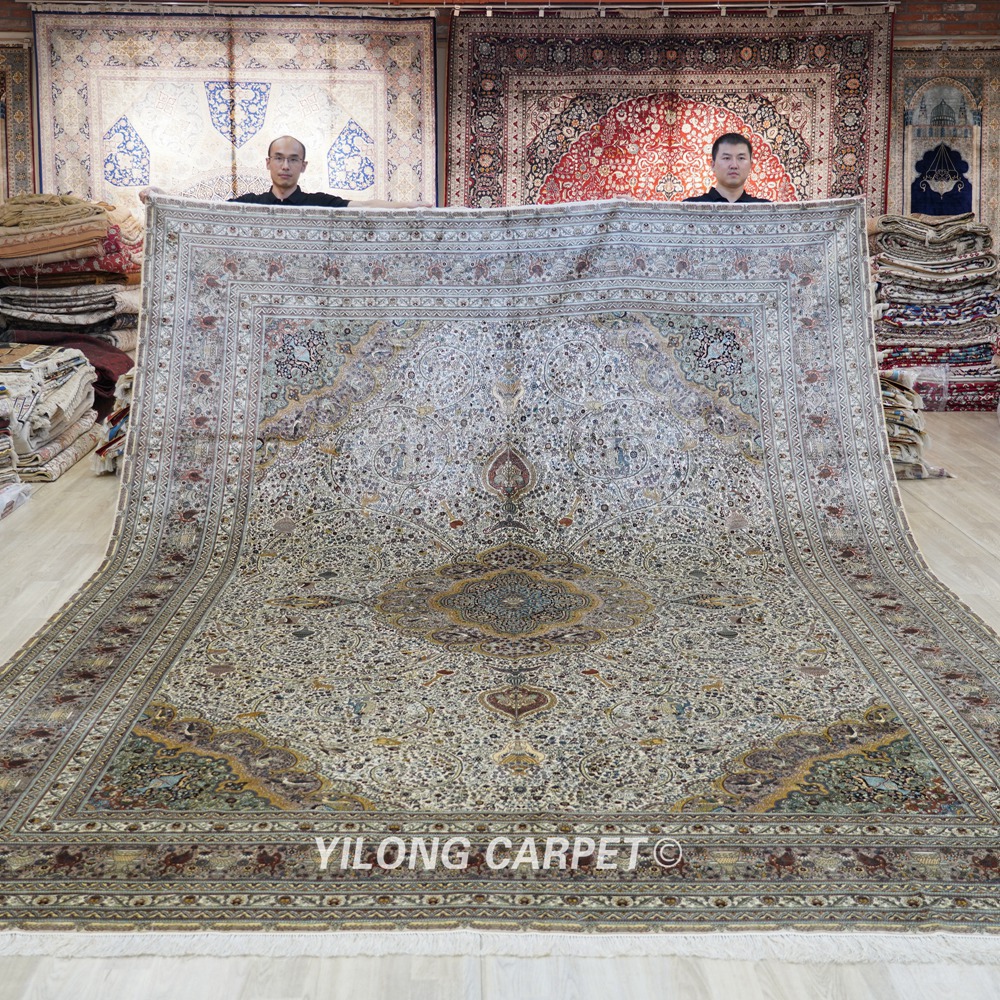
Rug knot density tells you how many hand-tied knots are packed into a given area. A higher count can support finer curves, smaller flowers, and more detailed designs, but it does not prove that a rug is better on its own. Material, knot consistency, design, finishing, condition, and how you plan to use the rug matter too.
If terms such as KPSI, knot count, and 230 lines sound confusing, you are not alone. Different rug-making regions use different measurements, and two sellers may describe a similar rug in different ways. This guide explains the numbers in plain English and shows you what to check before buying.
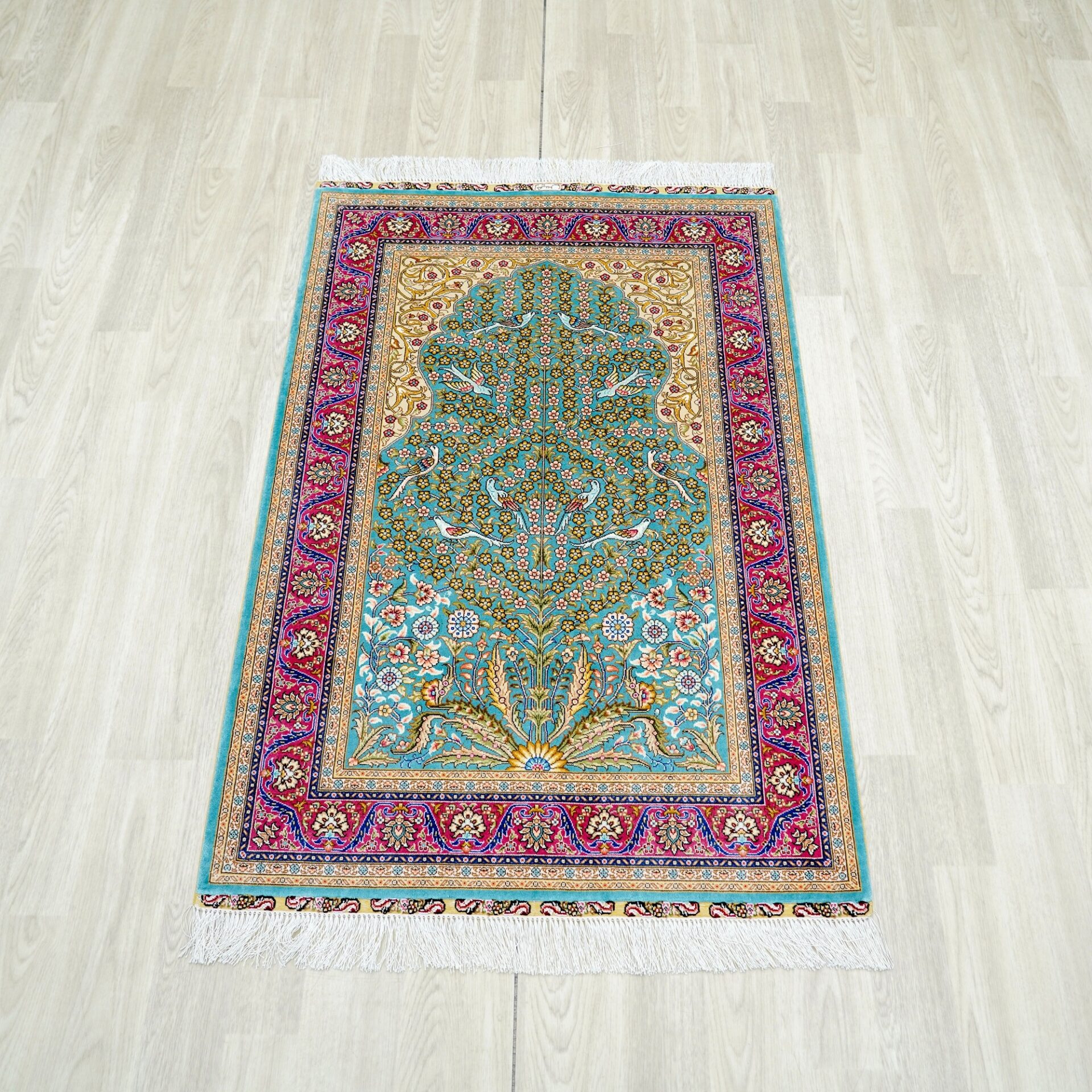
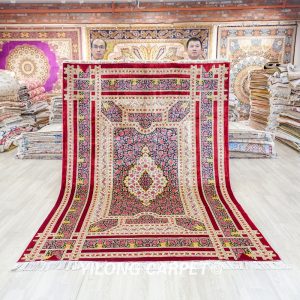
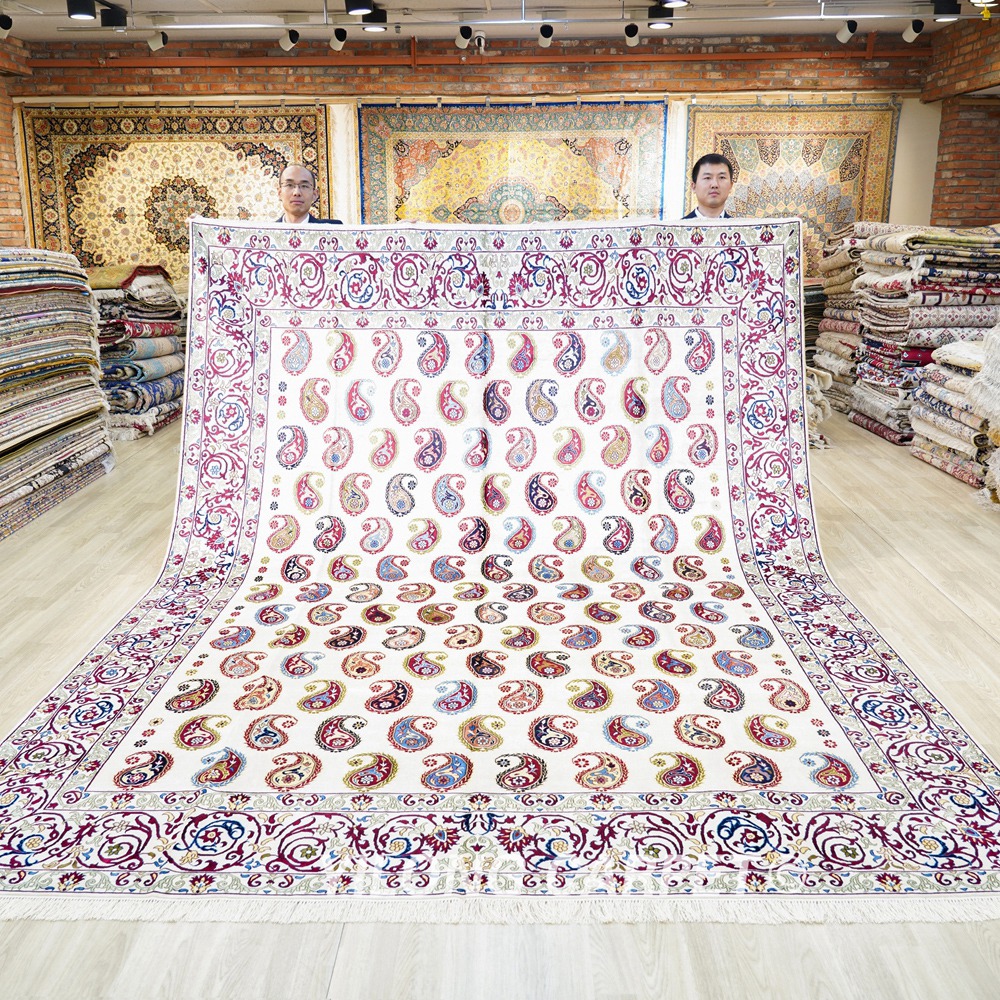
A full view helps you judge the overall design before moving closer to inspect the weave.
Quick Answer: How Do You Judge Knot Density?
KPSI
- means knots per square inch.
Line count
- usually describes the number of knot rows across one linear foot in the Chinese handmade-rug system.
- If the horizontal and vertical counts are approximately equal, a 230-line rug is about
367 KPSI
.
- More knots allow finer detail, but density should be compared between rugs with similar materials and construction.
- The safest way to verify a claim is to examine the back of the actual rug with a ruler.
What Is Rug Knot Density?
A hand-knotted rug is built one knot at a time. The weaver ties pile yarn around the foundation threads, adds a row of weft, and continues upward until the design is complete.
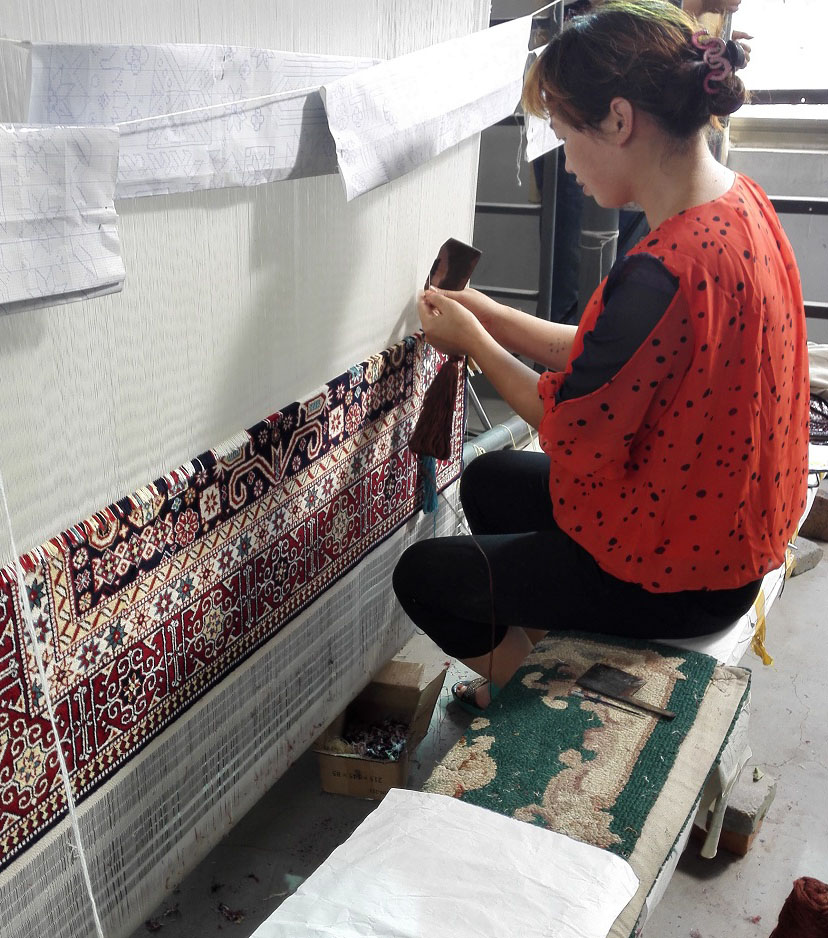
A YILONG weaver ties the design by hand, one row at a time.
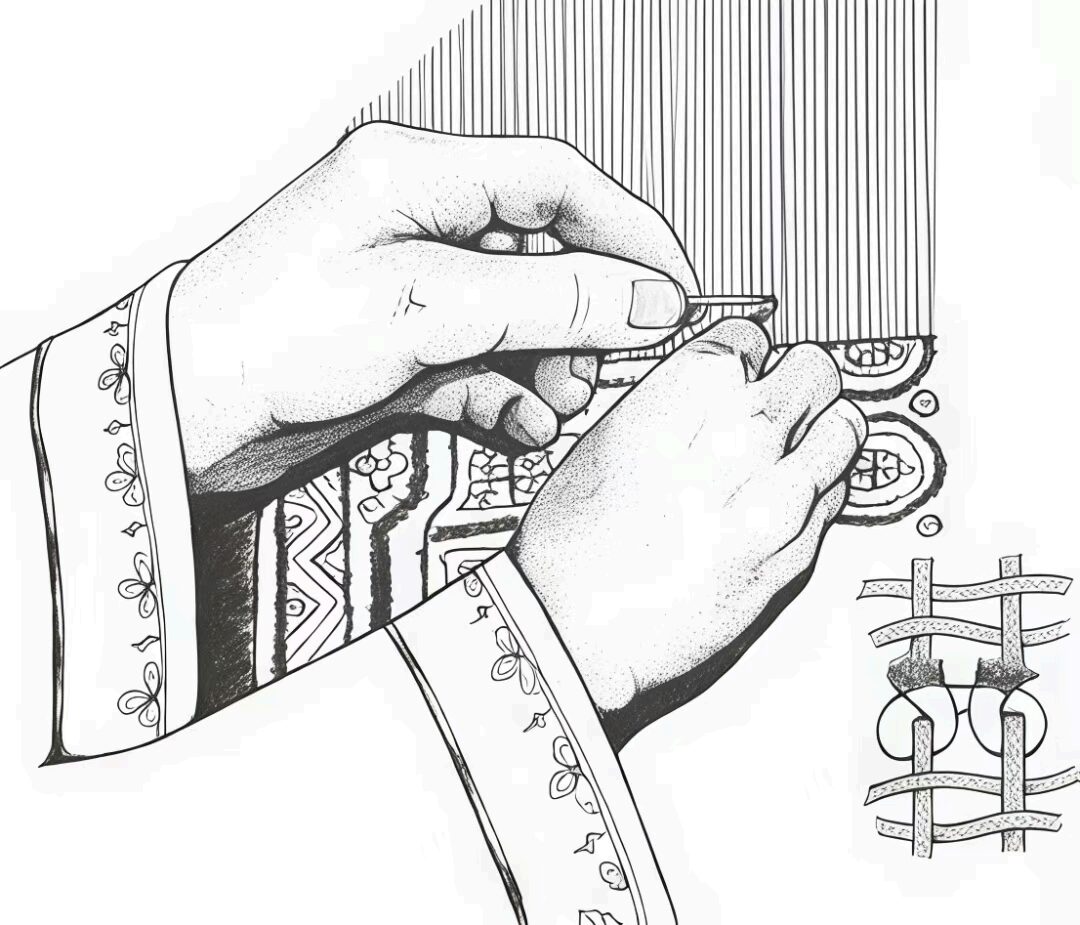
Illustration: the pile yarn is tied around the vertical warp threads during hand-knotting.
Knot density measures how closely those knots sit together. Think of it a little like image resolution. More points in the same area give the weaver more room to shape a smooth curve, define a small leaf, or show a face clearly. That comparison is helpful, but it has limits: a beautiful rug still needs good materials, balanced color, skilled weaving, and careful finishing.
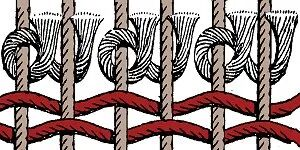
Illustration: knots form the pile around the warp threads, while the weft passes across the rug between rows.
Knot density is especially relevant to fine hand-knotted silk rugs, because thin silk yarn can support intricate designs. Wool yarn is usually thicker, so a wool rug may use fewer knots while still being very well made and perfectly suited to its design.
What Does KPSI Mean?
KPSI stands for knots per square inch. To calculate it, count the visible knots across one inch horizontally and one inch vertically on the back of the rug, then multiply the two numbers.
Horizontal knots per inch × vertical knots per inch = KPSI
For example, if you count 20 knots in one direction and 18 in the other:
20 × 18 = 360 KPSI
Do not assume the two directions are always equal. The foundation and weaving system can produce a rectangular knot grid, so counting both directions is more reliable than squaring one number.
What Does “230 Lines” Mean?
In the Chinese handmade-rug trade, line count commonly refers to the number of knot rows across one linear foot, about 30.5 cm. When the construction is balanced, the approximate conversion is:
KPSI ≈ (line count ÷ 12)²
Here are useful reference figures:
| Line count | Knots per square foot | Approx. knots per square meter | Approx. KPSI* |
| 150 lines | 22,500 | 242,000 | 156 |
| 230 lines | 52,900 | 569,000 | 367 |
| 260 lines | 67,600 | 728,000 | 469 |
| 350 lines | 122,500 | 1,318,000 | 851 |
*The KPSI figures assume roughly the same number of knots in both directions. They are estimates, not a substitute for counting the actual rug.
This distinction matters. A 230-line rug may contain about 52,900 knots per square foot, but that does not mean 52,900 KPSI. Mixing up square feet and square inches creates a very large and misleading number.
Does a Higher Knot Count Mean a Better Rug?
Sometimes it means a more finely woven rug. It does not answer the whole quality question.
Higher density can help with:
- smoother curves and cleaner outlines;
- small floral, pictorial, and architectural details;
- a closely packed surface;
- designs that require many color changes in a small area.
But a lower-density rug is not automatically poor quality. A bold tribal or geometric design may look better with a larger, more visible weave. A well-made wool rug may have fewer knots than a silk rug because the yarn is thicker. Using an extreme density for a simple design may add labor without making the rug more useful or more beautiful.
Museums and auction houses also treat knot count as one part of a larger description. The Metropolitan Museum of Art, for example, notes the extraordinarily high knot count and sensitive drawing of one seventeenth-century carpet fragment. Christie's descriptions of fine carpets discuss knot count alongside materials, design, condition, workshop, and provenance—not as a stand-alone grade.
The practical rule is simple: compare knot density only after confirming that the rugs use similar materials, construction, and design standards.
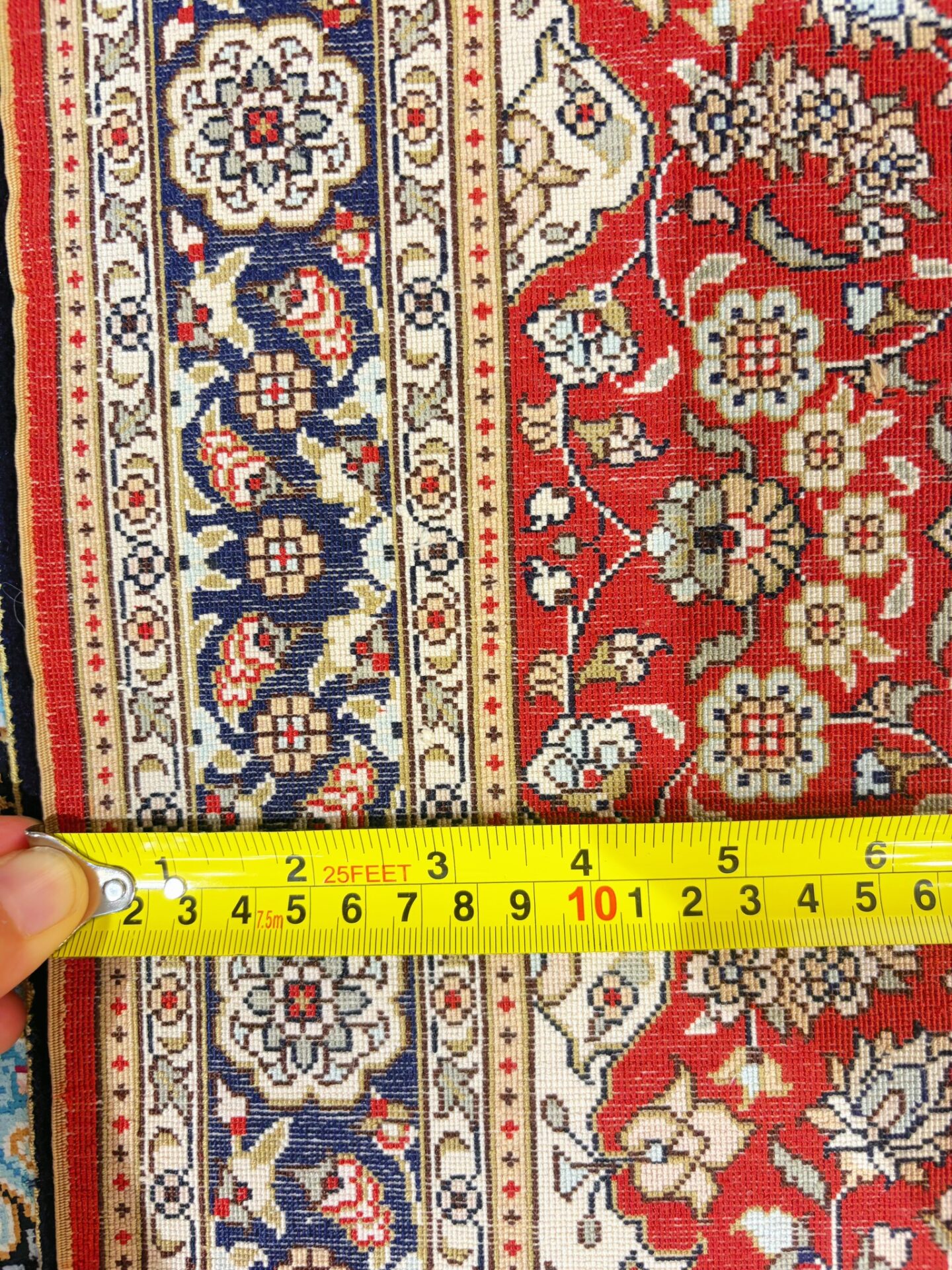
A ruler gives physical scale to the small pattern details. This photo shows the front of the rug, so it should not be used to calculate KPSI.
Why Do High-Density Rugs Take Longer to Weave?
Every extra knot is tied by hand. Increasing the density raises the number of knots in every square inch, while increasing the rug size multiplies that work across a larger area.
For a simple illustration, an 8 × 10 ft rug covers 11,520 square inches:
| Density | Approximate total knots in an 8 × 10 ft rug |
| 200 KPSI | 2.30 million |
| 367 KPSI | 4.23 million |
| 469 KPSI | 5.40 million |
These figures explain why a large, detailed rug can take a long time to produce. They do not predict an exact weaving schedule. Design complexity, number of colors, yarn preparation, finishing, the number of weavers, and working hours all affect production time.
Persian Knot and Turkish Knot: Is One Better?
The two best-known structures are the Persian knot and the Turkish knot.
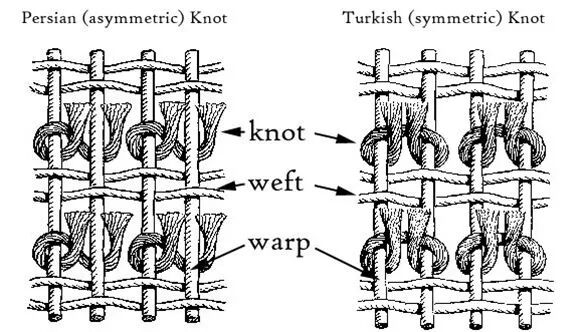
The Persian knot is asymmetrical; the Turkish knot is symmetrical. Both structures can be used to make excellent rugs.
Persian knot
The Persian knot is also called an asymmetrical or Senneh knot. The pile yarn wraps fully around one warp thread and passes under the neighboring warp. Its structure can support fluid curves and fine detail.
Turkish knot
The Turkish knot is also called a symmetrical or Ghiordes knot. The yarn wraps around two neighboring warp threads and comes up between them. It creates a balanced, secure structure and is common in rugs from Türkiye and other weaving regions.
One structure is not universally superior. Both can produce excellent handmade rugs. Knot type can offer clues about weaving tradition and construction, but you still need to examine the materials, density, consistency, design, and condition of the individual piece.
How to Check Knot Density on the Actual Rug
You do not need specialist equipment. A ruler, good light, and a clear view of the back are enough for a useful check.
Turn over one corner.
1. The back should reveal the structure more clearly than the pile side.
Choose a clear area.
2. Avoid the fringe, repaired sections, and very dark areas that are difficult to count.
Place a ruler on the back.
3. Count the knots across one inch horizontally, then one inch vertically.
Multiply the two counts.
4. This gives the approximate KPSI for that spot.
Repeat in another area.
5. Handmade work has natural variation, so one tiny sample may not represent the whole rug.
For an online purchase, ask for:
- one full front photo;
- one full back photo;
- a close-up of the back with a ruler;
- close-ups of the fringe and side edges;
- a short video from both ends, especially for a silk rug.
A seller should be able to explain whether the stated number is a line count, KPSI, knots per square meter, or another local measurement.
What Else Should You Check Besides Knot Count?
1. Material
Ask what the pile, warp, and weft are made from. “Silk rug” should not be accepted as a complete specification. Natural silk, wool-and-silk blends, and regenerated cellulose fibers can look similar in a small online photo but behave differently.
2. Knot consistency
Look for reasonably even rows on the back. Small variations are normal in handwork. Large irregular gaps, obvious loose areas, or unexplained changes deserve a closer look.
3. Pattern clarity
Study curves, borders, small flowers, and corners. Fine weaving should help the design look intentional and controlled. Density is useful when the design actually takes advantage of it.
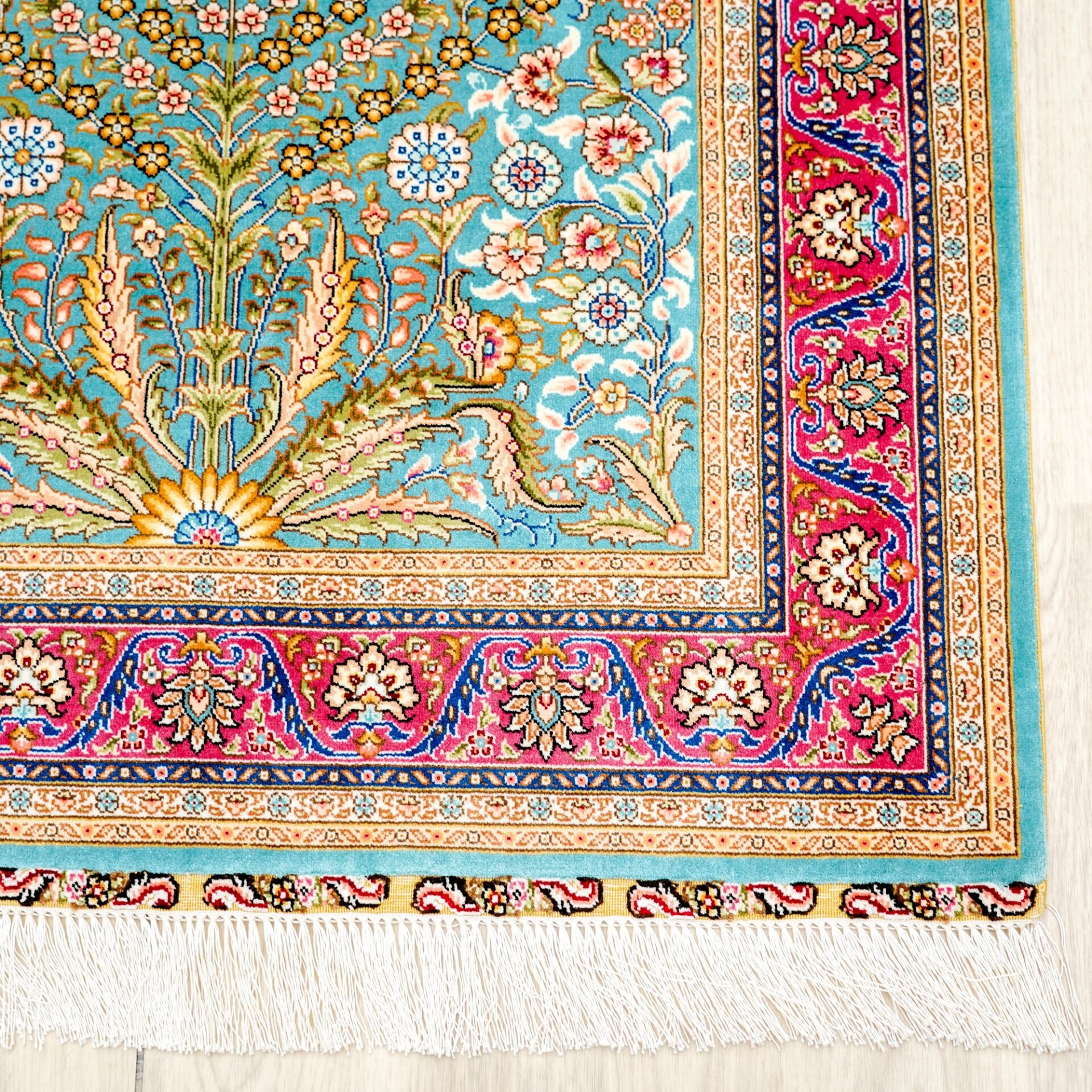
Look closely at curved lines, small flowers, border corners, and the transition to the fringe.
4. Edges and fringe
The fringe is normally part of the rug's foundation in a hand-knotted rug, not a decorative strip sewn onto the end. Check the side binding and ends for wear, repairs, or unraveling.
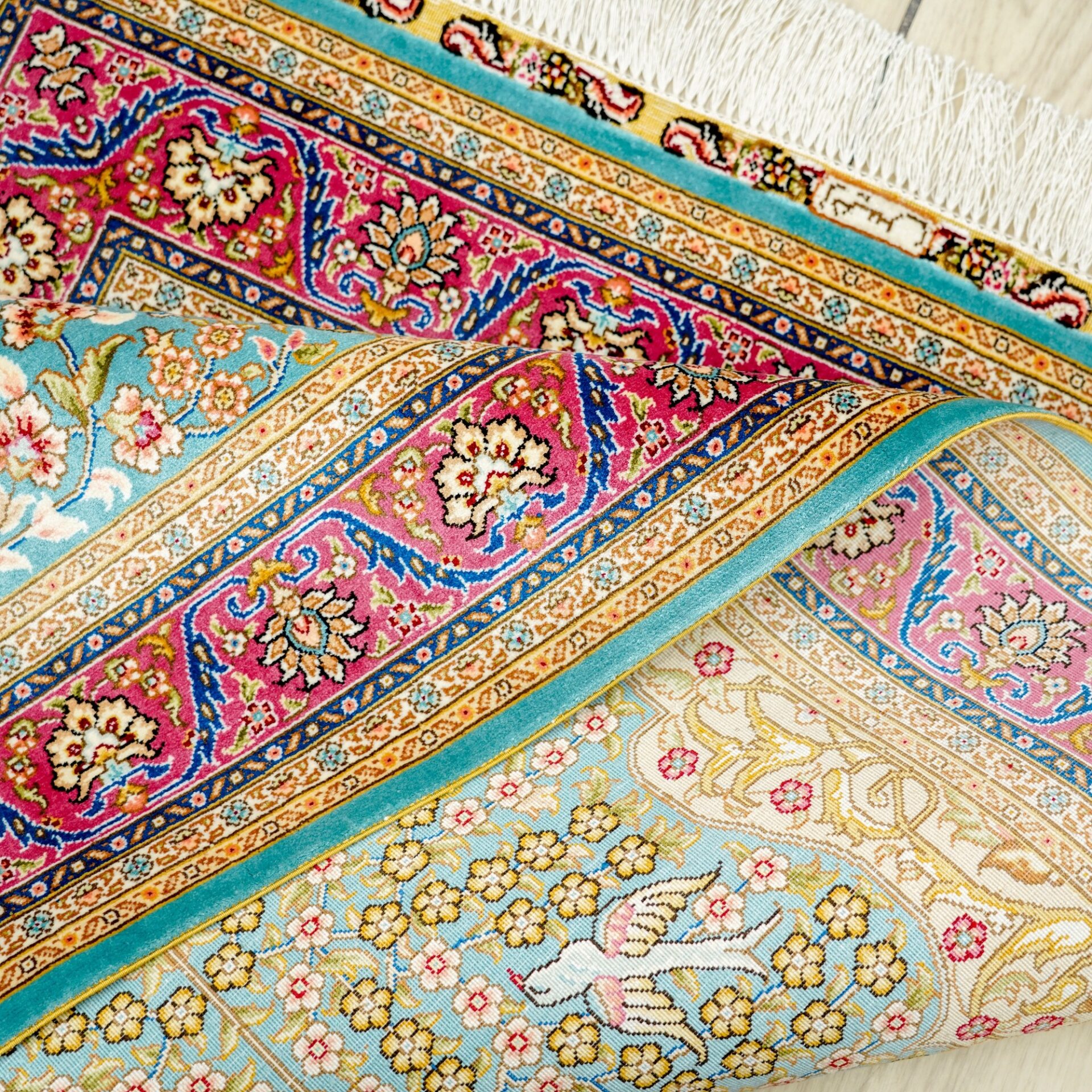
A folded corner makes the edge, pile, and flexibility easier to examine.
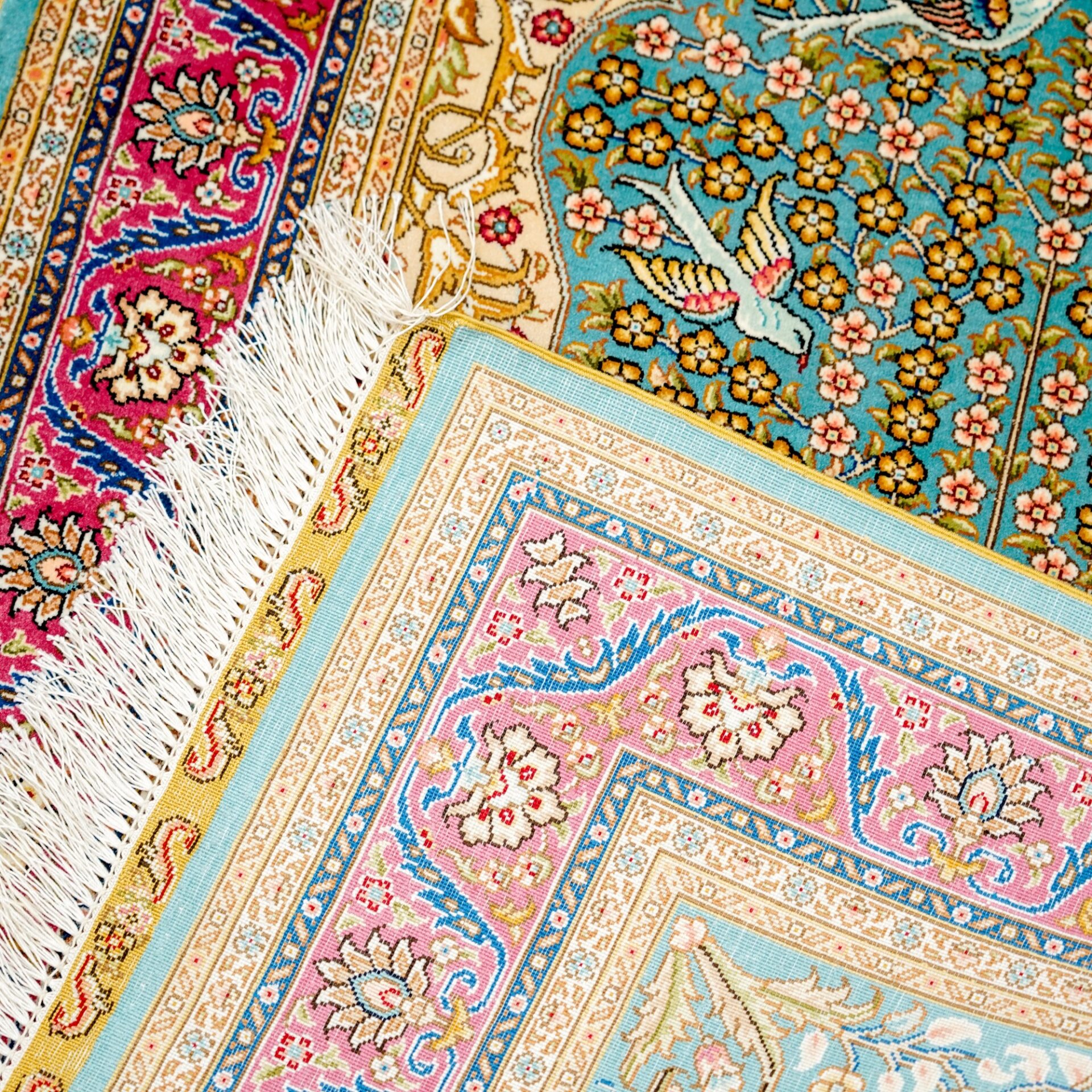
Fringe and end details should be photographed clearly before an online purchase.
5. Surface and pile
View the rug from both directions. Silk pile reflects light differently as you move around it, so the colors may appear lighter from one end and deeper from the other. Ask about stains, low-pile areas, repairs, and color variation.
| Viewed from one end | Viewed from the opposite end |
 |  |
The same silk rug can look deeper or lighter when viewed from opposite directions. This is a normal effect of the pile and light.
6. The room where you will use it
A very fine silk rug may be right for a formal living room, bedroom, or collection. A strong wool rug may be more practical in a busy family area. The best specification is the one that suits the design and your daily life.
Common Knot-Count Mistakes to Avoid
Mistake 1: Comparing different units as if they were the same. 230 lines, 367 KPSI, and about 569,000 knots per square meter can describe roughly the same balanced construction.
Mistake 2: Treating a seller's number as proof. Ask how it was measured and request a ruler photo of the back.
Mistake 3: Assuming higher density guarantees durability. Durability also depends on fiber, pile height, foundation, finishing, care, and where the rug is used.
Mistake 4: Buying for a future profit. A rug's resale value can depend on age, rarity, condition, workshop, provenance, demand, and many other factors. Knot density alone does not guarantee appreciation.
Mistake 5: Ignoring the design. A clear, balanced pattern you enjoy living with matters more than chasing the largest number on a label.
A Simple Buyer Checklist
Before buying, ask the seller these six questions:
1. Is the rug hand-knotted or hand-tufted?
2. What are the pile, warp, and weft materials?
3. Is the density stated in lines, KPSI, or knots per square meter?
4. How was the number measured?
5. Can I see the back with a ruler, plus the edges and fringe?
6. Are there any repairs, stains, worn areas, or color changes?
At YILONG Carpet, we have worked with hand-knotted rugs since 1987. When a customer asks about density, the most helpful answer is not just one number. We can show the actual rug, explain its material and construction, and help you decide whether its design and size fit your room.
Frequently Asked Questions
What is a good knot count for a handmade rug?
There is no universal “good” number. The right density depends on material, design, weaving tradition, and use. Fine pictorial silk rugs generally need more knots than bold geometric wool rugs.
How many KPSI is a 230-line rug?
If the horizontal and vertical counts are balanced, 230 lines is approximately 367 KPSI. Verify the individual rug because the two directions may not be identical.
Is 367 KPSI good for a silk rug?
Approximately 367 KPSI can produce clear, detailed designs in a well-made silk rug. Overall quality still depends on silk quality, weaving consistency, design, finishing, and condition.
Can I count rug knots from the front?
The back is usually easier and more reliable because the pile can hide the structure on the front. Use a ruler and count in both directions.
Do more knots make a rug thicker?
Not necessarily. Fine, high-density rugs often use thinner yarn and may have a shorter pile. Density and thickness describe different things.
Can knot density prove that a rug is handmade?
No. It is one clue, but construction must be examined as a whole. Look at the back, fringe, edges, pattern variation, and how the pile is attached.
Ask Us to Check a Rug With You
If you are comparing two rugs, send us the product links or photos of the front and back. Include the size, room, and the seller's density claim. We will help you translate the numbers into something useful.
Contact Alice at YILONG Carpet or browse our hand-knotted silk rug collection.