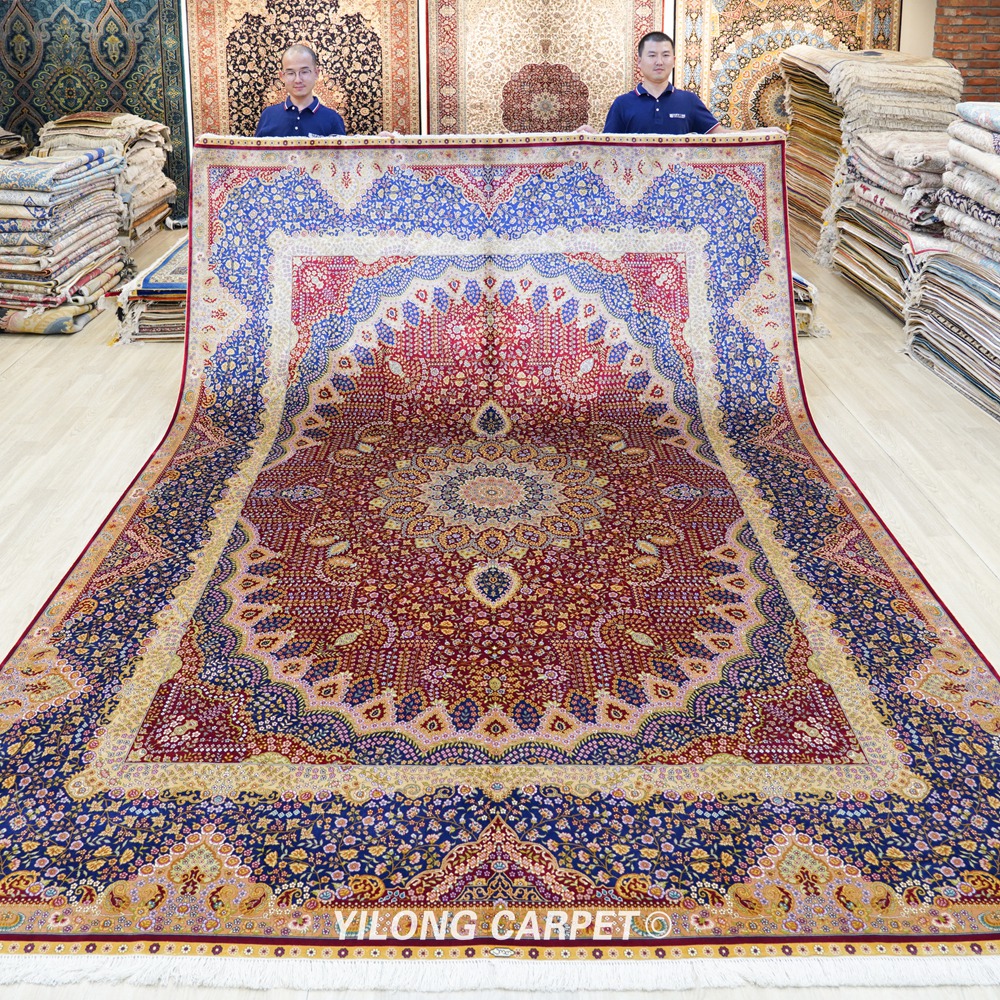
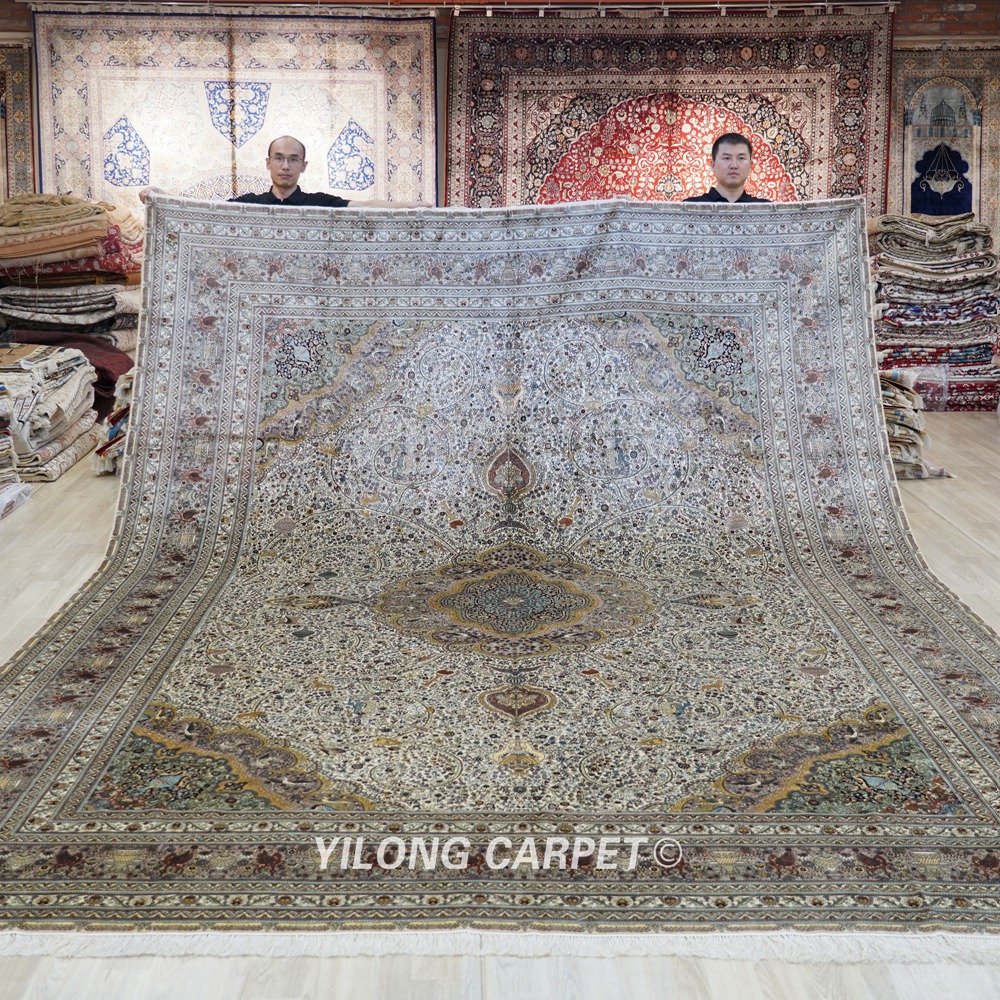
How to Choose a Handmade Silk Rug: 8 Expert Checks Before You Buy – Yilong Carpet Factory
August 14, 2026
SHARE TO:
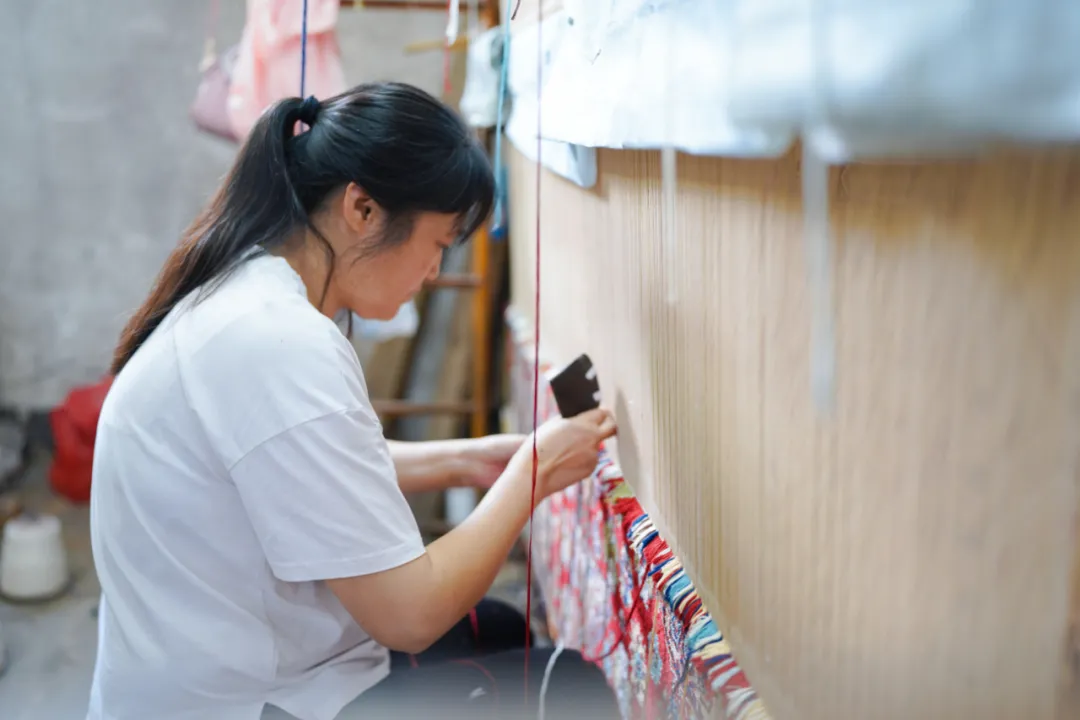
A high-quality handmade silk rug should combine genuine silk, secure hand-tied knots, a clear and balanced design, harmonious color, even finishing and a size that works in your room. Knot density matters because it allows finer detail, but it should never be judged alone. The best rug is the one that brings together good materials, skilled weaving, thoughtful design and reliable provenance.
This guide shows you what to examine on both the front and back of a silk rug before you buy.
Quick buying checklist: Confirm that the rug is hand-knotted, ask what material is used in the pile and foundation, inspect the back, compare knot density, look at pattern clarity and symmetry, check the color from different directions, examine the edges and fringe, and verify the seller's specifications and after-sales service.
1. Confirm That the Rug Is Hand-Knotted
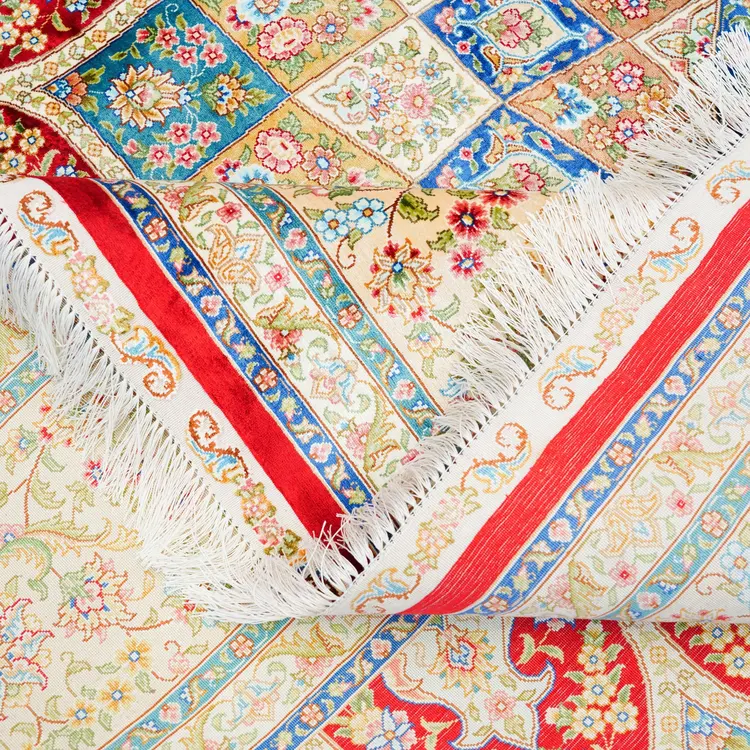
Start by turning the rug over. On a genuine hand-knotted rug, the pattern should be visible on the back because each knot forms part of the design. Small variations may appear because the rug was made by hand, but the structure should look secure and consistent.
The fringe is another useful clue. On a hand-knotted rug, the fringe normally continues from the rug's foundation rather than being sewn on as a decorative trim. Check the side edges as well: they should be firmly wrapped and neatly finished.
Machine-made and hand-tufted rugs can both be attractive, but they use different construction methods. A hand-tufted rug commonly has a backing layer that hides the yarn insertion points, while a hand-knotted rug allows you to inspect the actual knots from the reverse.
What to check:
The design is visible on the back.
The knots are individually distinguishable.
The fringe continues from the foundation.
There is no glued backing hiding the structure.
The sides and ends are secure and evenly finished.
2. Ask Exactly What “Silk” Means
Do not rely on the word silk by itself. Ask whether the pile is made from natural silk and what materials are used for the warp and weft. Also request close-up photographs of the pile, fringe and back.
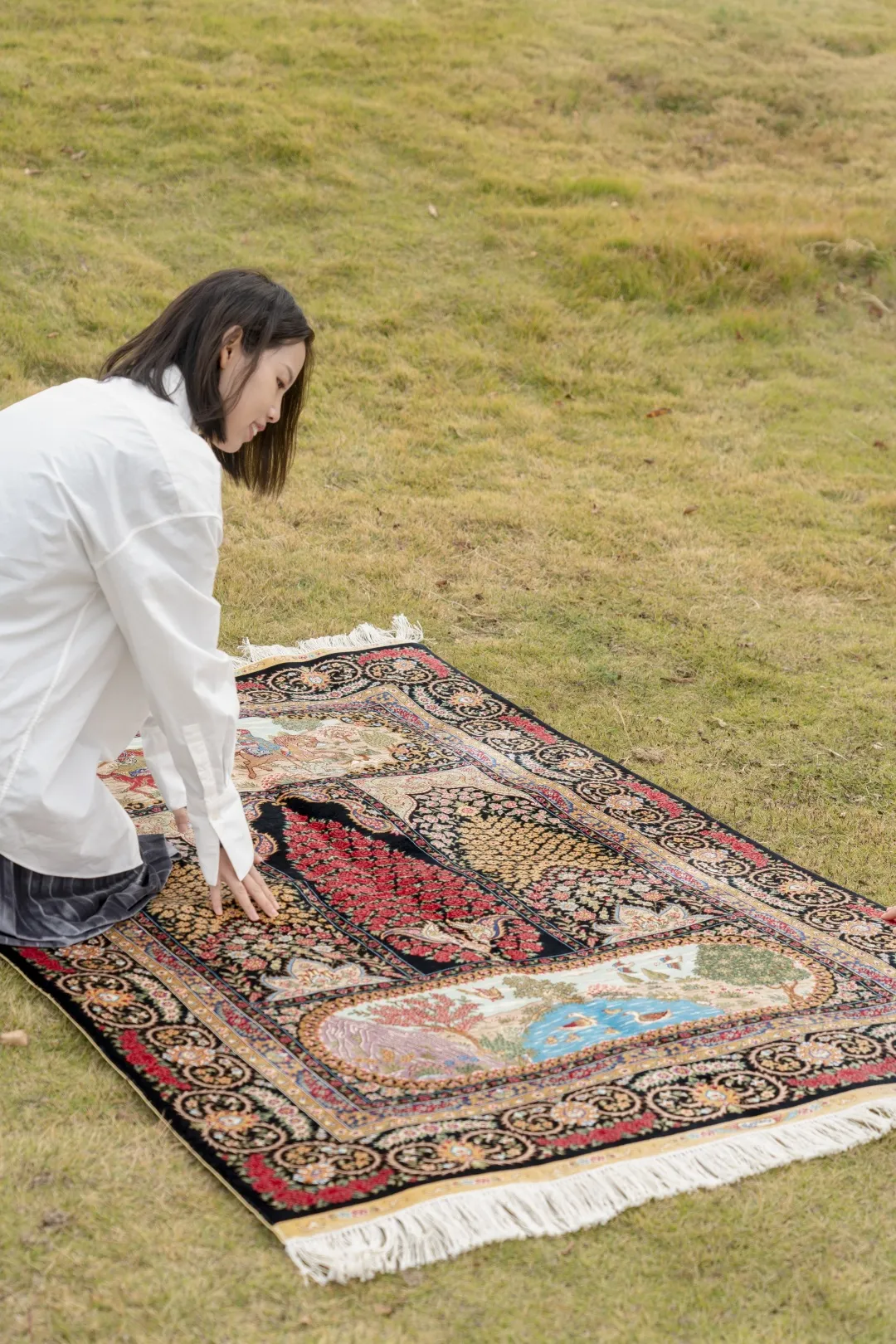
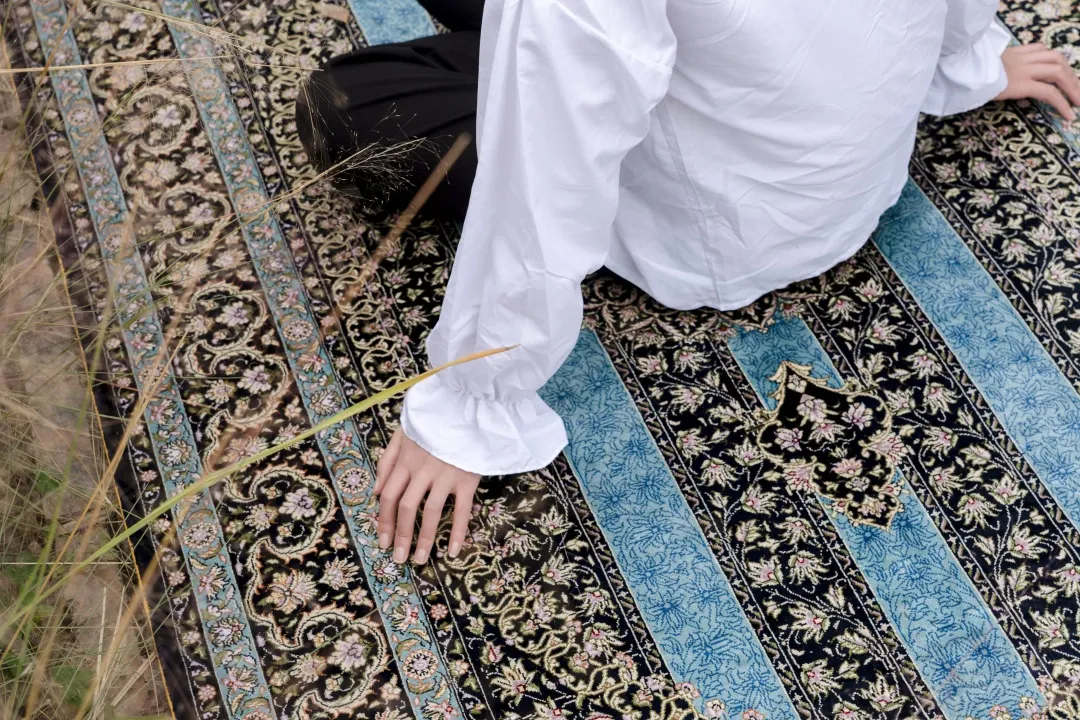
Natural silk is valued for its fine fibers, soft touch and distinctive luster. When viewed from opposite directions, a silk rug may appear lighter or darker because the pile reflects light differently. This directional color change is a normal characteristic of silk, not automatically a defect.
Material quality affects far more than appearance. It influences how finely the yarn can be woven, how clearly curved lines can be rendered and how the finished surface feels under the hand.
Be cautious of vague descriptions such as “silk-like,” “art silk” or “bamboo silk” when your intention is to purchase a pure silk rug. These are different materials and should be identified clearly in the product specification.
3. Understand Knot Density and KPSI
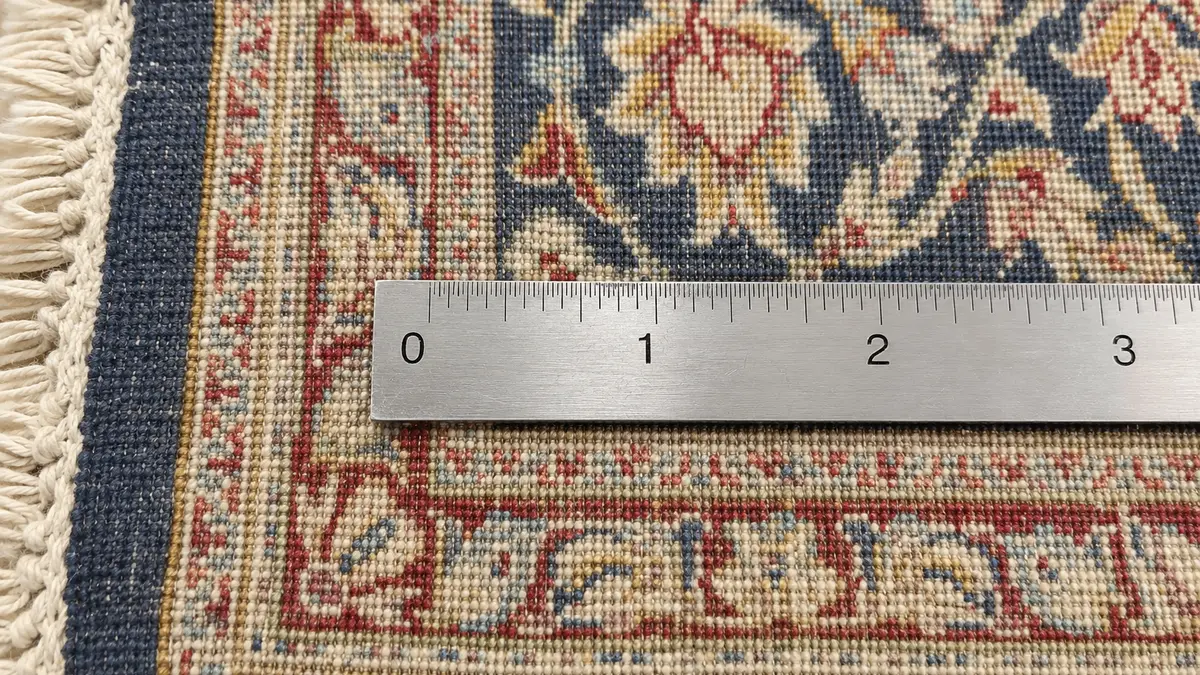
KPSI means knots per square inch. It is one way to describe the density of a hand-knotted rug. In general, a higher knot count can support finer curves, smaller floral elements, clearer outlines and more detailed shading.
Many YILONG handmade silk rugs are woven to a 230-line specification, approximately 367 KPSI when the horizontal and vertical knot counts are balanced. Always confirm the specification for the individual rug, because construction and design can vary.
The Chinese term “line count” describes the number of foundation lines across a given distance. International buyers will usually find KPSI easier to compare. The most reliable check is to examine a measured area on the back and count both directions rather than relying only on a sales label.
However, higher KPSI does not automatically mean a better rug in every respect. A geometric or tribal design may be intentionally woven at a lower density, while a detailed floral medallion benefits from a higher count. Material, knot consistency, design, color and finishing must also be considered.
What the density affects
What to look for
Curved lines
Smooth outlines without obvious stair-stepping
Small motifs
Petals and leaves remain distinct
Shading
Gradual transitions rather than abrupt blocks
Back structure
Knots are compact and reasonably consistent
Overall value
Density is supported by good silk, design and finishing
4. Examine Pattern Clarity, Balance and Symmetry
A hand-knotted design is built knot by knot, much like an image is built from pixels. Higher density gives the weaver more points with which to create detail, but skill and planning determine whether that detail becomes beautiful.
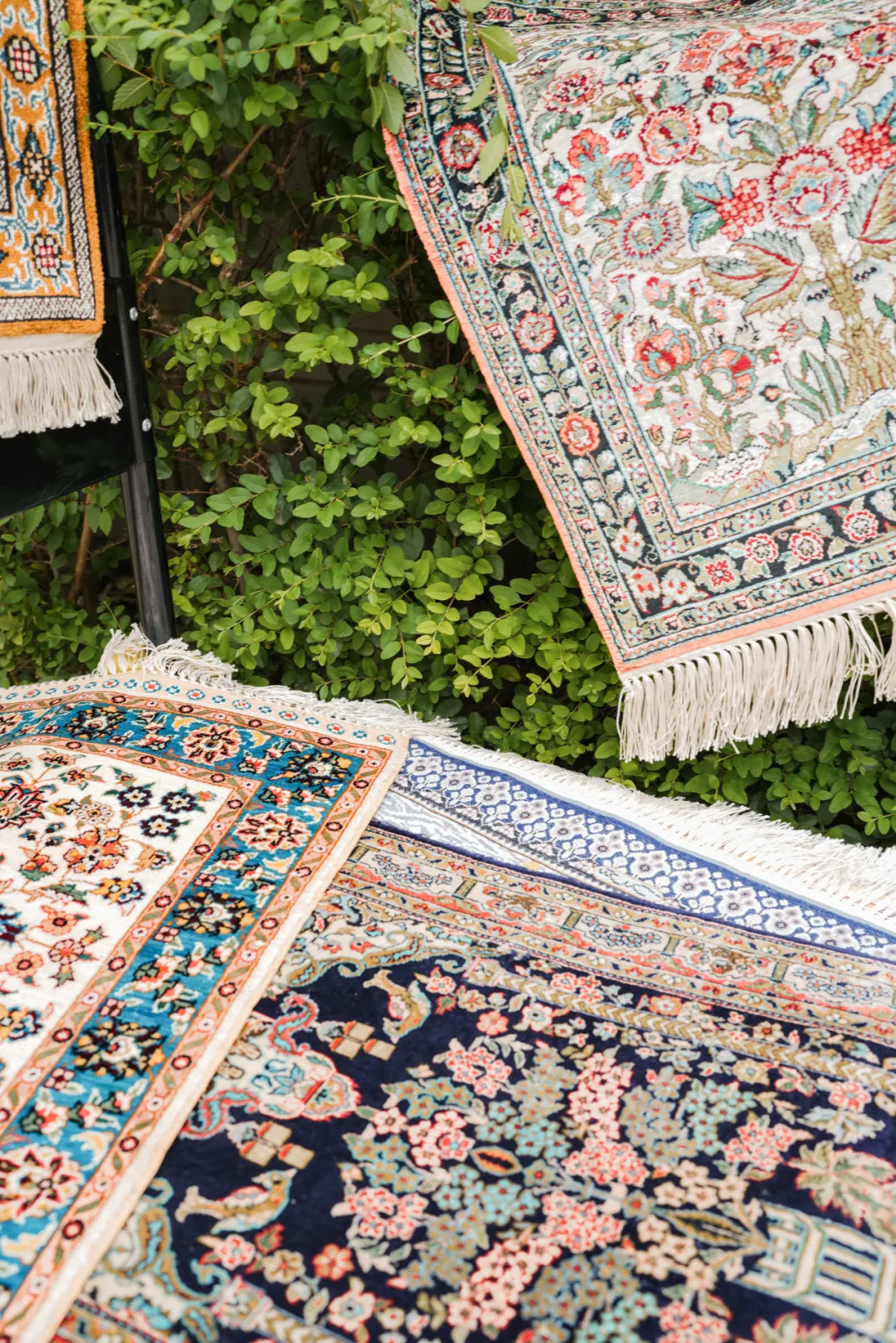
Stand back and look at the rug as a complete composition. The central medallion, field, corners and borders should feel balanced. On a symmetrical design, compare the left and right sides as well as the top and bottom. Flowers of the same type should be reasonably consistent, curves should flow naturally and the borders should not appear squeezed or distorted.
Then move closer. Fine outlines should be legible, color boundaries should be controlled and small motifs should not merge into one another. Minor variations are part of handmade character, but obvious distortion, missing elements or uneven spacing deserve closer inspection.
Design preference remains personal. A technically complex rug is not automatically the right rug for your home. Choose a composition that still appeals to you after you have viewed it both from a distance and close up.
5. View the Colors From More Than One Direction
Never judge a silk rug from a single photograph. Silk reflects light along the direction of the pile, so the same rug can look bright and luminous from one end and deeper from the other. Ask for photographs or video taken from both directions and, if possible, in natural indoor light.
Good color does not simply mean “bright.” Look for a palette that feels balanced across the field, border and central motifs. The colors should support the design rather than make individual elements difficult to read.
Ask the seller about the dyeing process, but avoid judging a rug only by whether the description says “natural” or “chemical” dyes. Color stability, yarn preparation, dye control and finishing all affect the final result. A professionally produced rug should have an even, intentional appearance appropriate to its design.
6. Feel the Surface and Inspect the Finishing
Run a clean hand gently across the pile in both directions. The surface should feel fine and even, without large areas of unexpected roughness. A few loose surface fibers can occur on a new textile, but active shedding, weak yarn or visible damage should be investigated.
Inspect the rug in good light and check:
Whether the pile height is even.
Whether carved or relief details are cleanly finished, if the design uses them.
Whether the rug lies flat without severe rippling.
Whether the corners are reasonably square.
Whether the side bindings are firm.
Whether the fringe and ends show damage or repair.
Handmade does not mean careless. Small irregularities can reveal the human process, but the finished rug should still show control and professional workmanship.
7. Choose the Size Before Falling in Love With the Design
A beautiful rug will not feel right if it is too small for the room. Measure the intended area and mark the rug dimensions on the floor with painter's tape before ordering.
Common rug size
Typical use
4 x 6 ft
Entry, bedside area or small sitting space
6 x 9 ft
Compact living room, bedroom or study
8 x 10 ft
Standard living room or under a queen/king bed arrangement
9 x 12 ft
Large living room or dining room
10 x 14 ft
Spacious living room, villa or formal dining area
12 x 15 ft and larger
Oversized rooms, luxury homes and custom spaces
For living rooms, decide whether all furniture legs, only the front legs or none of the legs will sit on the rug. For dining rooms, leave enough rug around the table for chairs to remain on the rug when pulled out. Room layout matters more than the size label alone.
A genuine hand-knotted silk rug requires skilled labor and substantial production time. Price may be influenced by size, silk quality, knot density, complexity of design, number of colors, finishing and the condition or age of the piece.
A very low price paired with an unusually high specification should prompt questions, but a high price alone is not proof of quality. Ask the seller for a written description that includes:
Exact dimensions.
Pile and foundation materials.
Construction method.
Knot-density or line-count specification.
Country or region of production.
Clear front, back and detail images.
Availability and dispatch time.
Shipping, duties, return and after-sales terms.
Reliable provenance makes comparison easier. It also gives you a record of what you purchased.
A Simple Final Inspection Checklist
Before ordering, answer these questions:
Is the rug genuinely hand-knotted?
Is the pile natural silk, and is the material clearly documented?
Can I see sharp photographs of the front, back, fringe and edges?
Does the knot density suit the complexity of the design?
Are the composition, borders and repeated motifs balanced?
Have I viewed the color from both pile directions?
Is the finishing neat and structurally secure?
Will the exact dimensions work with my furniture layout?
Are shipping, duties and return terms clear?
Is the supplier able to answer technical questions about the individual rug?
Why Buyers Choose YILONG Handmade Silk Rugs
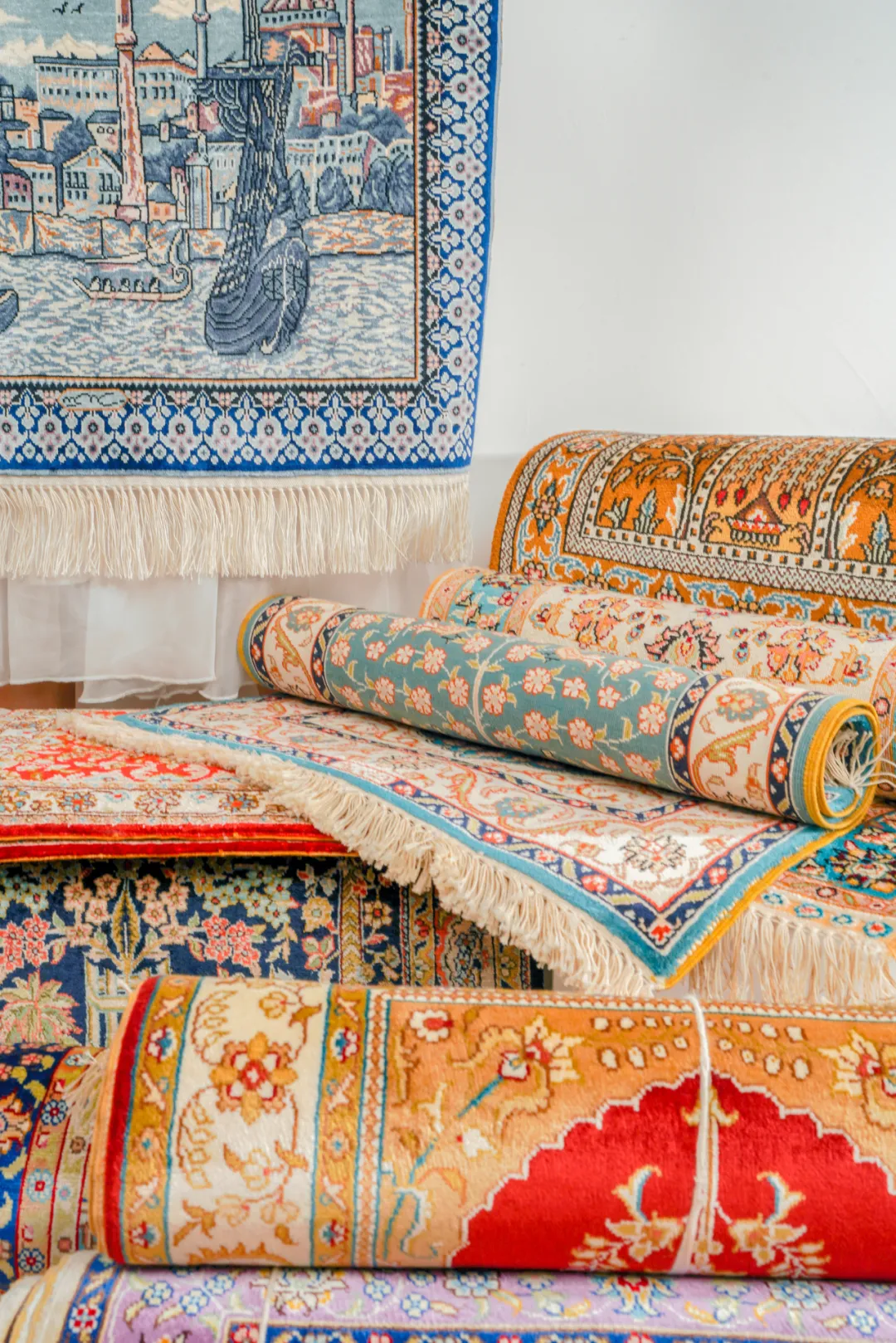
Established in 1987, YILONG Carpet specializes in hand-knotted silk and wool rugs. Our network includes approximately 4,000 skilled weavers, and our rugs have reached customers in 87 countries. We maintain a large ready-stock collection in common sizes from small accent rugs to 12 x 18 ft and larger statement pieces.
For each rug, our team can provide detailed photographs, video, dimensions and available specifications before purchase. International customers can also ask about door-to-door delivery, customs clearance and applicable import-duty arrangements for their destination.
Turn the rug over. A hand-knotted rug normally shows the design and individual knots on the reverse, and its fringe continues from the foundation rather than being attached as decorative trim. Request clear back and fringe photographs when buying online.
Is a higher KPSI always better?
Higher KPSI usually allows finer detail, especially in floral and curvilinear designs. It is not the only measure of quality. Silk quality, knot consistency, composition, color and finishing should be evaluated together, and some geometric designs do not require extremely high density.
What is the knot density of a 230-line silk rug?
A balanced 230-line construction is approximately 367 knots per square inch. Because specifications can vary, confirm the knot count or line count of the individual rug with the seller.
Why does a silk rug look different from opposite ends?
The silk pile reflects light differently depending on its direction. This can make the rug appear lighter from one end and deeper from the other. Ask for a two-direction video before choosing the color.
What size silk rug should I choose for a large living room?
Many large living rooms work well with 9 x 12 ft or 10 x 14 ft rugs, while expansive rooms may require 12 x 15 ft, 12 x 18 ft or a custom size. Measure the furniture layout rather than relying only on room dimensions.
Can YILONG ship handmade silk rugs internationally?
Yes. YILONG serves customers internationally. Delivery method, timing, customs clearance and duty arrangements should be confirmed for the specific destination and order before purchase.
Written by Alice Zheng | Reviewed by the YILONG Carpet Production Team