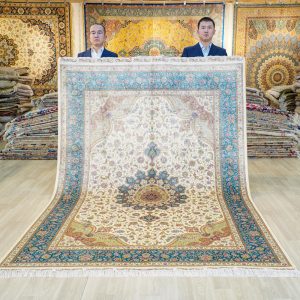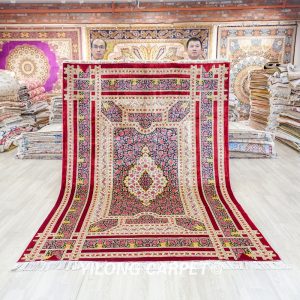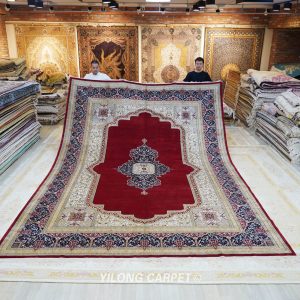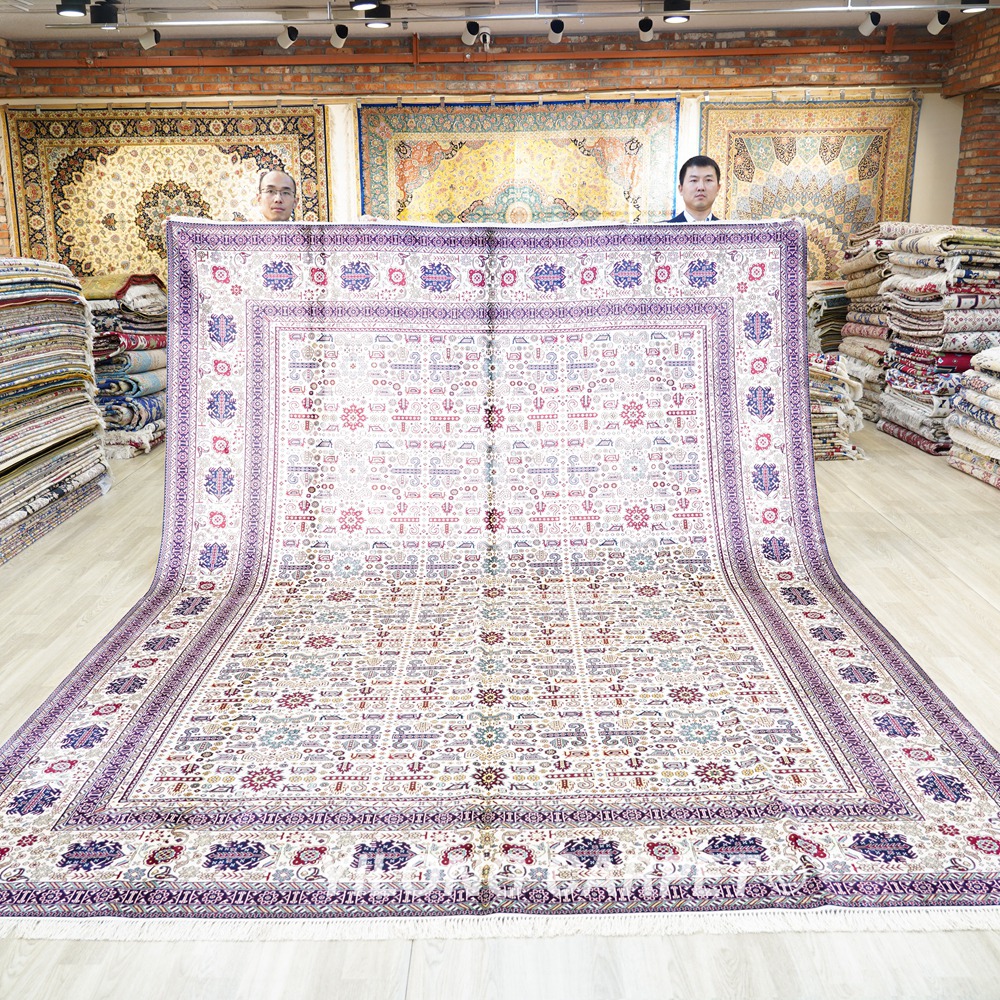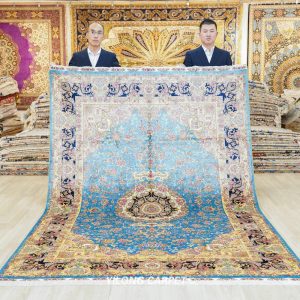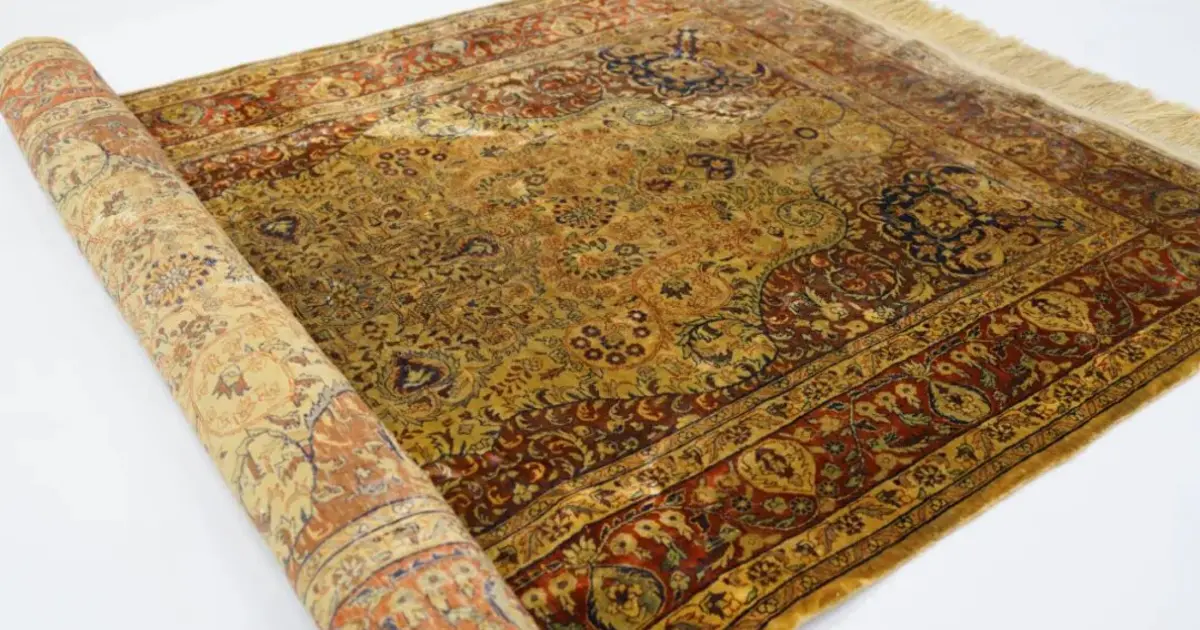
A handmade silk rug should be judged as a whole—not by one number.
What makes one handmade silk rug better than another? The short answer is: look at the silk, knots, pattern, colors, shape, and finishing together. Knot count is important because it helps the weaver create finer details. But a high number alone does not make a good rug. The rug should also lie well, feel smooth, show a clear pattern, and be carefully finished.
The seven factors at a glance
- Silk quality: clean, consistent fibers with a natural luster and pleasant hand.
- Knotting and density: genuine hand-knotting, with density suited to the design rather than treated as a single quality score.
- Design clarity: smooth curves, readable motifs, balanced borders, and accurate proportions.
- Color harmony: deliberate color relationships and controlled shading, not simply the largest possible number of colors.
- Structural integrity: straight sides, secure ends, a stable foundation, and no obvious weak areas.
- Finishing: an even pile, careful washing, clean fringe work, and precise final detailing.
- Overall execution and condition: all parts of the rug should work together, whether the piece is new, vintage, or antique.
1. Silk quality: the foundation of look and feel
Silk is fine, strong, and soft. It also reflects light in a special way. When you walk around a good silk rug, the colors may look lighter from one direction and deeper from the other. This is normal for silk pile.
Before weaving starts, the silk still needs a lot of preparation. The cocoons are sorted and softened, and the fine filaments are reeled into silk. The threads are then prepared and dyed for weaving. Clean and even silk yarn makes it easier to weave a smooth surface and clear details.
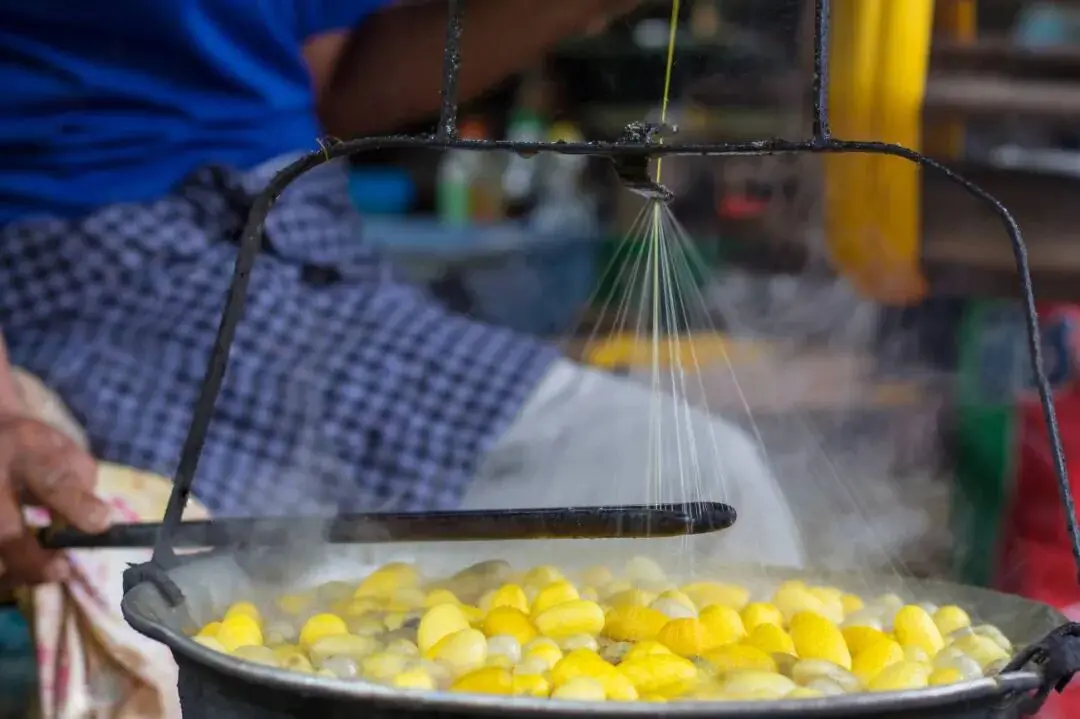
Silk rug quality starts with the selection and preparation of the silk fibers.
When evaluating a rug, do not rely on shine alone. Some artificial fibers can look very glossy. Ask the seller to confirm the pile and foundation materials in writing, examine close-up photos, and request a live video if you cannot inspect the rug in person.
Buyer check: Look for a refined, changing luster rather than a harsh, plastic-like glare. The pile should feel smooth, while the pattern and colors should remain clear under normal room light.
2. Hand-knotting and knot density: important, but not the whole answer
In a genuine hand-knotted rug, individual pile knots are tied around the foundation threads. This construction differs from machine-made, hand-tufted, and printed rugs. The back should reveal the design rather than a fabric or latex backing that hides the structure.
Knot density is often expressed as KPSI, or knots per square inch. In some Chinese workshops, fineness may also be described by a “line count,” referring to the number of foundation units across one linear foot. If the construction is balanced, a 230-line example works out to roughly 367 KPSI. That conversion is an illustration, not a universal rule: actual horizontal and vertical counts should be checked on the individual rug.
Higher density can allow smaller motifs, smoother curves, and more subtle facial or floral detail. But density alone cannot guarantee better silk, better dyes, accurate proportions, secure edges, or careful finishing. A technically dense rug with poor drawing or uneven structure is not automatically superior to a slightly lower-density rug that is beautifully executed.
Buyer check: Request a sharp, well-lit photograph of the back with a ruler showing a measured one-inch area. Count both horizontal and vertical knots, then multiply the two figures. Measure in more than one area because handmade work naturally varies slightly.
For a more detailed inspection method, read our guide to choosing a handmade silk rug.
3. Design clarity and proportion
Fine knotting is useful when it makes the design clearer. Look at the curved vines, flower petals, medallion, figures, and small borders. On a well-made rug, these details should be easy to see. They should not look rough or blurred.
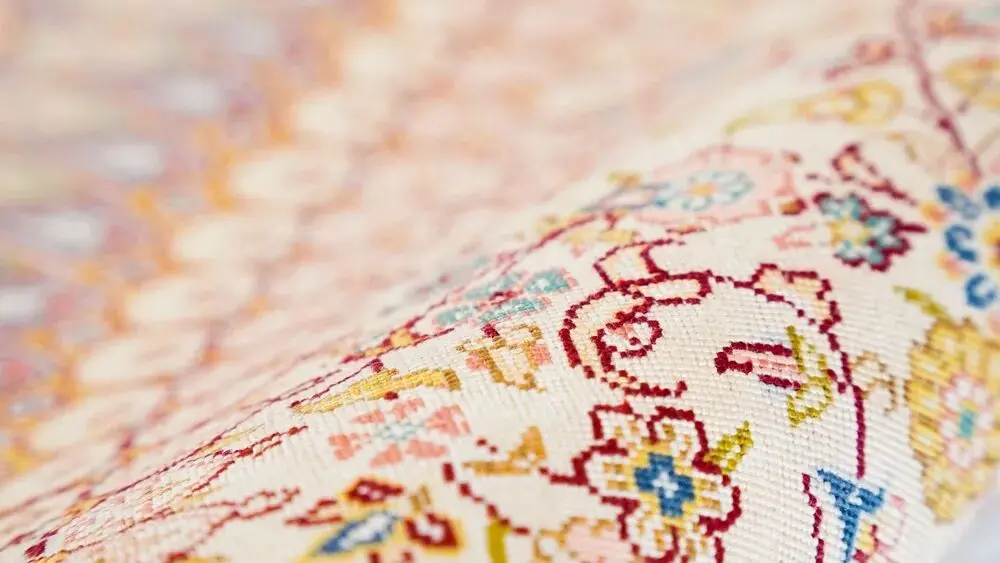
Fine knots help create smooth curves and small floral details when the pattern is carefully woven.
Symmetry matters when the design is intended to be symmetrical, but handmade character should not be confused with careless distortion. Compare the left and right borders, the placement of corner elements, and the way the central field aligns with the ends. Slight variations can show the hand of the weaver; obvious leaning, squeezed motifs, or a noticeably off-center medallion require closer inspection.
Scale also changes the technical challenge. A complex design on a small rug may demand especially fine planning, while an oversized rug must maintain proportion and structural consistency across a much larger surface. Buyers furnishing villas or large living rooms can browse YILONG’s oversized handmade silk rugs to compare how patterns read at room scale.
4. Color harmony and nuanced shading
Using more colors does not automatically make a rug better. Extra shades can make flowers, landscapes, and figures look more natural, but the colors still need to work well together. Look for smooth changes between similar shades and make sure the whole rug still feels balanced.
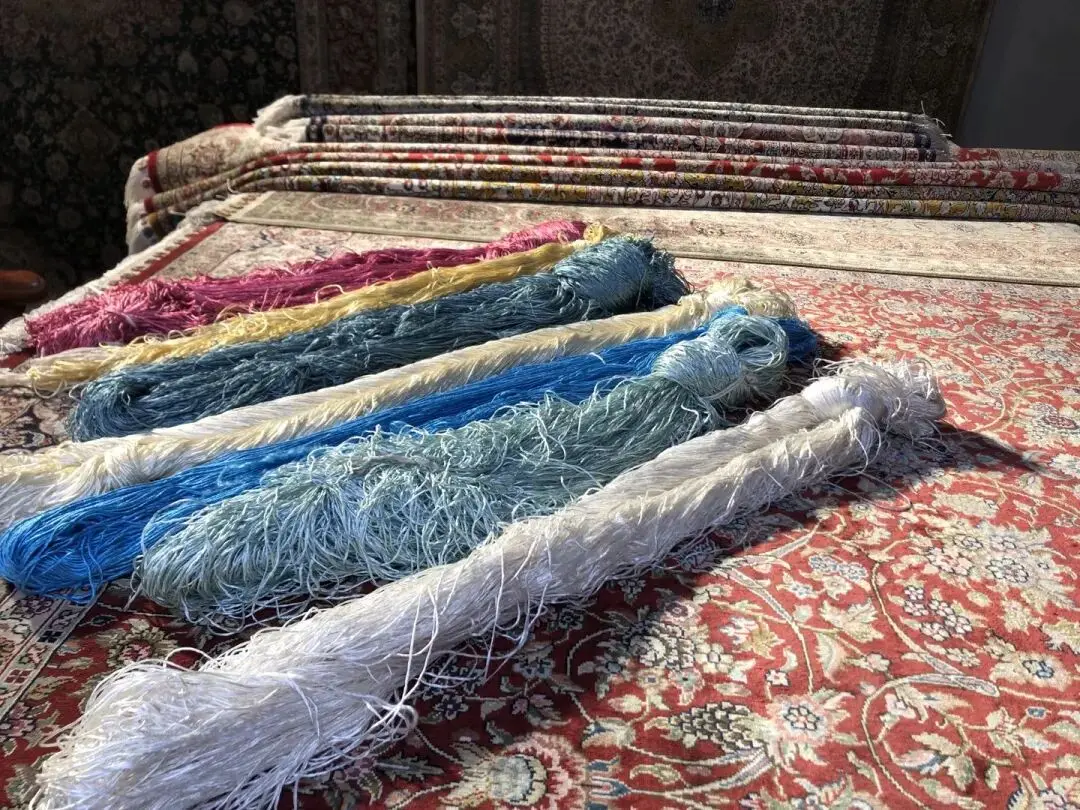
Different shades of silk yarn help the weaver create clear patterns and natural color changes.
Silk’s directional luster makes color evaluation especially important. View the rug from both ends and under daylight as well as warm indoor lighting. Ask whether product photographs have been heavily edited, and request a short video that moves across the pile. This reveals color movement more accurately than a single still image.
No responsible seller should promise that every dye or every rug will “never fade.” Color stability depends on dye selection, dyeing, washing, light exposure, cleaning, and use. Protect silk rugs from prolonged strong sunlight and follow professional cleaning guidance.
5. Structural integrity: inspect the rug as an object, not only an image
A silk rug must be visually beautiful and structurally sound. Lay it flat and inspect the full outline. The sides should be reasonably straight, the corners should sit naturally, and the rug should not show severe rippling, puckering, or twisting.
Check these areas closely:
- Back: The design should be visible and the weave should look reasonably consistent.
- Side cords: Edges should be secure without open or unraveling sections.
- Ends and fringe: Fringe is normally part of the foundation, not a decorative strip sewn on afterward.
- Field: Look for holes, splits, brittle areas, stains, repairs, or moth damage, especially on older rugs.
- Shape: Measure length and width at more than one point if exact placement matters.
Small variations are normal in handmade textiles. The goal is not mechanical perfection; it is stable construction, controlled execution, and honest disclosure of any irregularity.
6. Finishing: where months of weaving become a finished surface
Finishing starts after the weaving is complete. The pile may be leveled and carefully clipped, and the rug may then be washed, stretched, dried, and inspected. These final steps make a big difference to how the pattern looks and how the surface feels.
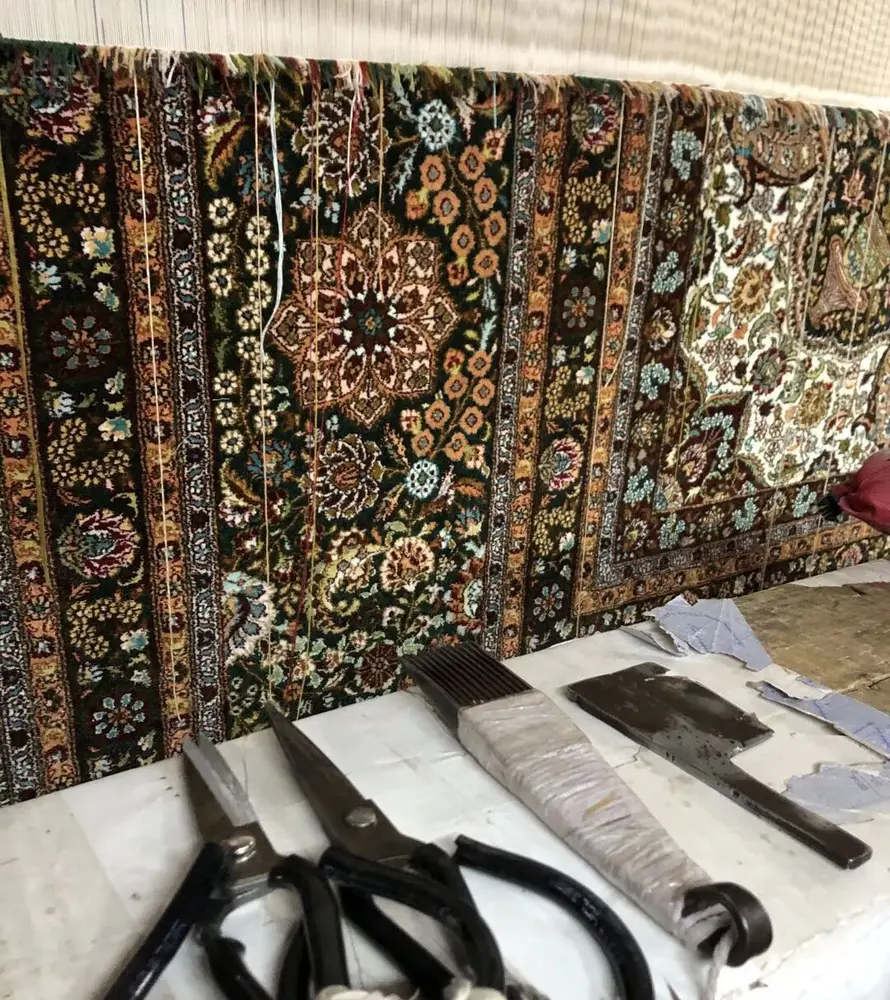
Careful clipping and finishing help reveal the pattern after weaving is complete.
Pile height should suit the design. If it is left too high, fine motifs can look blurred. If it is cut unevenly or too aggressively, areas may appear patchy and the pile can be weakened. Detailed relief carving may be used on certain styles, but it should be intentional and consistent rather than used to disguise irregular weaving.
Examine the surface in raking light, which makes height changes easier to see. Also inspect the edges and fringe after washing and stretching. Good finishing should improve clarity without making the rug feel unnaturally stiff.
7. Overall execution, condition, and suitability
Do not judge a rug from one close-up photo or one technical number. Think about the whole rug and the room where you will use it. A formal living room may suit a very detailed silk rug. A busy entrance or family room may need a different material or a more practical design. Silk is beautiful, but it is not the best choice for every space.
For new rugs, compare the stated materials, size, close-up details, back, edges, fringe, and full-field shape. For vintage or antique rugs, condition and restoration become equally important. Age alone does not guarantee quality or financial value, and a handmade rug should not be presented as a guaranteed investment.
A practical quality comparison table
| Factor | Strong evidence | Warning sign |
|---|---|---|
| Material | Written material specification, close-up pile video, consistent natural luster | Vague “silky” wording or shine used as the only proof |
| Construction | Clear back photo, visible individual knots, no hidden latex backing | Back concealed or construction type not disclosed |
| Density | Measured horizontal and vertical knot counts | A large KPSI claim with no measurement image |
| Design | Clear curves, balanced borders, readable small motifs | Blurred outlines, squeezed motifs, major unintended distortion |
| Color | Balanced palette viewed from both pile directions | Heavy photo editing or abrupt, uncontrolled color transitions |
| Structure | Stable shape, secure sides and ends | Severe rippling, open edges, weak or brittle areas |
| Finishing | Even pile, clean details, careful washing and stretching | Patchy pile, stiff residue, damaged fringe or rough clipping |
Final checklist before buying online
Before paying for a handmade silk rug, ask for:
- The exact finished size in both feet and centimeters.
- A written statement of the pile and foundation materials.
- A full front photograph in neutral light.
- A full back photograph.
- Close-ups of the pile, knots, edges, and fringe.
- A ruler photograph if knot density is part of the price comparison.
- A live video showing the rug from both pile directions.
- Disclosure of repairs, stains, shape variation, or other condition issues.
- Confirmation of shipping, customs clearance, duties, and return terms for your destination and order.
Why factory evidence matters
YILONG Carpet has made hand-knotted rugs since 1987. We work with skilled weavers and keep a large collection of rugs in stock. This gives customers the chance to compare different sizes, patterns, colors, and levels of detail before choosing.
For remote buyers, we can provide live video and detailed images so you can examine color movement, pile, back, fringe, and overall shape before making a decision. Learn more about our hand-knotted rug experience or browse the current handmade silk rug collection.
Frequently asked questions
Does a higher knot count always mean a better silk rug?
No. Higher knot density can support finer detail, but total quality also depends on silk, design accuracy, color, structure, finishing, and condition. Compare the whole rug, not one number.
What does KPSI mean?
KPSI means knots per square inch. Count the horizontal knots in one inch and multiply by the vertical knots in one inch. Use a clear back photo and verify more than one area.
How can I tell whether a silk rug is hand-knotted?
Inspect the back. A hand-knotted rug normally shows the pattern and individual knots without a fabric or latex layer hiding the structure. Also check that the fringe continues from the foundation rather than being sewn on.
Is natural silk shine proof of quality?
No. Natural luster is desirable, but shine alone does not prove fiber content or workmanship. Confirm materials and examine the weave, design, structure, and finishing.
Are small irregularities defects?
Not necessarily. Slight variation is normal in handmade work. Major distortion, unstable edges, open areas, or undisclosed damage are more significant than minor differences that do not affect structure or design.
Is a handmade silk rug a guaranteed investment?
No. Craftsmanship, rarity, provenance, age, and condition may influence desirability, but resale value is never guaranteed. Buy primarily for verified quality, beauty, and suitability for your space.
What should I request when buying a silk rug online?
Ask for material specifications, exact dimensions, full front and back images, knot and edge close-ups, a live video, condition disclosure, and destination-specific shipping and return terms.
Find the right rug for your space
Explore YILONG’s ready-stock handmade silk rugs or contact Alice and the YILONG team for close-up photos, live video, size guidance, and order-specific delivery information.