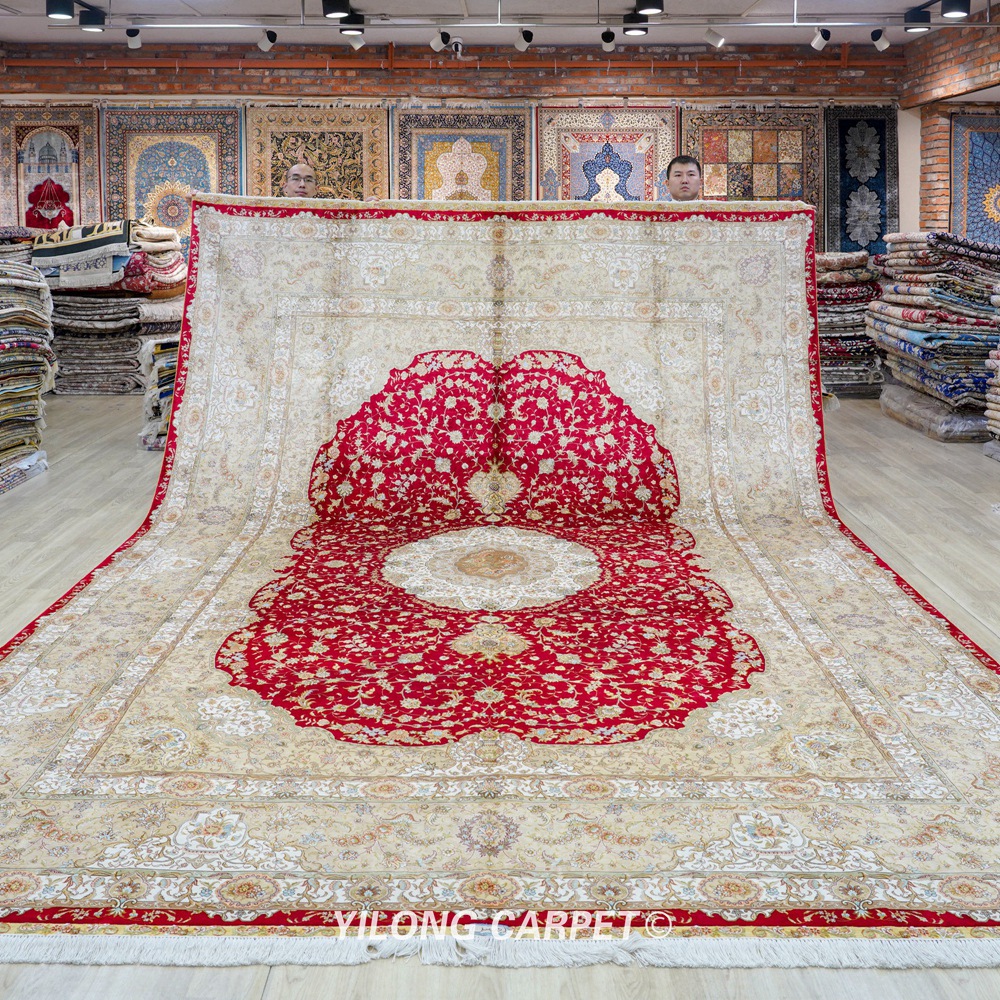
Some civilizations remain in temples and domes; others are hidden in bronze, porcelain, or manuscripts. But Persia, Turkey, and China have a different way of recording their lives — they weave their aesthetics, beliefs, and ways of living, thread by thread, into carpets.
A rug, then, has never been “just a rug.” It can trace the paths of nomadic tribes, reflect the order of imperial courts, carry religious and mythological meanings, and quietly reveal a culture’s vision of how the world should be seen.
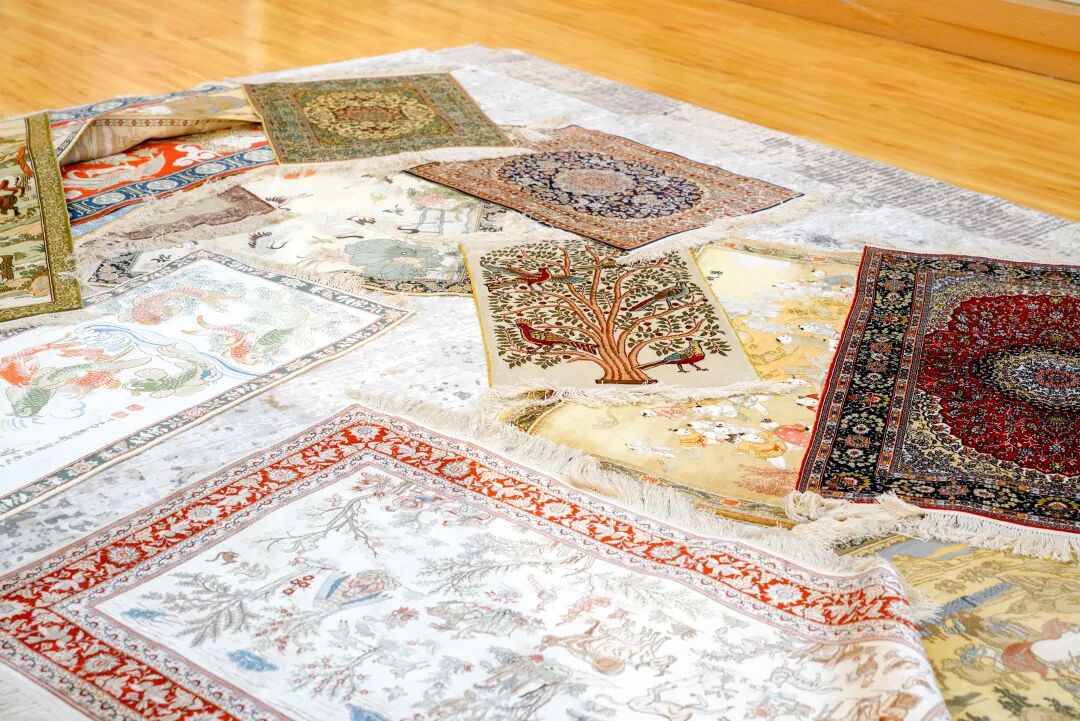
When many people encounter a handmade rug for the first time, they feel something subtle. It isn’t perfectly uniform like a factory-made item. Lines may shift slightly, colors shift in tone with natural dyes and light, and patterns might show small, visible differences. But it is precisely these “imperfections” that give the rug warmth. Machines replicate; humans leave traces.
At its core, a handmade rug is a civilization woven in miniature. It carries the climate, faith, trade, migrations, wars, and aesthetic evolutions of its people. Many now-lost languages, symbols, and ways of life survive in the threads of antique carpets. Few objects in human history are both walked upon and displayed in museums — yet rugs do both.
01 | Persian Rugs: Weaving the “Garden of Paradise” into Earth
If any textile represents an empire’s aesthetic in its entirety, it’s likely the Persian rug. Its fascination isn’t just in complexity; it is the way it transforms order into a near-religious form of beauty.
Persian civilization grew between highlands and deserts. To the ancients, gardens weren’t merely landscapes — they were spiritual havens. Water meant life, trees meant shelter, and a garden was humankind’s vision of eternity in a harsh, arid land. Persian artisans wove gardens into rugs: life trees, vines, pomegranates, streams, birds, and perfectly balanced central designs. Every ornate pattern tells the same story again and again: how humans create paradise in the desert.
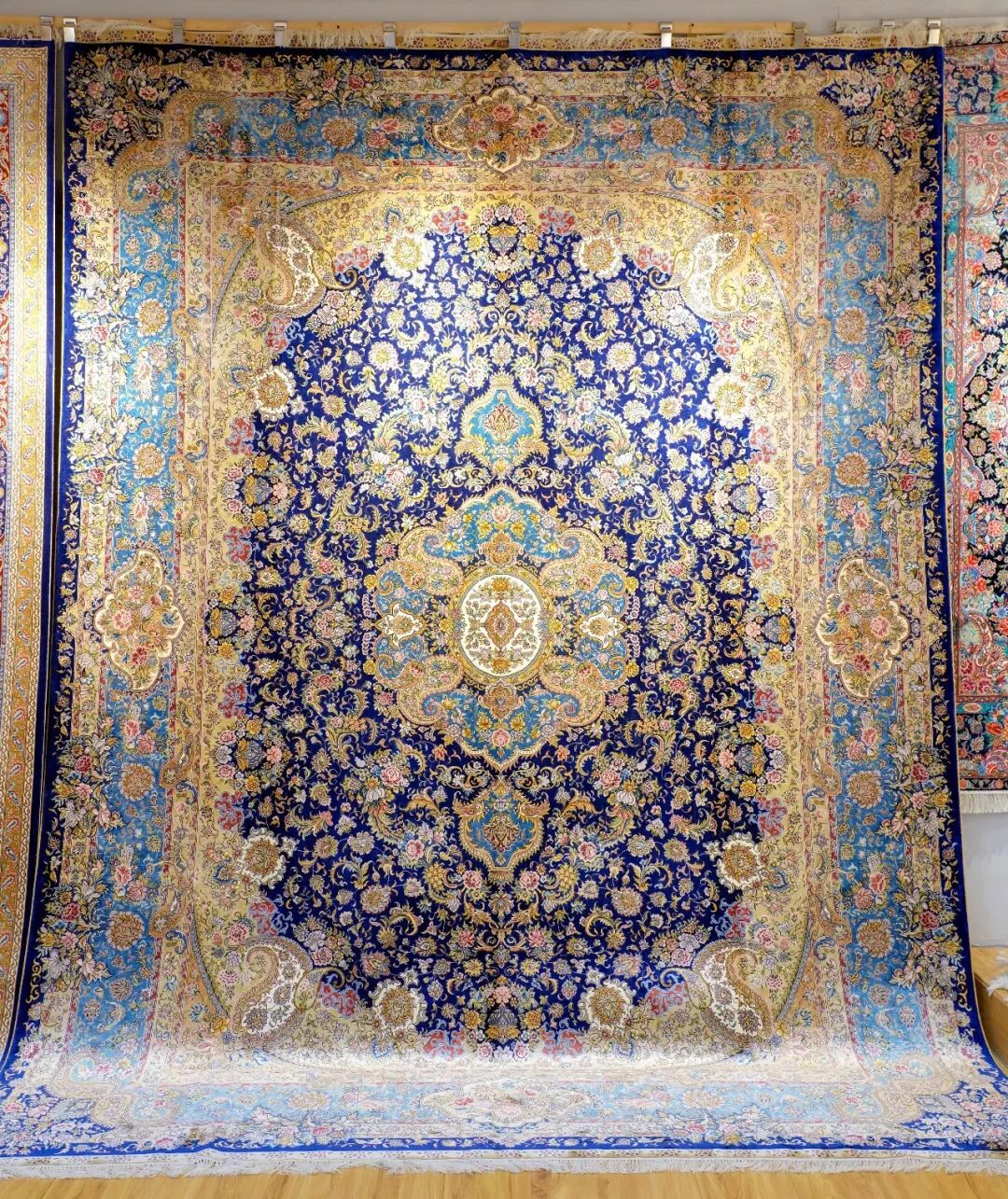
The aesthetic conveys a classical sense of order, like Persian domes or Islamic geometric art. Everything must balance, cycle, and grow. Some old workshops even deliberately left tiny imperfections, for absolute perfection belongs only to God. Mature Persian rugs are never merely “busy” — they are carefully controlled opulence. Deep reds, navy blues, warm ochres, ivory — dyed naturally and mellowed with age — create a texture like old oil paintings. Over time, colors soften, like they’ve been gently brushed by history.
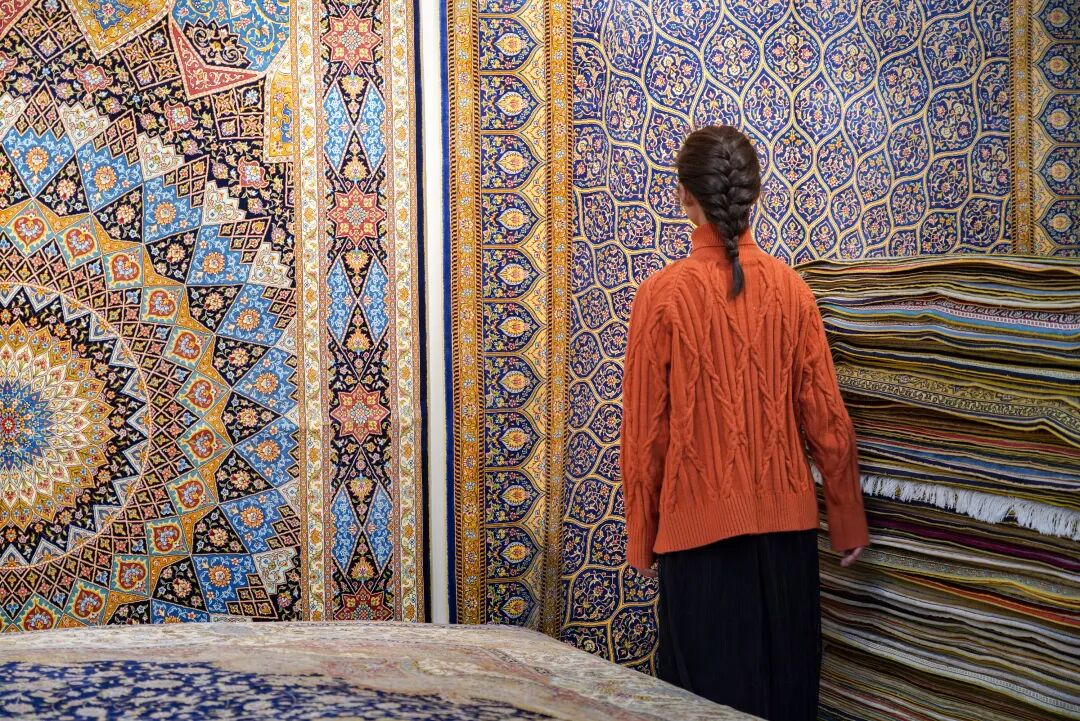
Antique Persian rugs captivate not because they are new, but because they are “aged” — not worn out, but enriched by the patina of time. Many European aristocratic families still collect them, for they transcend mere decor; they become symbols of cultural identity. When a rug passes through generations, it approaches the status of art.
02 | Turkish Rugs: A Language of Totems
If Persian rugs belong to palaces, Turkish rugs belong to the open steppe. They are freer, more primal, and closer to life itself.
Many traditional Turkish rugs come from nomadic tribes. A rug was not only decoration, but also a tent, a bed, a partition, a heater, and a symbol of identity. Wherever the tribe rested, that became home. Turkish rugs carry this “mobile civilization” spirit. Unlike courtly art, they preserve raw, vivid, sometimes wild expressions, particularly geometric motifs.
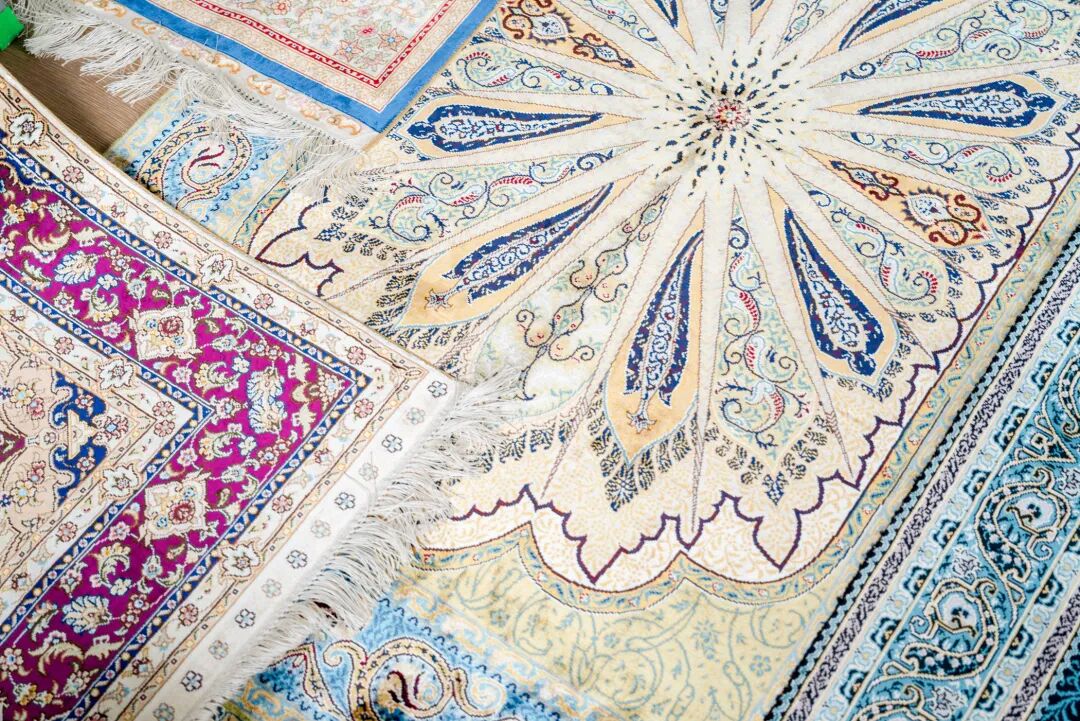
At first glance, these designs may seem cryptic or abstract. Yet they were once a complete language of women. In many Anatolian tribes, women wove the rugs. Before marriage, a girl might create one final rug, embedding her emotions, hopes, and destiny into its patterns. Diamonds represented protection, pomegranates abundance, hooked motifs love and marriage, and endless borders family continuity. Some symbols even encoded longing, childbirth, parting, and blessings. Rugs thus became emotional texts rather than mere craft.
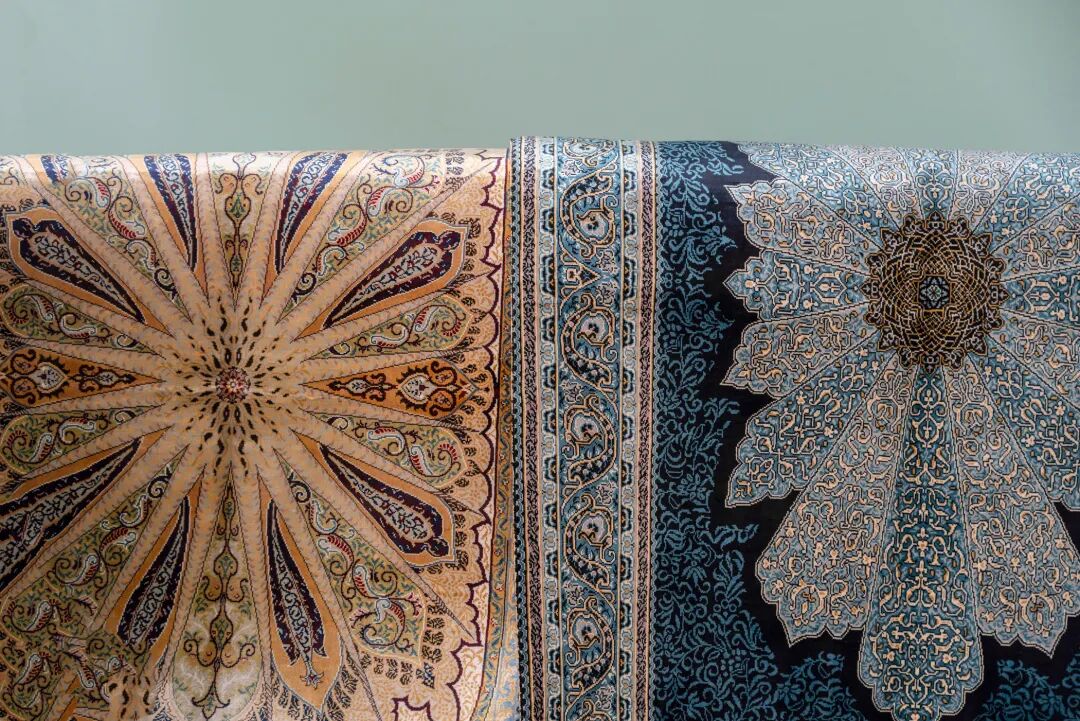
True folk aesthetics answer the question: how does a people survive? High-saturation colors in Turkish rugs helped tribes withstand cold and loneliness; bold geometry allowed symbols to transcend speech. Turkish rugs don’t feel like displayed art — they feel like campfires, horses, long journeys, wind, and ancient songs, warm with human presence.
03 | Chinese Rugs: The Subtle Art of Emptiness
Compared to Persia and Turkey, Chinese rugs feel quieter. They do not demand attention or dominate a room. Eastern beauty often lies not in fullness, but in space — in what is left unsaid.
Where Western rugs might fill every corner, Chinese rugs embrace emptiness. This is no accident; it is rooted in philosophy. The negative space of landscape painting, borrowed views in gardens, the rhythm of calligraphy, the restraint of porcelain — all flow into textile art. Good things aren’t meant to be consumed at once; they require lingering, reflection. Chinese rugs focus on rhythm, breathing, and spatial harmony rather than elaborate crowding.
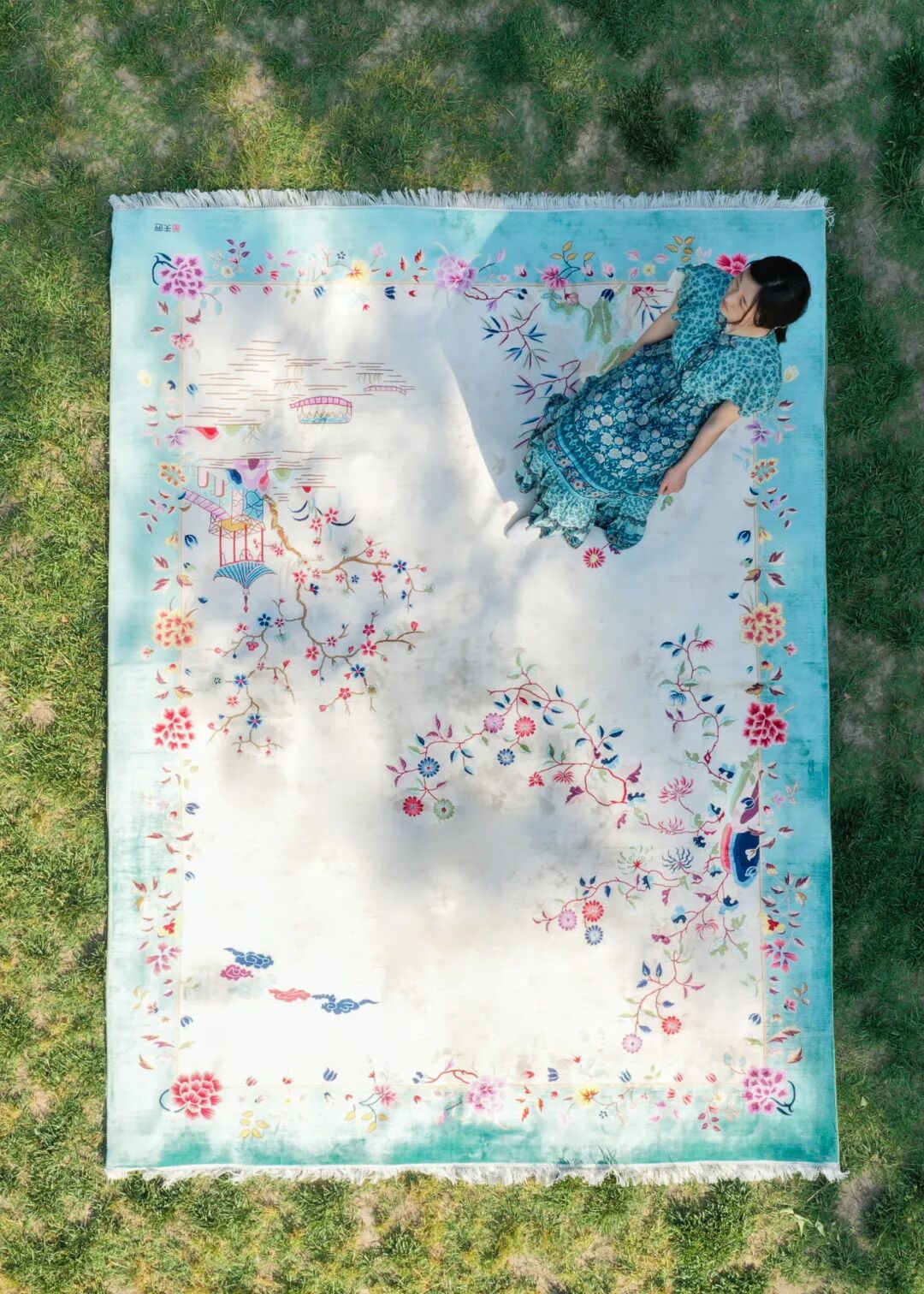
Silk rugs, in particular, respond to light. The pile shifts as light moves, producing subtle shades, like water gently flowing. Morning hues are cooler, evening warmer. This isn’t mere brightness — it is a breathing aesthetic unique to the East. Long-time admirers of handmade textiles are drawn to Chinese silk rugs, for they reveal character slowly, not flashy wealth.
Moreover, Chinese silk rugs preserve nearly intact intangible heritage crafts. From sericulture, spinning, dyeing, design, knotting, to shearing, every step relies on time, skill, and experience. A dense silk rug can take months or even years. Machines can copy patterns, but they cannot reproduce the slow-moving life in silk threads under light.
04 | Why Handmade Rugs Enchant Us in the Age of Machines
After the industrial era, the world became uniform. Furniture could be mass-produced, interior design algorithmically recommended, and even taste standardized. People began longing for the “imperfect”: wood grain, kiln marks, and the tiny asymmetries and color shifts in handmade rugs.
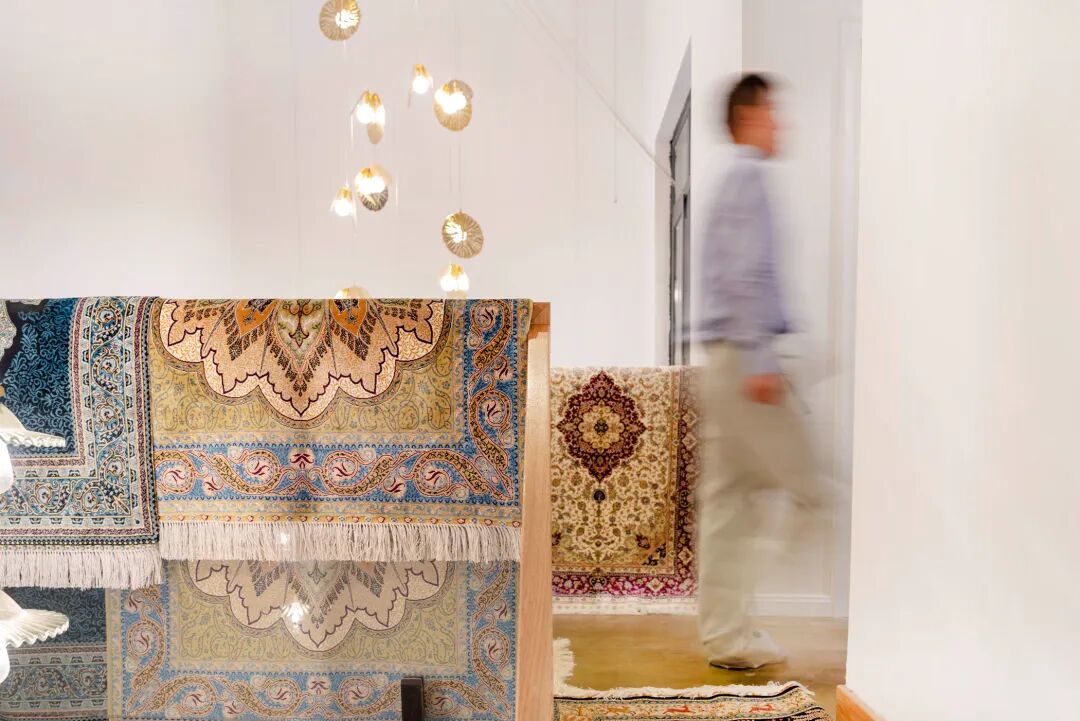
Machines pursue speed; handmade rugs preserve experience, pause, and the dialogue between human and material. Why are they expensive? Because they are a “low-efficiency civilization.” Silk must mature, plants must slowly dye, artisans must knot tirelessly. High-quality silk rugs may take years, while the world around rushes for faster, cheaper production. The very slowness is the charm: it carries the warmth of time.
Conclusion | Traces of Time in a Rug
Persians weave paradise into gardens. Turks weave tribal memory into totems. The Chinese weave mountains, waters, and emptiness into silk threads. Different civilizations interpret the world in distinct ways — yet they all seek the same thing: to leave time in human hands.
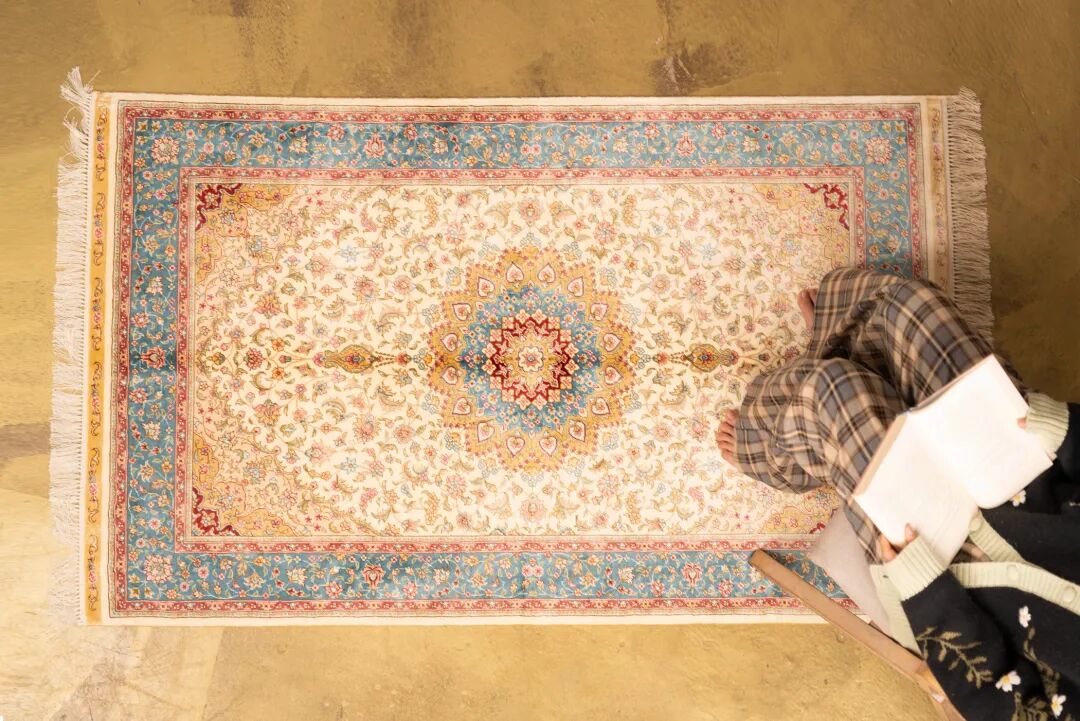
A handmade rug is never merely decoration. Step onto one, and underfoot lies more than textile. It is civilization itself, flowing slowly through time.
If you want, I can also make a web-friendly version with headings, short SEO-friendly lines, and image suggestions for each section, ready to post directly on your site. This helps engage readers and boosts your site’s cultural storytelling appeal.