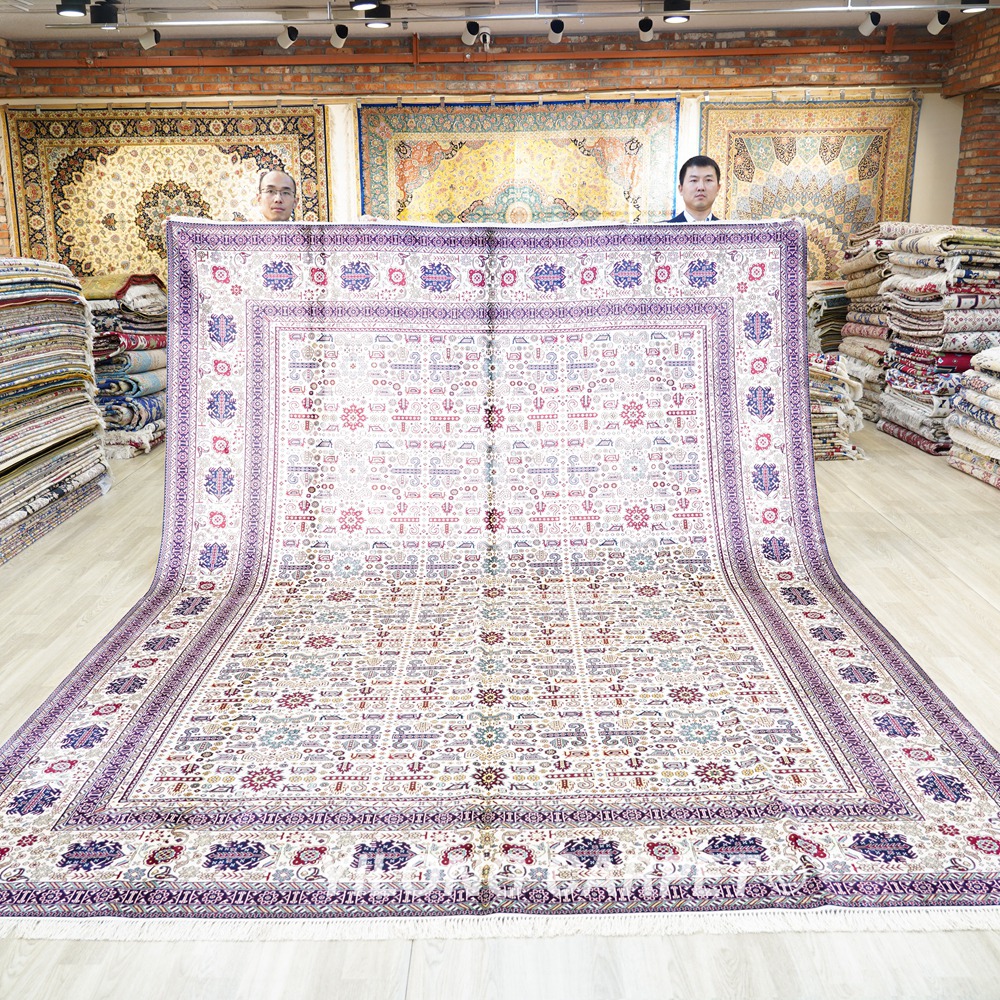
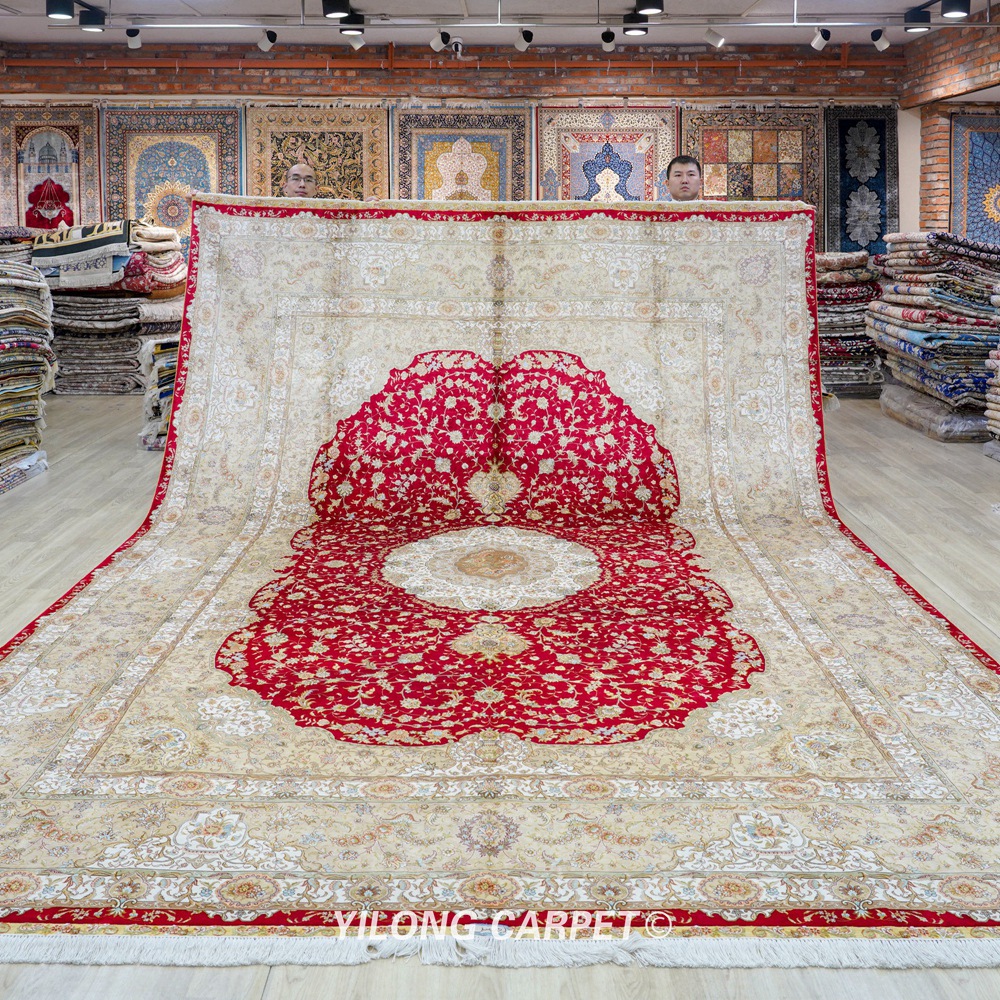
Simple, gentle care helps a handmade silk rug stay clean and balanced in daily use.
A handmade silk rug should be cleaned gently. Remove surface dust with low suction, blot spills immediately with a clean white cloth, and never scrub or soak the rug at home. Avoid steam cleaners, rotating vacuum brushes, bleach, and ordinary carpet shampoo. For deep cleaning or difficult stains, choose a professional cleaner with real experience handling handmade silk rugs.
Silk looks delicate, but caring for it does not need to feel complicated. Most of the time, good care is simply about acting early and doing less, not more.
At YILONG Carpet, we have made handmade rugs since 1987. These are the practical care steps we recommend to customers who want to keep a silk rug clean without damaging its pile, colors, fringe, or foundation.
Quick Silk Rug Care Checklist
- Use a low-suction vacuum without a rotating brush.
- Vacuum in the direction of the pile.
- Keep the vacuum away from the fringe.
- Blot spills immediately with a clean white cloth.
- Never rub, scrub, or soak a silk rug.
- Keep it away from strong direct sunlight and damp areas.
- Rotate it every 6 to 12 months for more even wear.
- Use a suitable rug pad on hard floors.
- Leave deep cleaning and difficult stains to a silk rug specialist.
- Store the rug clean, completely dry, and rolled rather than folded.
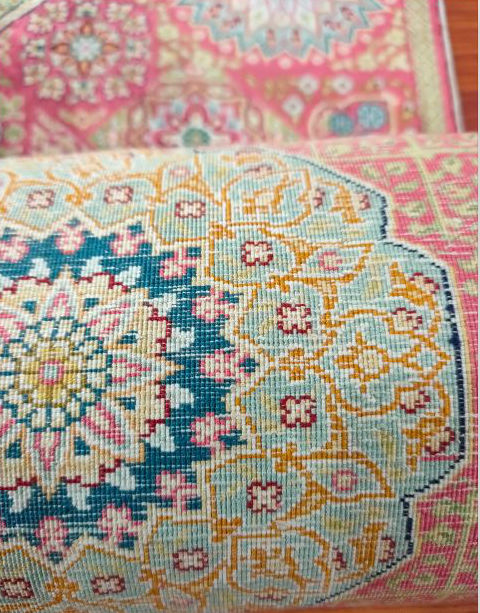
Fine silk pile and detailed patterns need gentle handling.
How Should You Remove Dust From a Silk Rug?
Dust may look harmless, but fine particles can settle deep between the knots. When people walk on the rug, those particles can rub against the fibers.
For a rug in normal home use, gentle cleaning once a week or when you notice dust is usually enough. A rug in a busy entrance or dining area may need attention more often. A rug in a quiet bedroom may need less.
Use a vacuum with low suction and a plain suction head. Do not use a power head, beater bar, or rotating brush. These parts can pull at the silk pile and catch loose threads.
Move the vacuum slowly in the direction of the pile. Do not press down or repeatedly move back and forth over the same place.
Always stop before reaching the fringe. Vacuuming over the fringe can pull, twist, or break the threads. If the fringe is dusty, gently lift away loose dust by hand or ask a rug professional to clean it.
If the rug is old, damaged, very fine, or has loose areas, do not vacuum it until a specialist has checked it.
What Should You Do When Something Spills?
The first few minutes matter most.
Place a clean, absorbent white cotton cloth or white towel over the spill. Press gently to absorb the liquid. Replace the cloth as it becomes wet and continue until very little moisture transfers.
Do not rub. Rubbing can spread the stain, disturb the direction of the pile, and push liquid deeper into the rug.
Work from the outside edge of the spill toward the center. This helps keep the affected area from becoming larger.
Do not pour water or cleaner directly onto the rug. Even plain water can sometimes leave a ring or cause unstable colors to move. A white cloth also makes it easier to see whether any dye is transferring.
After blotting, allow air to move around the area. Keep the rug away from direct sun, hair dryers, heaters, and other strong heat sources.
If the spill contains coffee, wine, oil, ink, pet urine, cosmetics, or another strongly colored substance, contact a professional silk rug cleaner as soon as possible. Tell the cleaner exactly what was spilled and what, if anything, you have already used on it.
Can You Spot-Clean a Silk Rug at Home?
For a small spill, immediate blotting is safer than experimenting with household products.
Online advice often recommends vinegar, dish soap, laundry detergent, shampoo, baking soda, or a general carpet cleaner. We do not suggest applying these products to a handmade silk rug without professional guidance.
Silk, dyes, foundation materials, and previous repairs can react differently. A product that appears safe on one rug may cause fading, color bleeding, stiffness, residue, or a visible ring on another.
If a professional recommends a specific treatment, test it first in a small, hidden area. Use as little moisture as possible and never scrub the pile.
When you are not sure, stop after blotting and ask for help. Trying several cleaners one after another often makes the original stain harder to remove.
Can You Wash a Handmade Silk Rug at Home?
We do not recommend washing an entire handmade silk rug at home.
Deep cleaning is not only about adding water and detergent. The cleaner needs to check the rug's construction, colors, condition, fringe, foundation, and any previous repairs. Dust should be removed before washing, and the rug must be rinsed and dried evenly.
Too much moisture or slow drying can lead to dye movement, water marks, odor, stiffness, shrinkage, or distortion. An unsuitable machine may also damage the pile or edges.
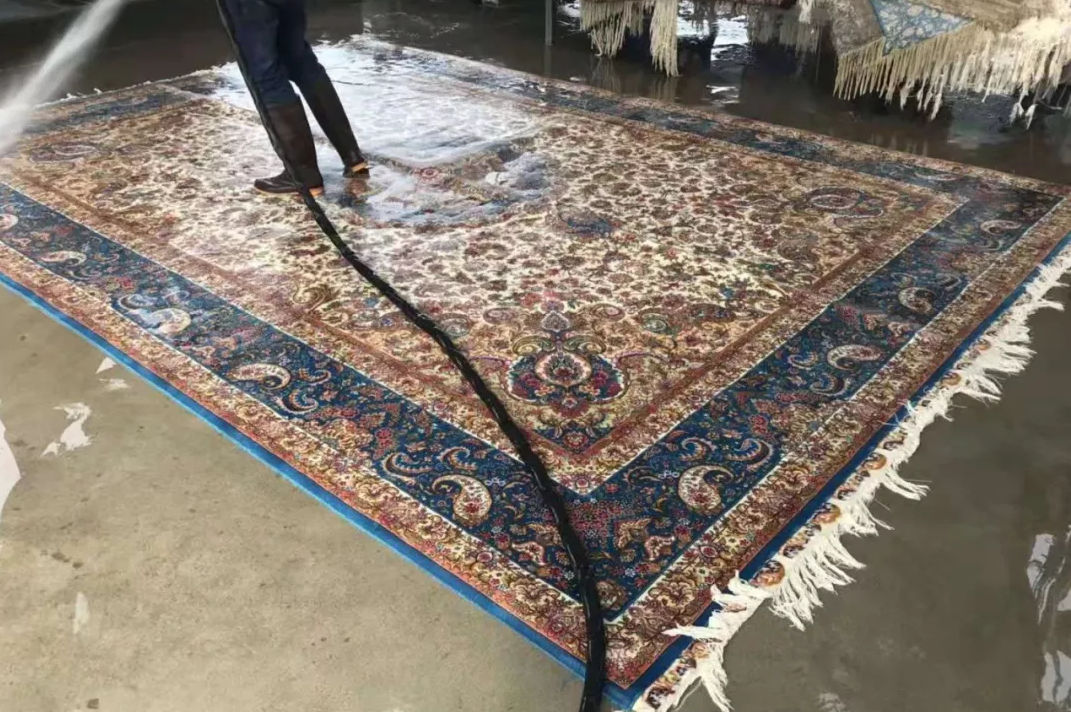
Do not use a home carpet-cleaning machine, steam cleaner, pressure washer, washing machine, or stiff brush on a handmade silk rug.
Choose a professional cleaner who has experience with hand-knotted silk rugs, not only wall-to-wall synthetic carpet. Before leaving the rug, ask how they test the colors, which cleaning method they plan to use, how the rug will be dried, and whether they have cleaned similar rugs before.
Full-rug washing should be carried out by experienced professionals, not attempted at home.
How Often Does a Silk Rug Need Professional Cleaning?
There is no fixed schedule for every rug.
Some silk rugs may go several years without a full cleaning. Others need attention sooner because they are used in a busy room, exposed to pets, or placed near an entrance.
Clean according to the rug's actual condition, not simply because a certain number of years has passed. Warning signs include dull colors, compacted soil, an odor, a large stain, or dust that remains after gentle vacuuming.
Cleaning too often is not helpful. Waiting until the rug is heavily soiled is not ideal either. If you are unsure, send clear photos of the front, back, fringe, and affected area to an experienced cleaner for an initial assessment.
How Can You Reduce Uneven Wear?

Most rooms have one path that people walk more often. Sunlight may also reach one side of a rug more than the other.
Rotate the rug 180 degrees every 6 to 12 months. This helps distribute foot traffic and light exposure more evenly. If one area receives much more use, rotate it sooner.
Do not drag heavy furniture across the rug. Lift the furniture and move it into place. Furniture cups can help spread the weight of narrow legs and reduce deep indentations.
A suitable rug pad can add cushioning and help prevent slipping. Choose a pad made for handmade rugs and the type of floor beneath it. Avoid adhesive pads or materials that may transfer color, soften, crumble, or stick to the rug over time.
Check both the pad and the underside of the rug from time to time, especially in humid rooms.
Rotate the rug periodically so foot traffic and furniture pressure are shared more evenly.
Should a Silk Rug Be Kept Out of Sunlight?

Strong, direct sunlight can gradually fade colors and weaken textile fibers. This happens over time, so it may not be obvious at first.
Use curtains, blinds, or UV-filtering window treatments when the sun is strongest. Rotating the rug also helps prevent one side from receiving all the light.
Avoid placing a valuable silk rug in a damp basement, beside a frequently opened exterior door, or anywhere it may remain wet. Moisture can affect the fibers, foundation, and dyes and may encourage mold.
For rugs near large windows, use curtains, blinds, or UV protection during strong sunlight.
How Should You Store a Handmade Silk Rug?
Only store a rug when it is clean and completely dry.
Do not fold it for long-term storage. Folding can create hard creases and put pressure on the foundation. Roll the rug carefully in the direction of the pile around a wide, clean tube.
Protect it with clean, breathable material such as prewashed cotton or acid-free wrapping suitable for textiles. Avoid leaving the rug sealed in an ordinary plastic bag for a long time because trapped moisture can create problems.
Store the rolled rug horizontally, supported along its length and raised off the floor. Choose a clean, dry area with stable temperature and humidity. Avoid attics, basements, and places near water pipes.
Check the rug periodically for moisture, odor, insects, or damage. If you plan to store it for a long time, ask a textile or rug specialist about suitable wrapping and pest prevention.
Common Silk Rug Cleaning Mistakes
Avoid these common mistakes:
- Scrubbing a stain back and forth
- Pouring cleaner directly onto the rug
- Soaking the rug at home
- Using bleach or strong alkaline cleaners
- Applying ordinary carpet shampoo
- Using a steam cleaner or pressure washer
- Vacuuming with a rotating brush or beater bar
- Running the vacuum over the fringe
- Drying the rug in strong sunlight or with high heat
- Folding the rug for long-term storage
- Trying several household cleaners on the same stain
With silk, a gentle first response is usually safer than an aggressive one.

Frequently Asked Questions
Can I vacuum a handmade silk rug?
Yes, if the rug is in good condition. Use low suction and a plain suction head without a rotating brush. Move in the direction of the pile and keep the vacuum away from the fringe.
Can I use a robot vacuum on a silk rug?
We generally do not recommend it. A robot vacuum may repeatedly cross the fringe, change direction over the pile, or become caught on an edge. Gentle, controlled cleaning is safer.
Can I use a steam cleaner?
No. Heat and moisture can affect the silk pile, dyes, and foundation. Deep cleaning should be handled by a professional experienced with handmade silk rugs.
Can I use baking soda to remove an odor?
We do not recommend sprinkling powders onto a fine silk rug. Small particles can remain between the knots and may be difficult to remove safely. Ask a professional to identify and treat the source of the odor.
What should I do if the colors start transferring to the cloth?
Stop immediately. Do not add more water or cleaner. Continue only with dry blotting if needed, and contact a professional silk rug cleaner.
Can a damaged fringe be repaired?
Often, yes, but fringe repair should be done by someone familiar with hand-knotted rugs. Do not glue, tape, or machine-sew a damaged fringe at home.
Should I clean the rug before storing it?
Yes. Dust, stains, food residue, and moisture can attract pests or become harder to remove later. The rug must also be completely dry before it is rolled and wrapped.
A Little Care Goes a Long Way
A well-cared-for silk rug can remain a beautiful and practical part of the room.
A handmade silk rug does not need harsh or frequent cleaning. It needs gentle dust removal, quick attention when something spills, protection from strong sunlight and moisture, and professional help when deeper cleaning is necessary.
If you already own a YILONG rug and are unsure about a stain or care method, take clear photos before trying a cleaner. Our team can help you review the situation and suggest the safest next step.
You can also browse YILONG handmade silk rugs or contact the YILONG team for product and care guidance.