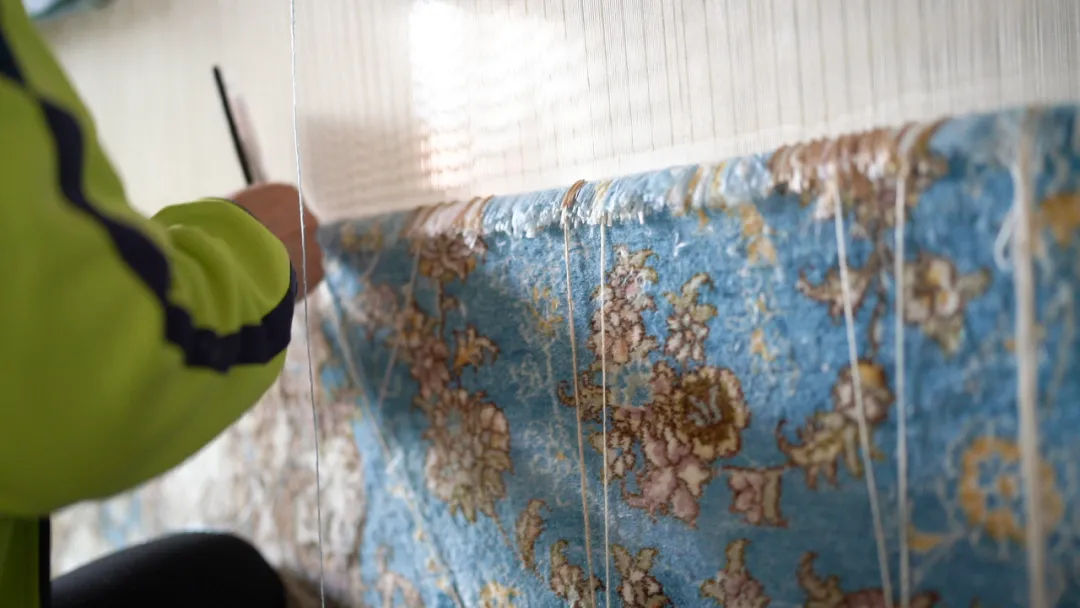
A handmade silk rug taking shape one row at a time.
A YILONG handmade silk rug begins with a full-size design and carefully prepared silk yarn. Skilled weavers then tie the pile by hand, knot by knot, across a tensioned foundation. After weaving, the rug is trimmed, cleaned, shaped, finished, and inspected. Depending on its size, knot density, colors, and pattern, the whole process can take many months.
When people see a finished silk rug, they usually notice the colors first. The surface may look lighter from one direction and deeper from another. What they cannot see straight away is the long chain of decisions and handwork behind it.
At YILONG Carpet, a rug does not come off a fast production line. It grows slowly on the loom, one row at a time. Here is how we make it.
The Process at a Glance
- Create the design and weaving map
- Select and prepare the silk yarn
- Match and dye the colors
- Set up the loom and warp threads
- Build a stable foundation
- Tie every knot by hand
- Add weft threads and compact each row
- Level and detail the pile
- Wash, dry, and shape the rug
- Finish the edges and complete the final inspection
1. The Rug Starts as a Design
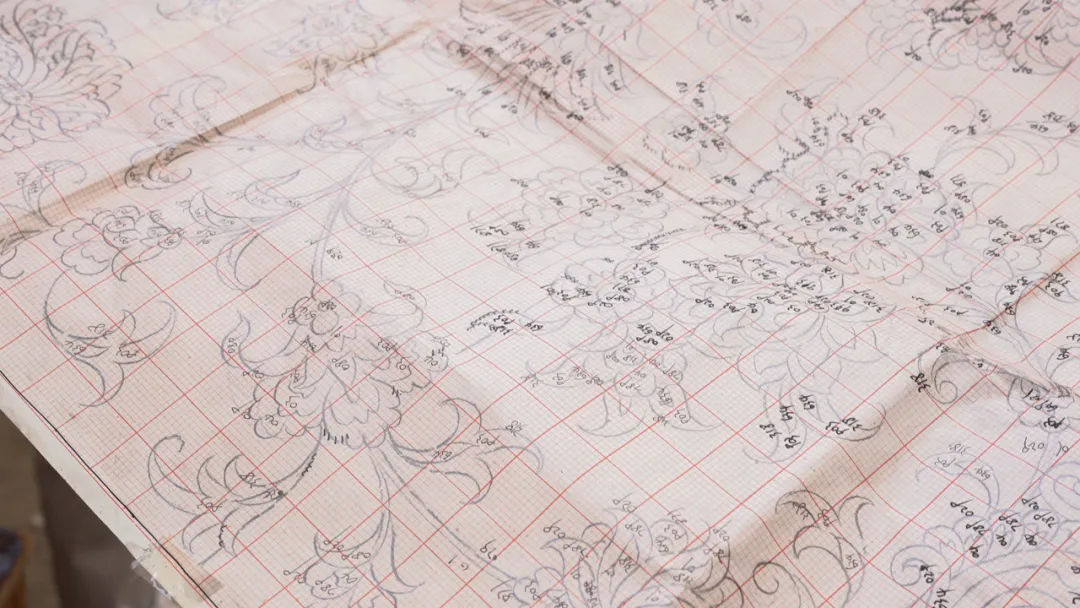
Before anyone touches the loom, the rug has to be planned.
The designer develops the pattern, proportions, border, and color balance. The design is then turned into a detailed weaving map. It looks a little like a cross-stitch chart: each small square or symbol tells the weaver where a particular color belongs.
This map is important because a detailed silk rug may contain many colors and a very large number of knots. A small mistake repeated over several rows can change the shape of a flower, break the curve of a vine, or make a border look uneven.
The weaving map gives the artisan a clear path, but the human eye and hand still matter. An experienced weaver constantly checks the pattern as the rug develops.
The weaving map shows the pattern and color placement before work begins on the loom.
2. Silk Yarn Is Selected and Prepared
Silk is chosen for its smooth touch, fine fibers, and natural luster. Because the yarn is so fine, it can be used to create delicate outlines and small pattern details that would be difficult to achieve with a thicker fiber.
The yarn must also be prepared to suit the rug. Its thickness and the number of strands used depend on the planned construction. The goal is not simply to use the thinnest possible yarn. The yarn, foundation, knot density, pile height, and design all need to work together.
This balance is one reason two silk rugs can feel quite different even when both are hand-knotted.
3. The Colors Are Matched and Dyed
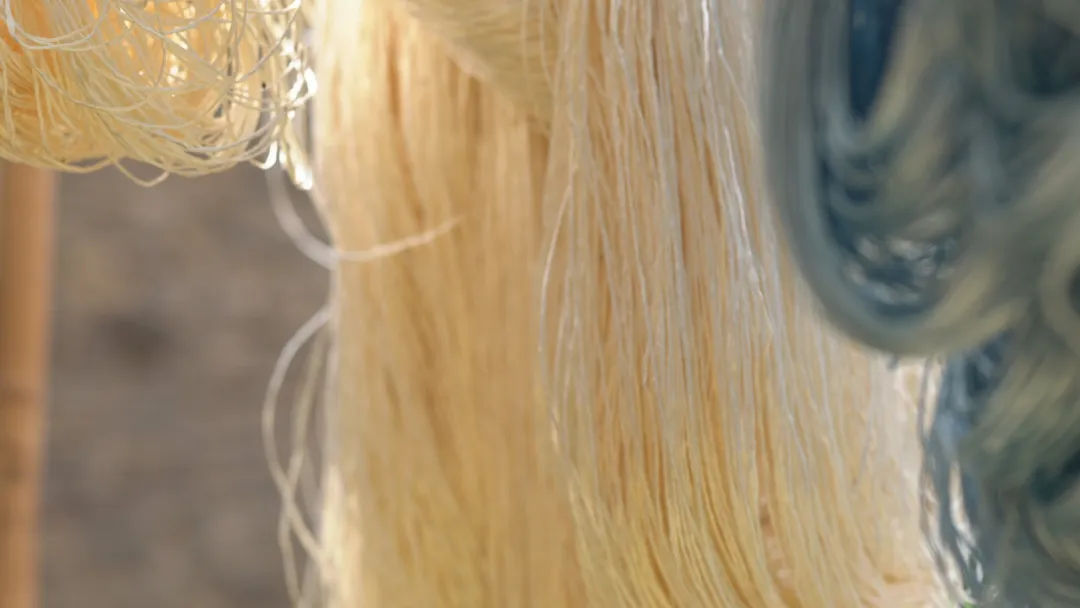
Next, the silk yarn is prepared in the colors required by the design.
A handmade rug can use many shades, especially when the pattern includes flowers, leaves, medallions, or soft color transitions. Similar tones may be placed next to one another to give a motif more depth. Even a small difference in red, blue, beige, or gold can change the mood of the finished rug.
YILONG uses dyeing methods and color formulas according to the design and production requirements. Both traditional and modern dye approaches can be used in rug making. What matters is careful color control and consistency across the yarn prepared for the rug.
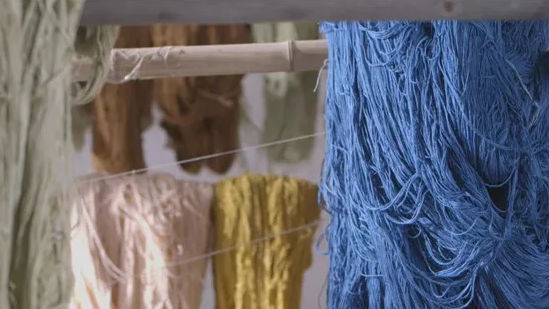
The dyed silk is rinsed, dried, sorted, and organized so the weaver can find each shade easily at the loom.
Prepared silk yarn is sorted and kept ready for the weaving stage.
4. The Loom and Warp Threads Are Set Up
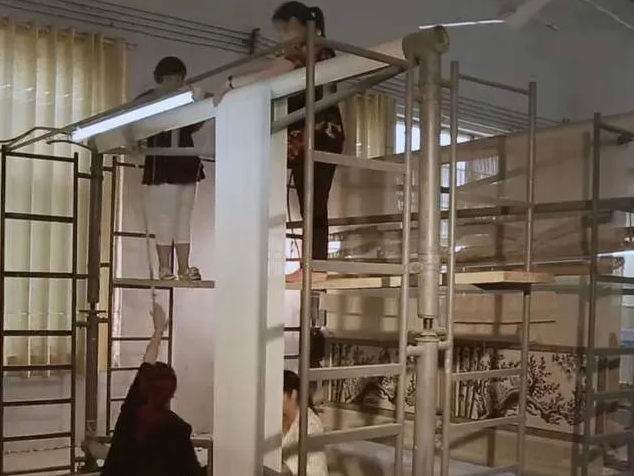
The rug is woven on a vertical loom. Strong warp threads run tightly between the upper and lower beams, creating the foundation on which every silk knot will sit.
Setting the warp is precise work. The threads need even spacing and steady tension. If the tension is uneven, the rug may begin to pull out of shape as the weaving moves upward.
The spacing of the warp also relates to knot density. A denser construction can support finer pattern detail, but knot density alone does not decide whether a rug is good. The quality of the silk, the accuracy of the weaving, the design, the finishing, and the overall balance are just as important.
That is why we confirm the construction of each individual rug instead of describing every YILONG silk rug with one universal knot count.
5. A Stable Foundation Is Woven First
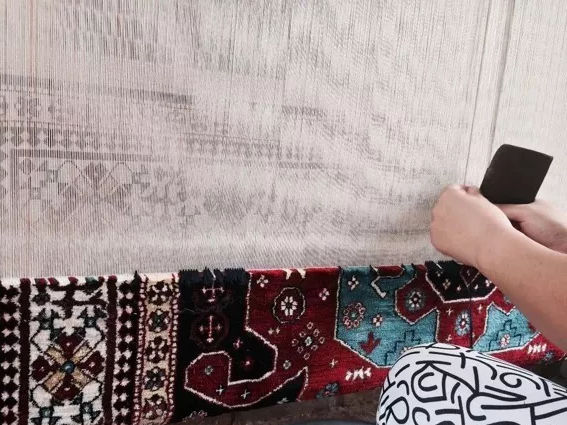
The weaver does not begin the decorative pile immediately.
First, a short flat band is woven at the bottom. This helps stabilize the foundation and creates a clean starting edge. Only then does the weaver begin following the color map and tying the silk pile.
This part may not attract much attention in a finished rug, but it plays an important structural role.
6. Every Silk Knot Is Tied by Hand
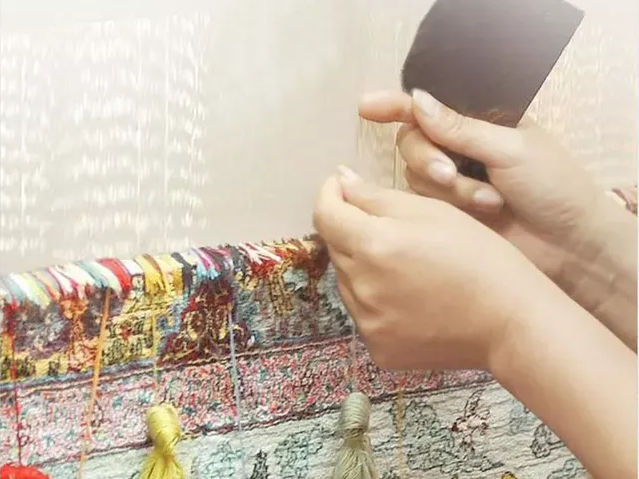
This is the heart of the process.
The weaver selects a colored silk yarn, loops it around the warp threads, tightens the knot, and cuts the yarn to form a small tuft of pile. Then the next knot is tied beside it. The work continues across the rug, row after row.
After a row of knots is completed, a weft thread is passed through the warp. The row is then compacted firmly with a special comb-like tool. This locks the structure together before the next row begins.
From a distance, the movement looks simple. Up close, it demands steady tension, accurate color placement, good eyesight, and patience. The weaver has to follow the chart while also watching the actual rug. Hands learn things that a printed map cannot explain: how firmly to pull, how to keep an outline clean, and when a tiny adjustment is needed.
You can explore examples of finished YILONG handmade silk rugs and then look closely at how much detail is built from these individual knots.
7. Each New Row Is Cut and Checked
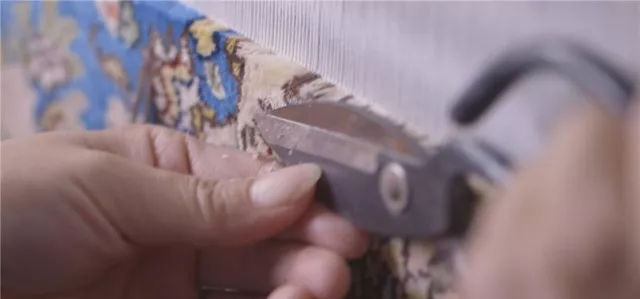
As the weaving continues, the newly formed pile is cut back to a manageable height. The weaver checks the line of the pattern, the straightness of the edges, and the firmness of the rows.
Small corrections are much easier to make while the rug is still on the loom. Waiting until the end would allow a minor problem to grow into a visible distortion.
This is also why handmade production takes time. Speed matters far less than keeping thousands of small actions consistent.
8. The Finished Pile Is Leveled and Detailed
When the weaving is complete, the rug is removed from the loom and the pile is trimmed more carefully.
First, the surface is leveled so the pile has an even height. Then skilled finishers work on the detailed areas by hand. They clean the outlines around flowers, borders, leaves, and other motifs. The depth and angle of the trimming must match the design.
For many pure silk rugs, the aim is a smooth, clear surface rather than a heavily carved effect. Careful trimming helps the pattern read cleanly without taking away the soft feel of the silk.
9. The Rug Is Washed, Dried, and Shaped
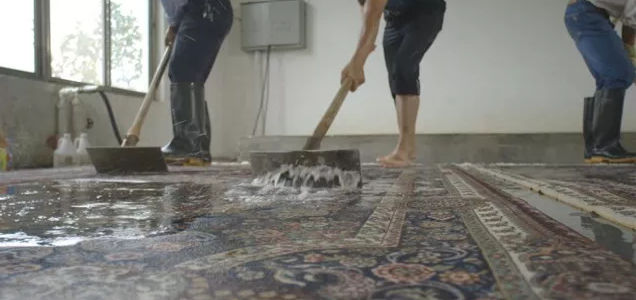
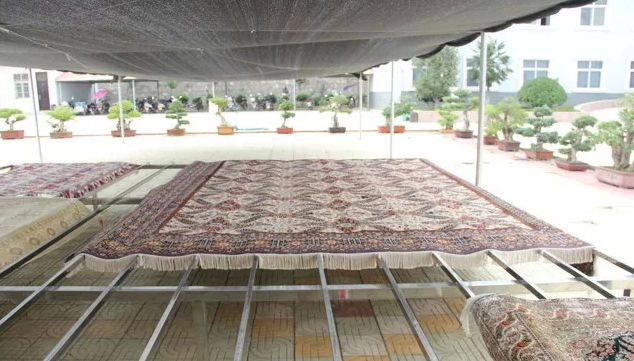
After trimming, the rug is washed to remove loose fibers and dust from production. Washing also helps reveal the natural clarity and luster of the silk pile.
The rug is then dried and carefully shaped. Its sides, corners, and overall proportions are checked so it lies correctly. Because silk reflects light along the direction of the pile, the color may look richer from one end and softer from the other. This is a natural feature of silk, not a change in the dye.
It is one of the things customers often notice when they first unroll a silk rug at home. Walk around it, and the surface seems to change with you.
10. Fringes, Edges, and Final Inspection
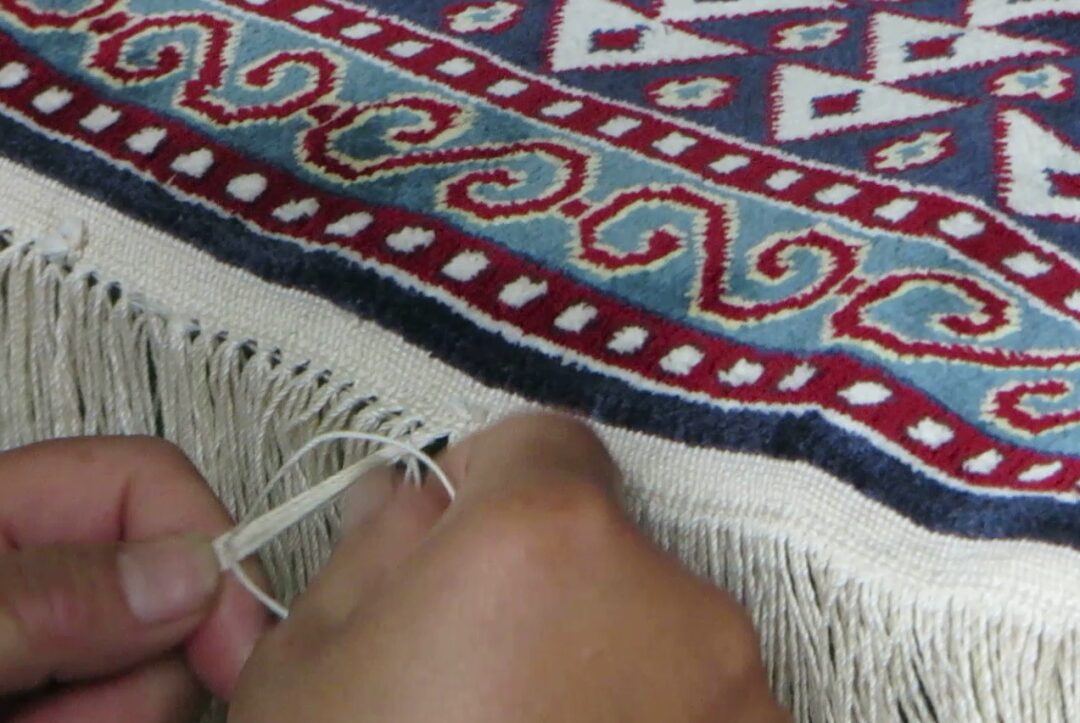
The final stage is quiet but important.
The fringes are arranged and finished, the sides are checked, and any remaining loose fibers are removed. The team inspects the rug from both the front and the back.
We look at the pattern, dimensions, color balance, pile surface, edges, fringe, and overall shape. The back is especially useful because it shows the structure of the hand-knotted construction more clearly.
Only after these checks is the rug ready to be photographed, packed, stored, or prepared for delivery.
The fringe and end finish are checked and completed by hand.
Why Does a Handmade Silk Rug Take So Long?
The simple answer is that every part depends on handwork.
The production time changes from rug to rug. Size is only one factor. A large open design may move faster than a smaller rug filled with tiny floral details. More colors, finer outlines, higher knot density, and complex borders all add time. Some detailed or oversized rugs can remain on the loom for close to a year or even longer.
This does not mean that the slowest rug is automatically the best. Good craftsmanship is about control: the right construction for the design, even weaving, clear details, careful finishing, and a rug that looks balanced as a whole.
What Makes Every Handmade Rug Slightly Different?
Two rugs can follow the same design and still show small differences.
The pressure of the hand, the way a knot is tightened, and tiny changes in trimming all leave a human trace. These differences should not distort the pattern or shape. They are simply part of working by hand.
For us, this is one of the most honest things about a handmade rug. You can see the plan, but you can also feel the person behind it.
Inside the YILONG Carpet Factory
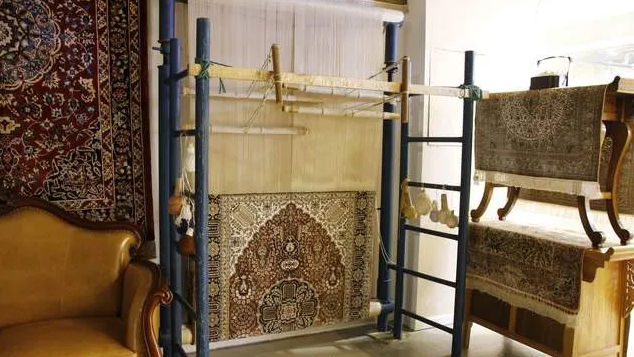
YILONG Carpet has been making handmade rugs since 1987. Today, we work with a network of approximately 4,000 skilled weavers. Our team produces hand-knotted pure silk rugs as well as wool-and-silk and New Zealand wool rugs.
The scale of our work has grown, but the basic process has not been replaced: a design, a loom, prepared yarn, and skilled hands building the rug one knot at a time.
If you would like to learn more about our production team and facilities, visit the YILONG factory profile.
Frequently Asked Questions
Are YILONG silk rugs really handmade?
Yes. The pile of a YILONG hand-knotted silk rug is created by tying individual silk knots around the warp threads. Weft threads are added between rows and compacted to build the rug's structure.
How long does it take to make a handmade silk rug?
It depends on the size, pattern, number of colors, knot density, and the complexity of the details. A rug may take many months, while a large or highly detailed piece can take close to a year or longer.
Does a higher knot density always mean a better rug?
No. Higher knot density can make finer detail possible, but it is only one part of quality. Silk quality, weaving accuracy, design, color control, pile finishing, and the rug's overall balance also matter.
Why does a silk rug look different from each direction?
Silk fibers reflect light differently depending on the direction of the pile and your viewing angle. This can make the same rug appear lighter, darker, warmer, or cooler as you move around it.
Are all YILONG silk rugs made to the same specification?
No. Construction and knot density can vary by design and product. Check the details of the individual rug or ask our team to confirm them before ordering.
Can I see photos or videos before my rug is shipped?
Yes. Our team can provide current photos or videos of a rug before shipment so you can review its color, pattern, and condition.
Find a Handmade Silk Rug for Your Home
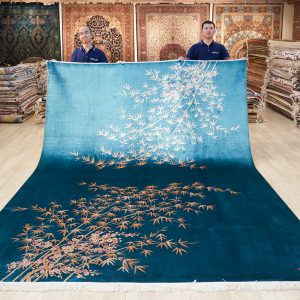
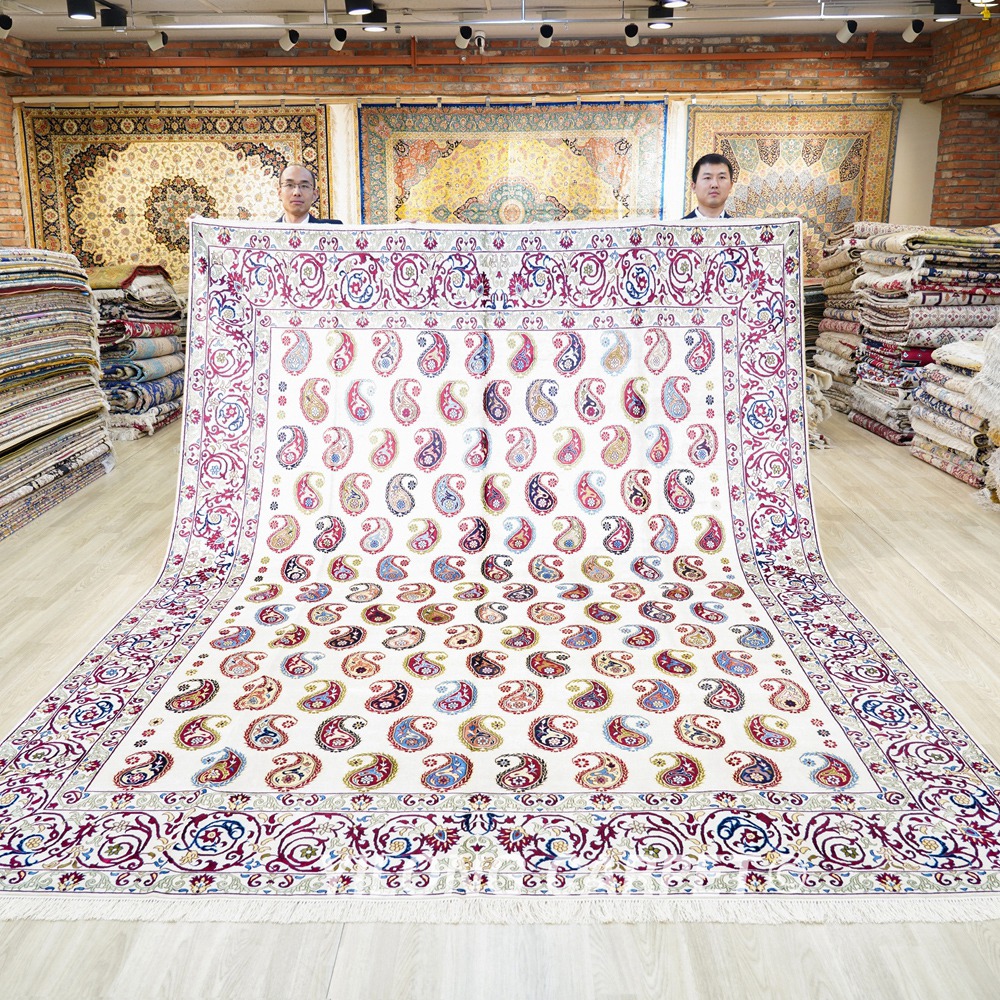
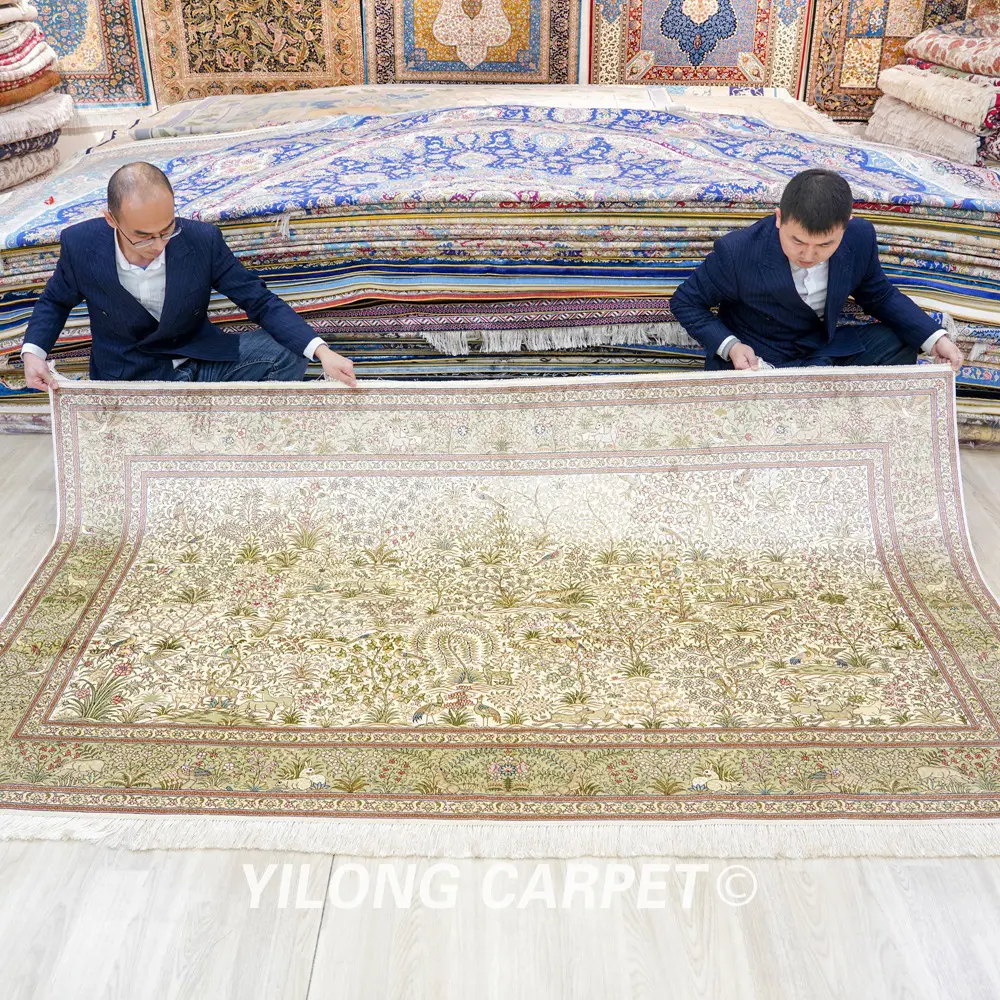
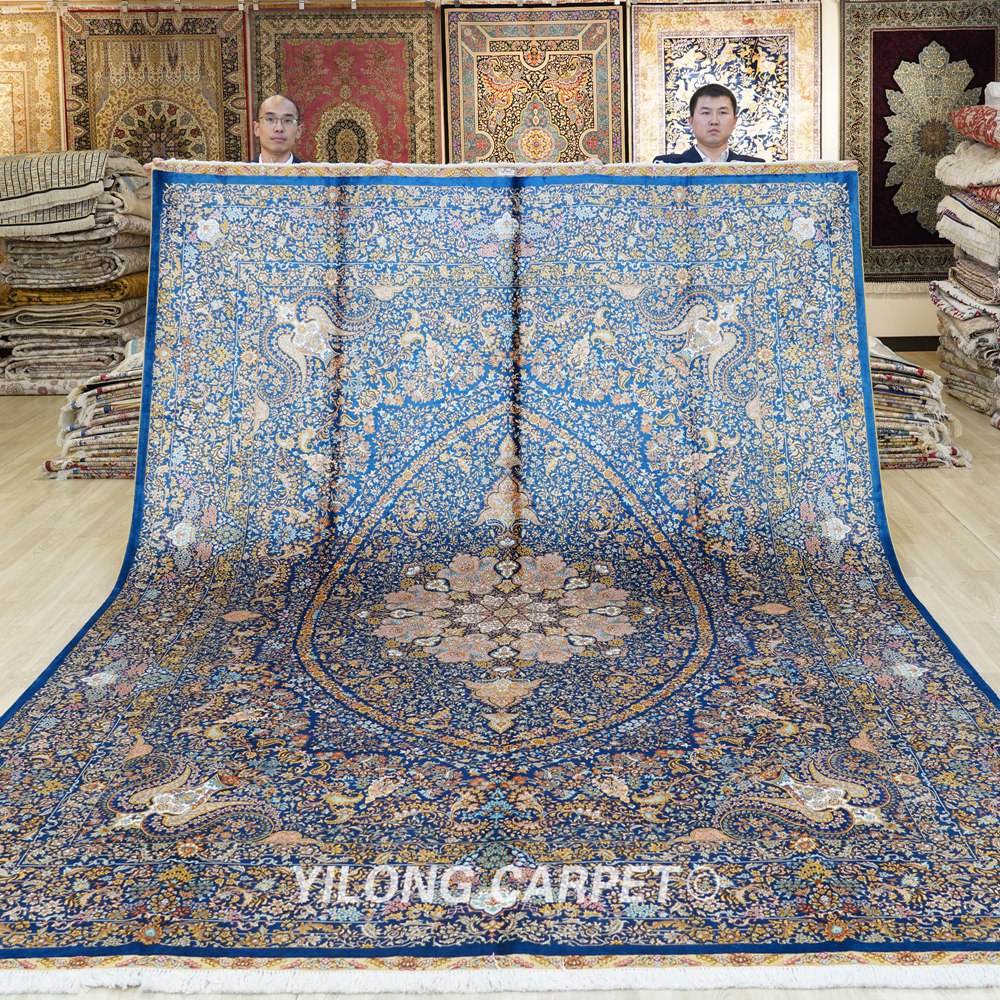
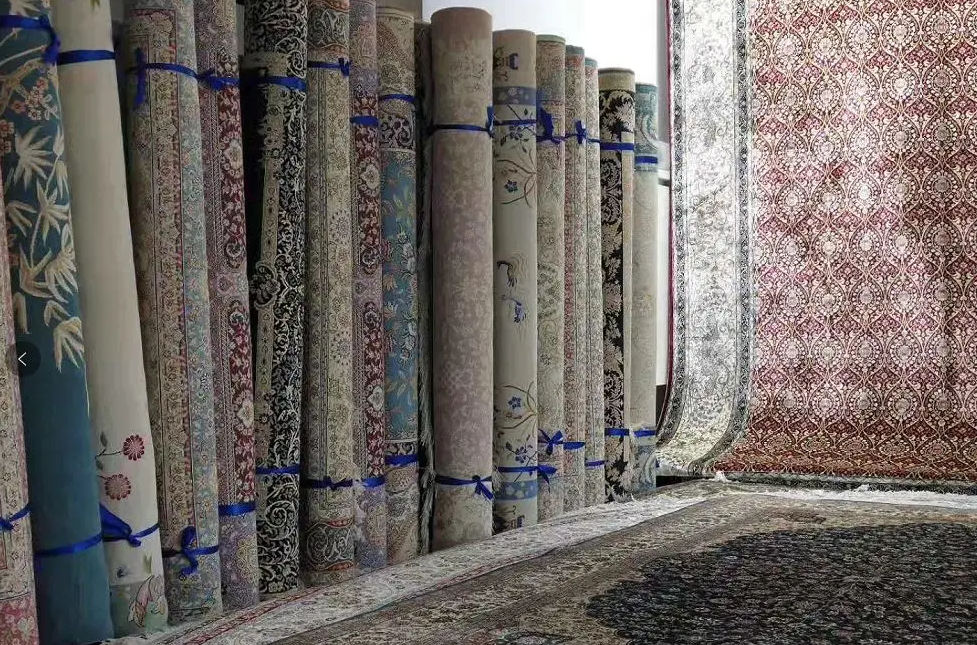
Finished silk rugs ready for customers to view and compare.
A finished silk rug may look effortless, but it carries months of focused work in every line and curve. If you are choosing one for your home, we are happy to show you close-up photos, the back of the rug, available sizes, and current stock.
Browse YILONG handmade silk rugs or contact the YILONG team for help choosing the right piece.