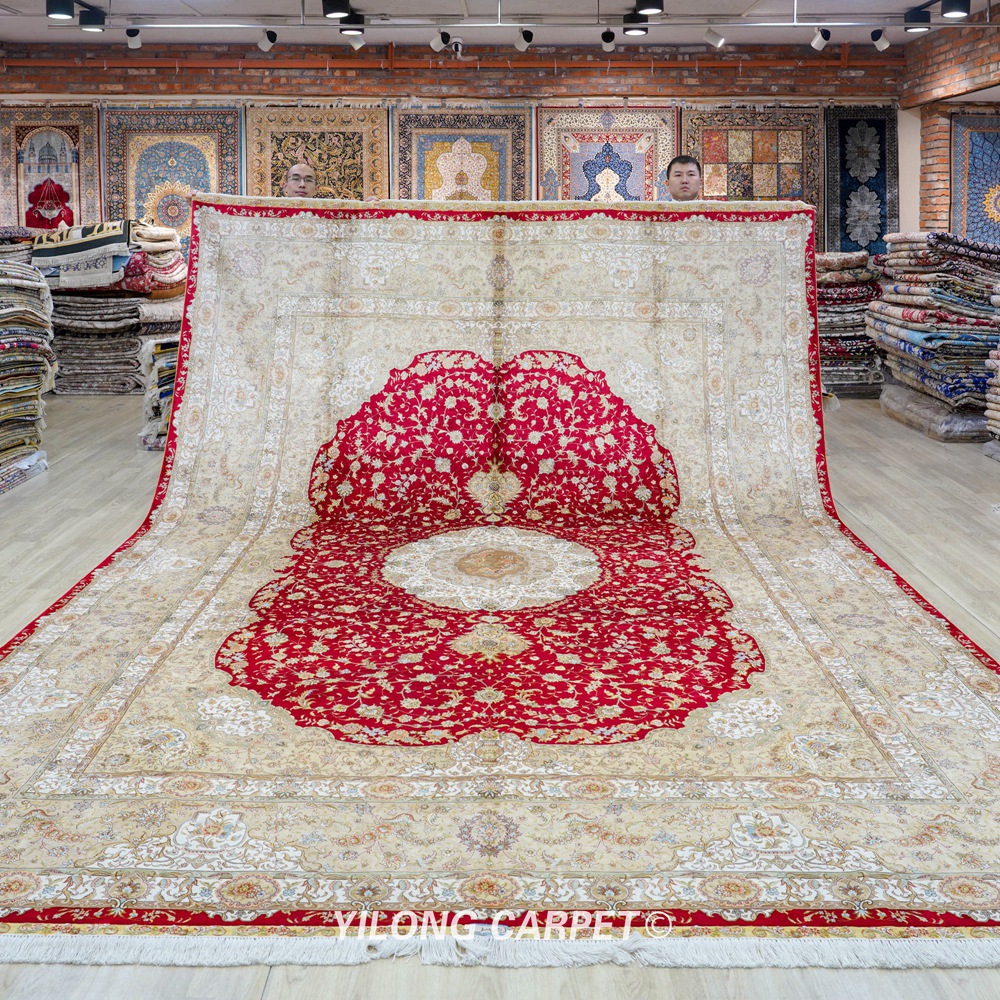
A handmade silk rug can work in more than a formal living room. In this customer’s home, different silk rugs were placed in the living room, bedroom, study, and dressing room. The photos show a simple lesson: the right rug depends on the room’s size, furniture, light, and color—not on one fixed decorating rule.
A Quick Room-by-Room Guide
| Room | What the rug should do | A useful starting point |
|---|---|---|
| Living room | Connect the seating and become the visual center | The customer used 9 by 12 feet rugs to anchor the main seating area |
| Bedroom | Add softness and pattern without making the room feel busy | The 8 by 10 feet rugs leave the pattern visible around the furniture |
| Study | Bring warmth to dark wood furniture and reduce the visual hardness of the floor | A 5 by 8 feet rug fits beneath the desk while leaving walking space |
| Dressing room | Add color and comfort to a narrow or quiet space | A 4 by 6 feet rug leaves a clear border of flooring around it |
These are practical starting points, not strict rules. Before buying, measure the usable floor area and mark the proposed rug outline with painter’s tape. It is much easier to change the outline than to exchange a rug that feels too small or too large.
Living Room: Let the Rug Connect the Furniture
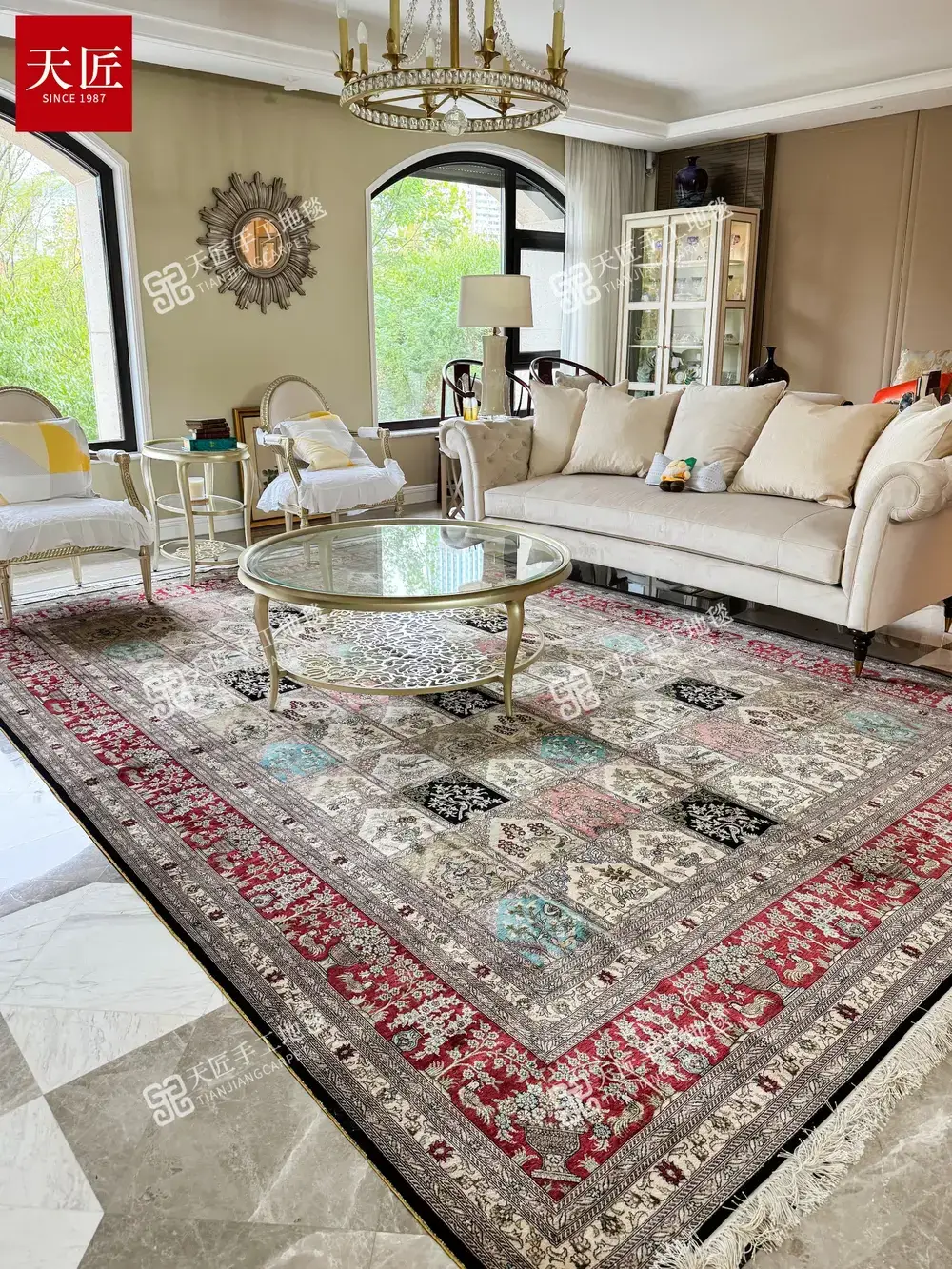
The living room is where a large handmade silk rug can make the biggest visual difference. It gives the sofa, chairs, and coffee table one shared foundation, so the room feels connected rather than divided into separate pieces.
In the first living room, a 9 by 12 feet rug uses a soft patchwork-style field framed by a deep red border. The cream sofa and pale walls keep the space light, while the red border gives the room a clear outline. Because several colors appear in small amounts across the rug, the owner does not need every cushion or chair to match it exactly.
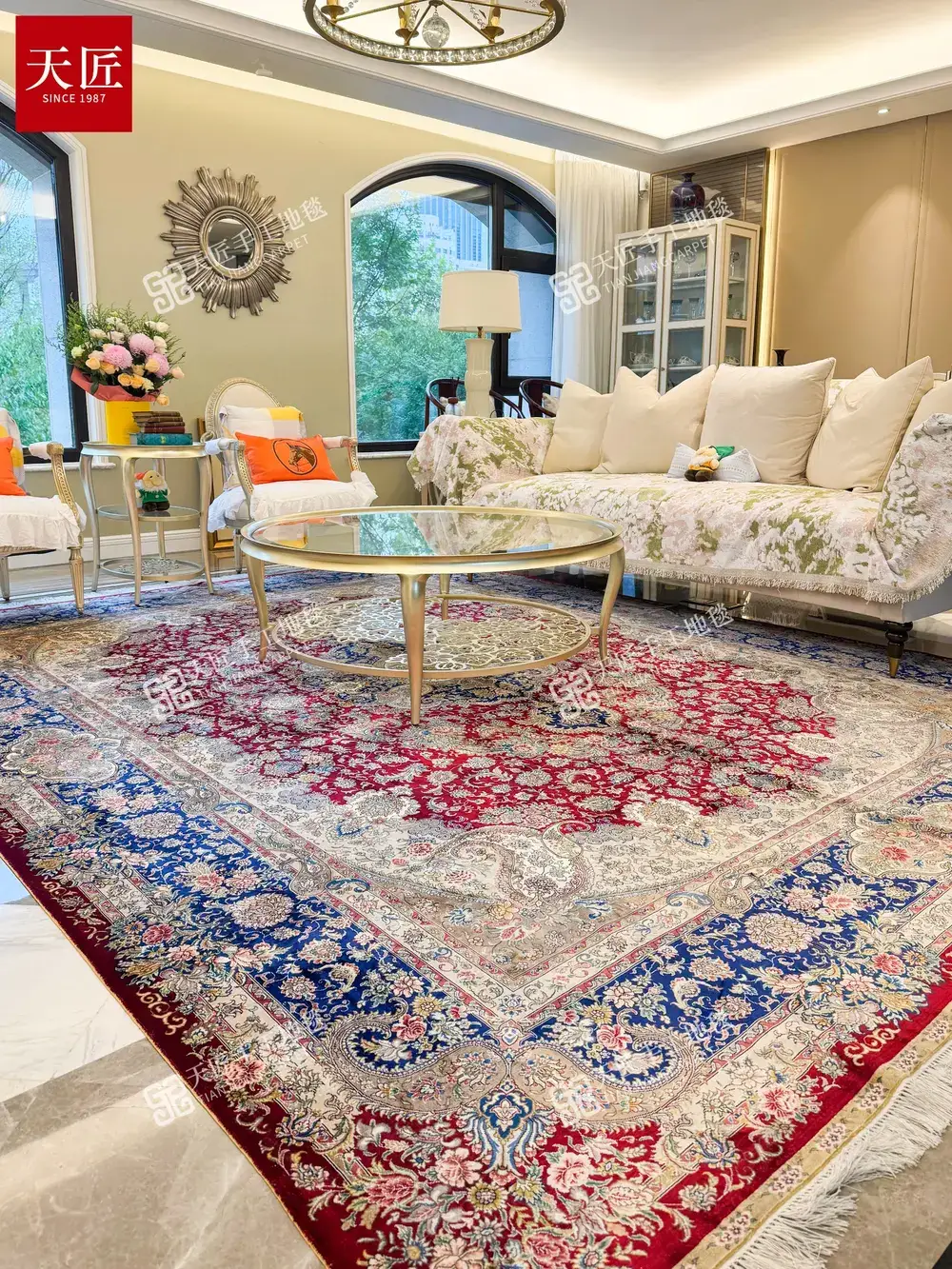
The second 9 by 12 feet living-room rug is stronger and more traditional. Its red center and blue border bring energy to a room with light furniture and gold-toned details. The pattern is detailed, but the furniture remains simple. That balance lets the rug become the main decorative piece without making the whole room feel crowded.
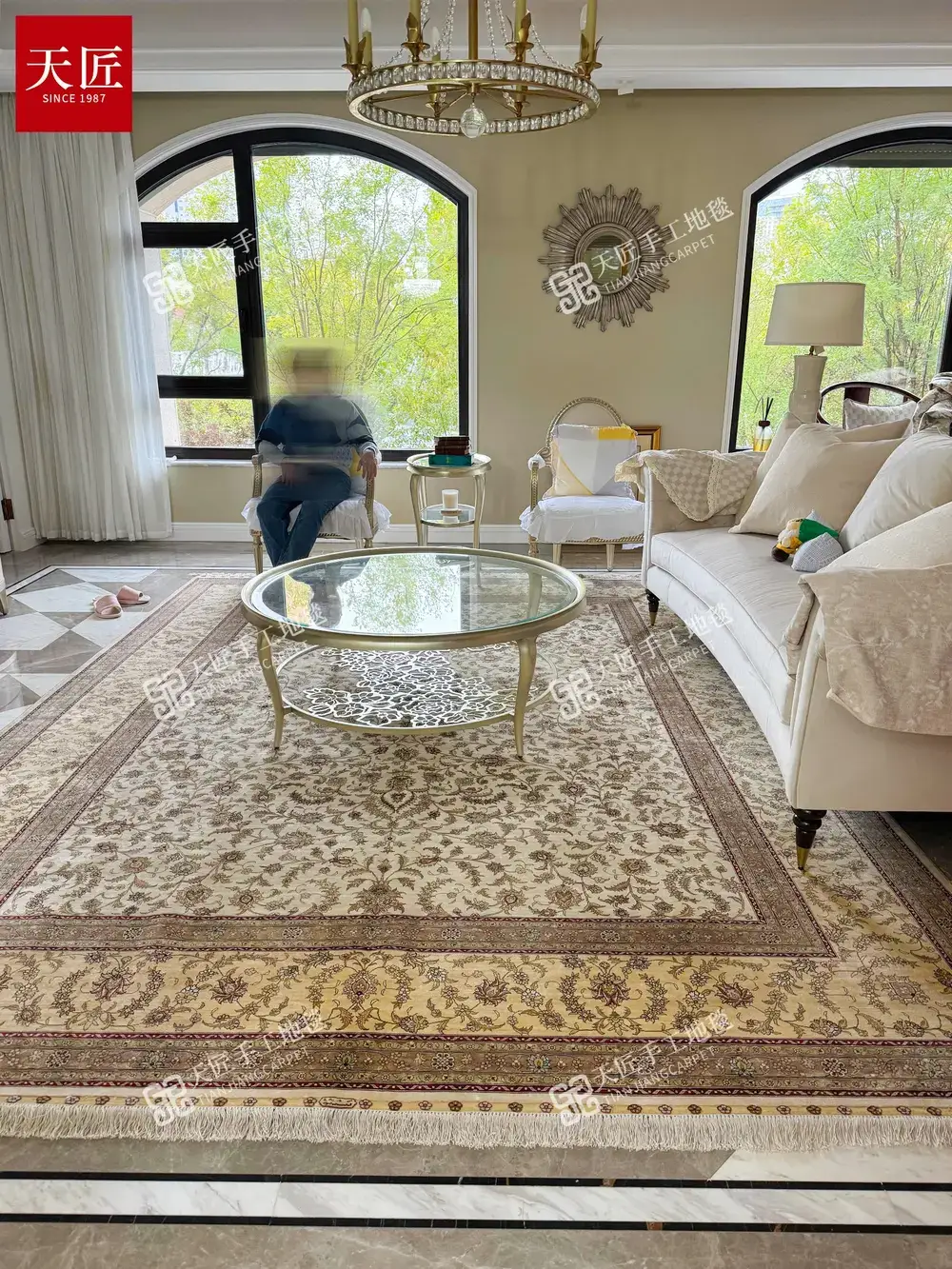
The third 9 by 12 feet example is quieter. A beige field with fine floral details works naturally with cream upholstery, pale curtains, and soft wall colors. This is a useful direction for buyers who love traditional hand-knotted patterns but do not want a strong red or blue rug to dominate the room.
Which living-room style is easier to decorate around?
Neutral rugs are usually easier to combine with changing furniture and fabrics. Rich red, blue, or jewel-toned rugs create a stronger focal point. Neither choice is better. The right one depends on whether you want the rug to support the room or lead it.
You can explore more YILONG handmade silk rugs and compare light, dark, floral, and medallion designs.
Bedroom: Add Color Without Losing a Restful Feeling
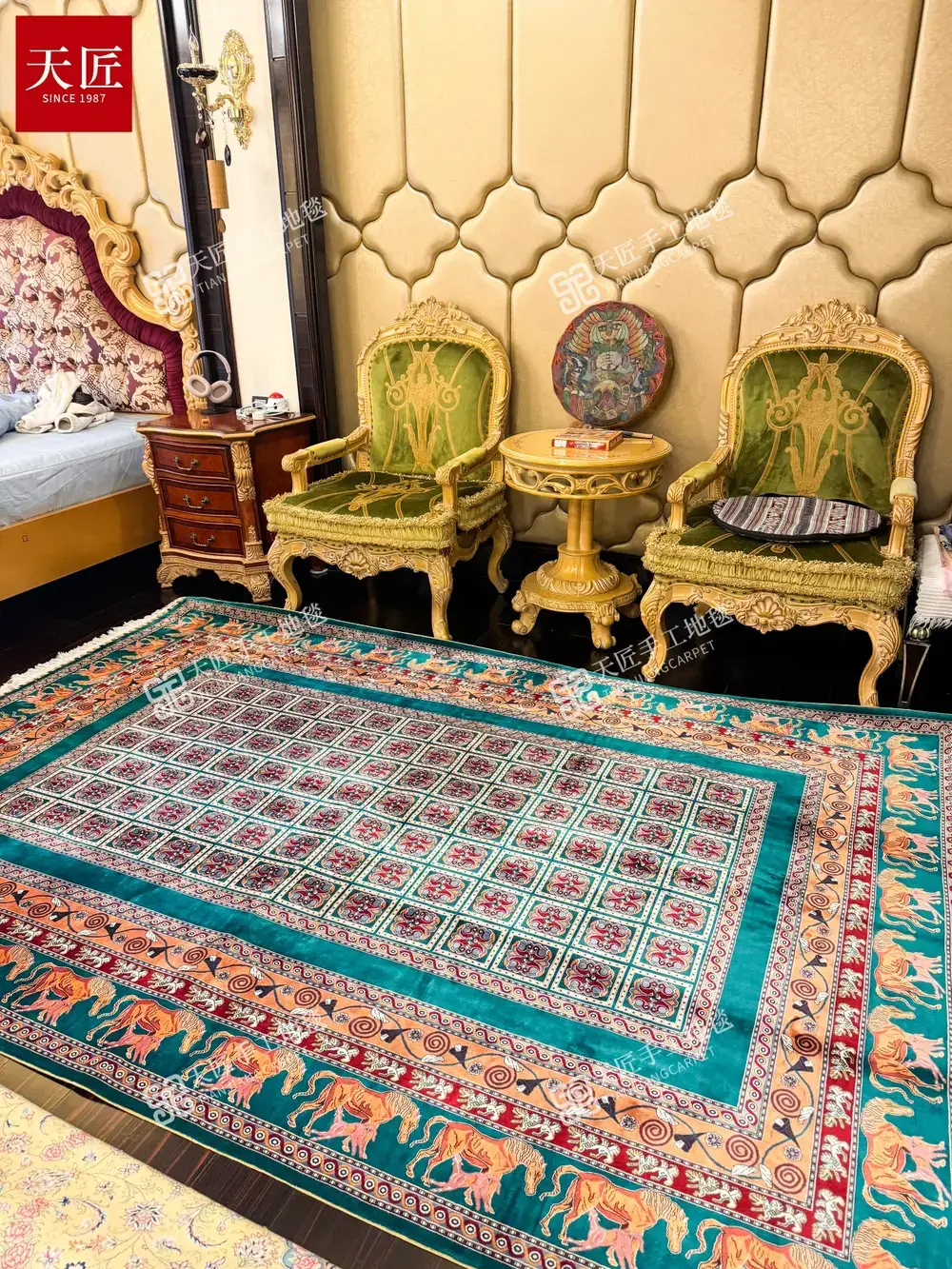
A bedroom does not have to use only beige or grey. This 8 by 10 feet silk rug brings green, orange, and red into the room, while the repeated border keeps the design organized. It works because the surrounding furniture already has warm gold and green tones.
For a bedroom, think about what you see first when you enter. If the bed and wall panels are visually strong, the rug can repeat one or two of those colors rather than introduce an entirely new palette.
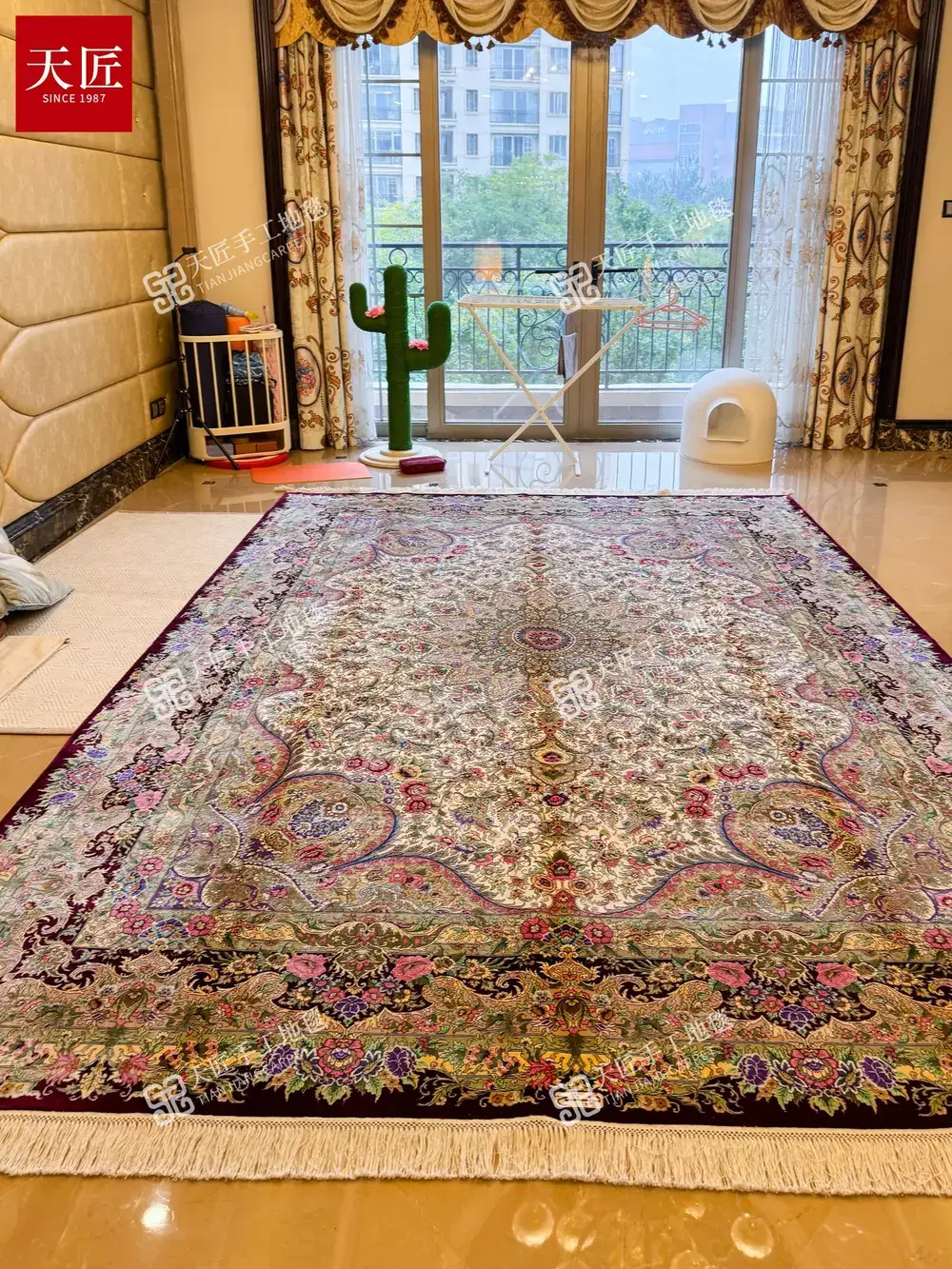
The second bedroom uses another 8 by 10 feet rug with a much softer floral design. Its pale field, burgundy edge, and small pink and green details add interest without making the room feel heavy. Natural light also changes how silk looks during the day. The pile may appear lighter from one direction and deeper from another. This is a normal feature of silk, not a change in the dye.
Should a silk rug go under the bed?
It can, but placement should be planned carefully. A large rug can extend beyond the sides and foot of the bed. A smaller rug can sit in an open seating area or at the foot of the bed. In either case, avoid placing sharp furniture edges directly on delicate fringe.
Study: Soften Dark Wood Furniture
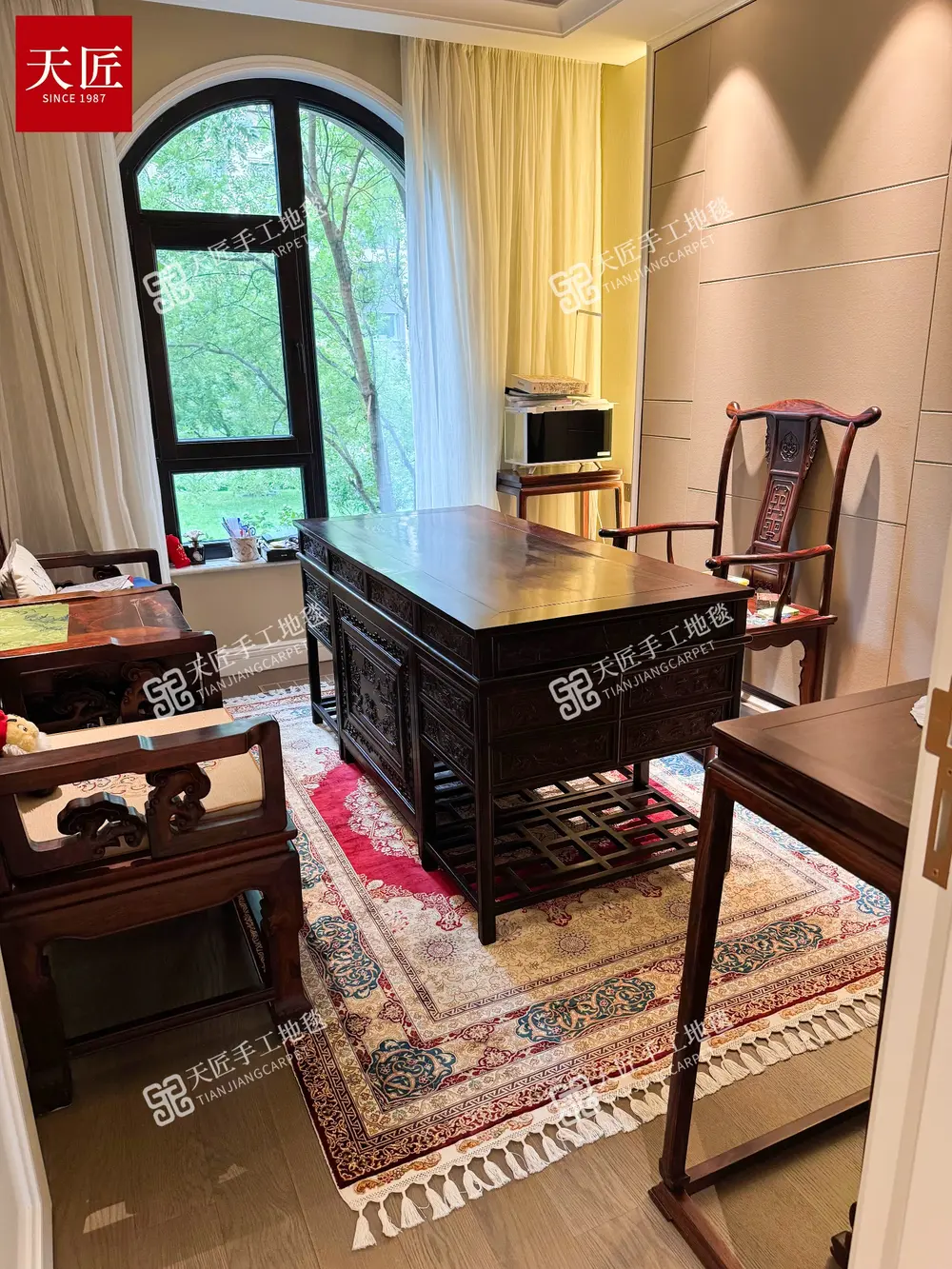
Dark wood gives a study weight and character, but too many hard surfaces can make the room feel severe. Here, a 5 by 8 feet red and cream silk rug softens the floor and brings the furniture together. Its border follows the shape of the desk, which makes the layout feel intentional.
The desk covers part of the center pattern, and that is fine. A handmade rug does not need to be completely visible to work well. The exposed border and corners still add color and detail around the furniture.
Before using a silk rug under an office chair, check how the chair moves. A fixed chair or a protective mat is safer than wheels repeatedly rolling across the pile and fringe.
Dressing Room: Use a Rug to Finish a Narrow Space
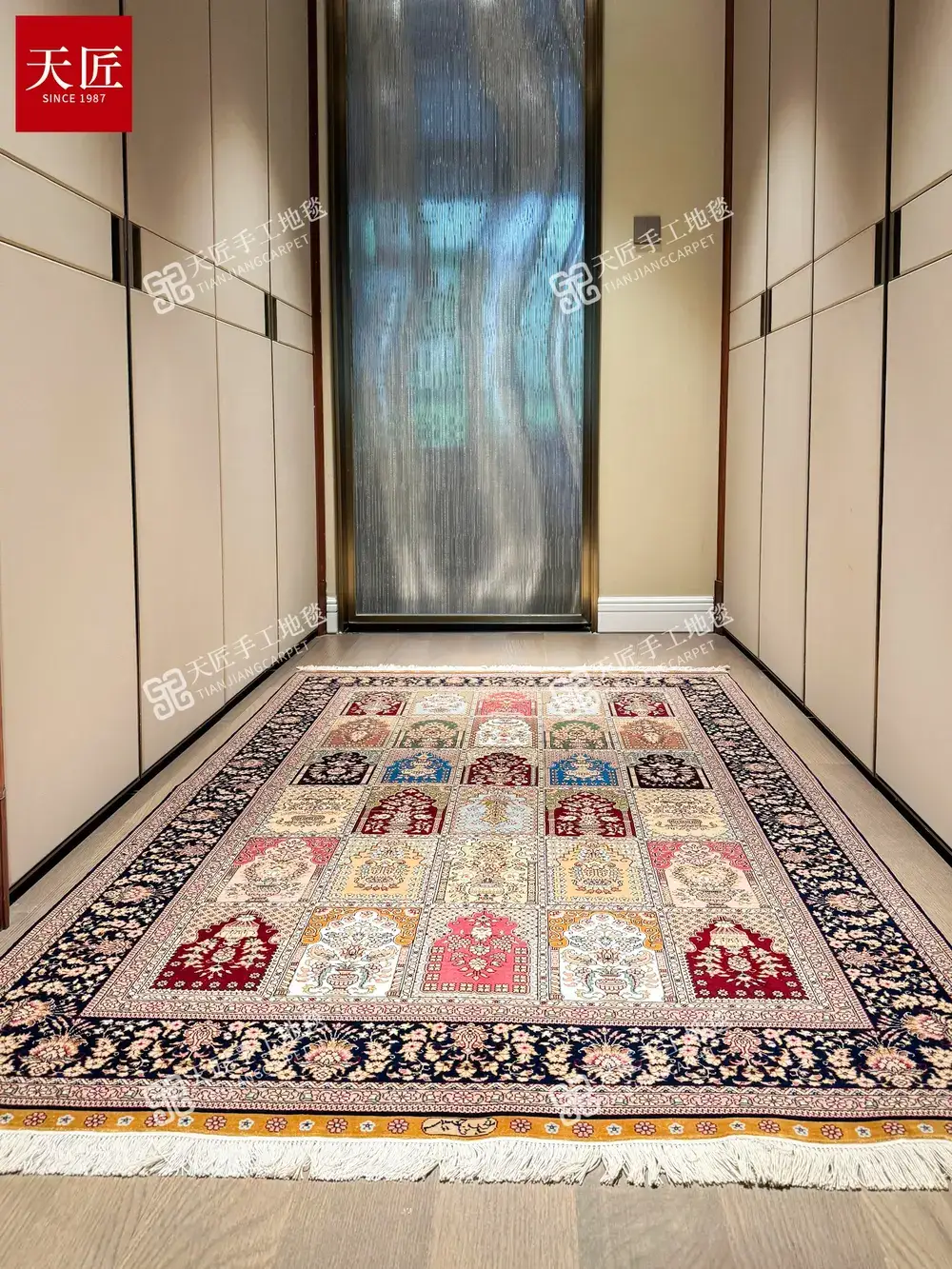
The dressing room shows another useful idea. A rug can make a narrow space feel complete even when there is very little furniture.
This 4 by 6 feet garden-panel design introduces several colors, while the dark outer border connects with the cabinetry. A visible strip of flooring remains around the rug, so the room still feels open and the rug does not look squeezed between the cabinets.
For spaces like this, measure door clearance as well as floor width. The pile and fringe should not interfere with doors, drawers, or frequently used storage areas.
What These Real Rooms Teach Us About Choosing a Silk Rug
These customer photos make several buying decisions easier to understand.
1. Start with the room, not only the rug
A beautiful rug can still feel wrong if its scale does not suit the furniture. Measure the room, then measure the furniture arrangement. The usable rug area is often smaller than the full floor area.
2. Match color families, not every single shade
The living-room examples combine many colors without looking chaotic. They work because the rug repeats a few colors already found in the furniture, curtains, wall finish, or decorative pieces.
3. Decide whether the rug should lead or support
A red-and-blue rug naturally becomes the focal point. A beige or pastel rug supports the furniture more quietly. Make this decision before comparing dozens of designs.
4. Look at the rug in different light
Silk reflects light along the direction of the pile. Ask for photos or videos taken from both ends of the rug. If possible, view it in daylight and indoor lighting before making a final decision.
5. Ask to see the actual available rug
For a ready-stock rug, current photos and videos are more helpful than a catalog image alone. Ask for the exact dimensions, front, back, fringe, corners, and close-up details. This makes it easier to judge color, construction, and condition from a distance.
Why Real Customer Photos Build Confidence
Studio photographs show a rug clearly, but home photographs answer different questions. They show how much floor a rug covers, how it works with real furniture, and whether a detailed pattern feels calm or strong once it is in a room.
YILONG Carpet has made handmade rugs since 1987. Our team works with an approximately 4,000-person skilled-weaver network, producing hand-knotted pure silk rugs as well as wool-and-silk and New Zealand wool rugs. For buyers who cannot visit in person, we can provide current photos and videos of an available rug before shipment.
Final Checklist Before Choosing Your Rug
- Measure the room and furniture layout.
- Mark the rug outline on the floor.
- Decide whether you want a strong focal point or a quieter foundation.
- Compare the rug in different lighting and viewing directions.
- Check the actual dimensions, fringe, corners, front, and back.
- Confirm delivery, customs clearance, and duties for your destination and order.
Frequently Asked Questions
Are handmade silk rugs suitable for everyday rooms?
Yes, when they are placed thoughtfully. Living rooms, bedrooms, studies, and dressing rooms can all work. Avoid wet areas, direct outdoor exposure, and locations where rolling chairs or heavy traffic repeatedly stress the pile and fringe.
How do I choose a silk rug color for my living room?
Start with colors already present in the sofa, curtains, walls, or artwork. Choose a neutral rug if you want flexibility. Choose a richer red, blue, or jewel-toned design if you want the rug to lead the room.
What size silk rug should I buy?
The size depends on the room and furniture layout. In a living room, the rug should usually connect the main seating. In a bedroom, it may extend beyond the bed or sit in a separate open area. Measure and mark the outline before ordering.
Why does a silk rug look lighter from one direction?
Silk fibers reflect light differently depending on the pile direction and viewing angle. The same rug can look lighter, darker, warmer, or cooler as you move around it.
Can I review a ready-stock rug before it is shipped?
Yes. Ask the YILONG team for current photos or videos showing the exact rug, including its front, back, fringe, corners, and close-up details.
Can YILONG help me choose a rug for my room?
Yes. Send us a room photo, usable floor measurements, preferred colors, and the approximate size you need. We can show you suitable ready-stock options and explain the differences between them.
See How a Handmade Silk Rug Could Work in Your Home
If you are choosing a rug for a living room, bedroom, study, or another space, you do not have to decide from a product photo alone.
Contact the YILONG team with your room measurements and a photo of the space. We can recommend suitable ready-stock handmade silk rugs and provide current photos and videos for comparison.