01/ Dragon and Phoenix Motif
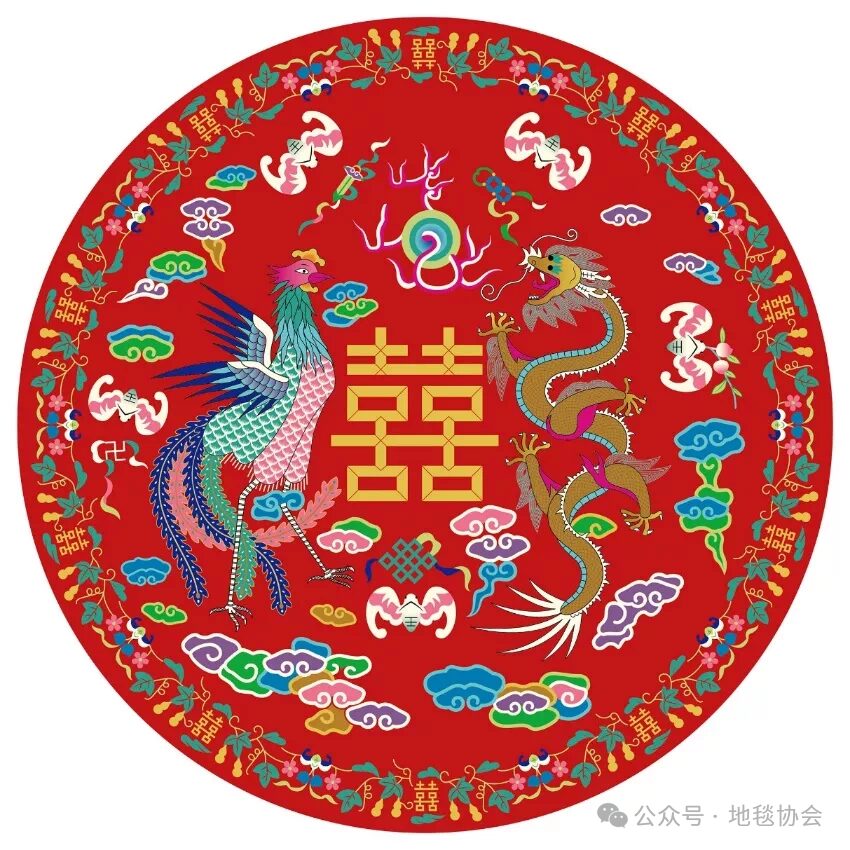
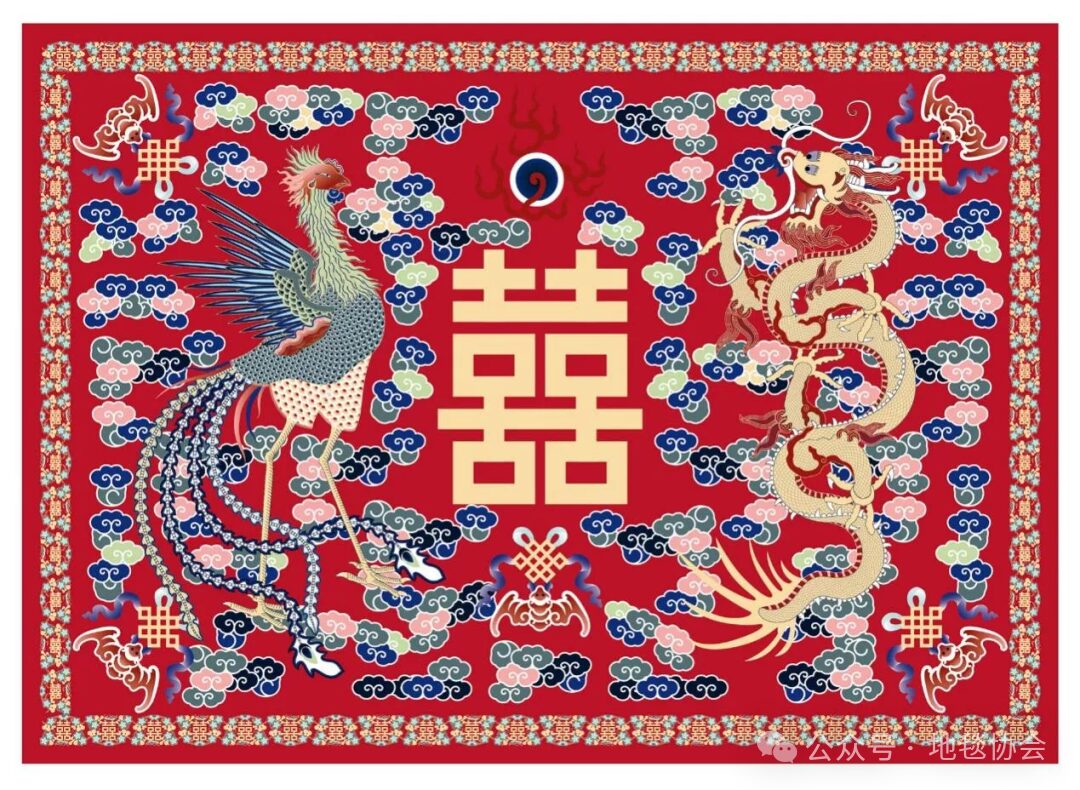
The dragon and phoenix motif primarily depicts a scene of the dragon and phoenix soaring together in flight, while the portrayals of the dragon and phoenix themselves can vary widely in form and style.
"Dragon and Phoenix Bringing Auspiciousness" is a Chinese idiom originating from the *Kongcongzi · Jiwen*: "When the Son of Heaven spreads virtue and is about to bring peace to all under heaven, the *qilin*, phoenix, turtle, and dragon will first appear to present auspiciousness," signifying joyous and celebratory events.
In later generations, to commemorate the touching story of Nongyu and Xiaoshi from the Spring and Autumn period, "Dragon and Phoenix Bringing Auspiciousness" came to describe the faithful love between husband and wife—flying wing to wing, deeply in love and supporting each other, sharing life's joys and hardships, and remaining harmonious for a hundred years.
During the grand wedding of the Guangxu Emperor of the Qing Dynasty, a carpet of this very design was used—a red woolen *kang* rug embroidered with the character "囍" (Double Happiness), dragons, phoenixes, colorful clouds, and the motif of "descendants for ten thousand generations."
The main pattern in the center of the rug features one dragon and one phoenix flanking a gold-embroidered "囍," conveying wishes for good fortune and happiness as one pleases, and accentuating the jubilant atmosphere of the imperial wedding.
02/ Phoenix Frolicking with Peony
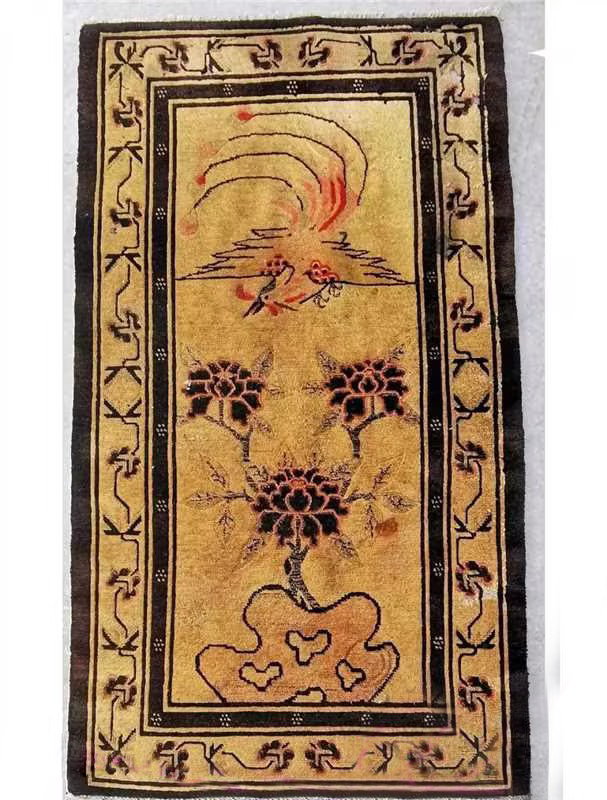
Carpet with Phoenix Frolicking with Peony: A Symbol of Wealth, Honor, and Love
This antique carpet, *Phoenix Frolicking with Peony*, was woven in the late 19th century in the Chifeng region of Inner Mongolia. Its unique pattern of the phoenix playing amid peonies has captivated the gaze of countless collectors. In traditional Chinese culture, the phoenix symbolizes auspiciousness and radiance, revered as the king of all birds, while the peony represents wealth, honor, and good fortune. When the phoenix and peony meet, they not only symbolize marital bliss and sweet love but also signify enduring prosperity and everlasting splendor.
03/ Butterfly Motif · Butterfly Loving Flower
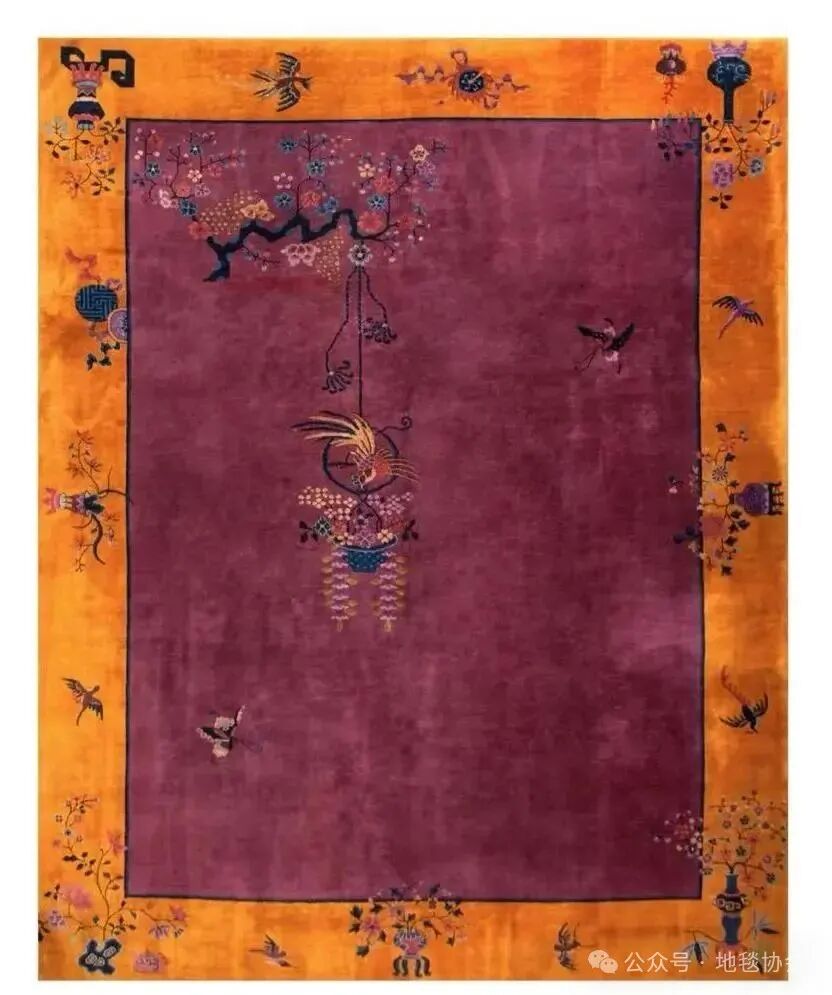
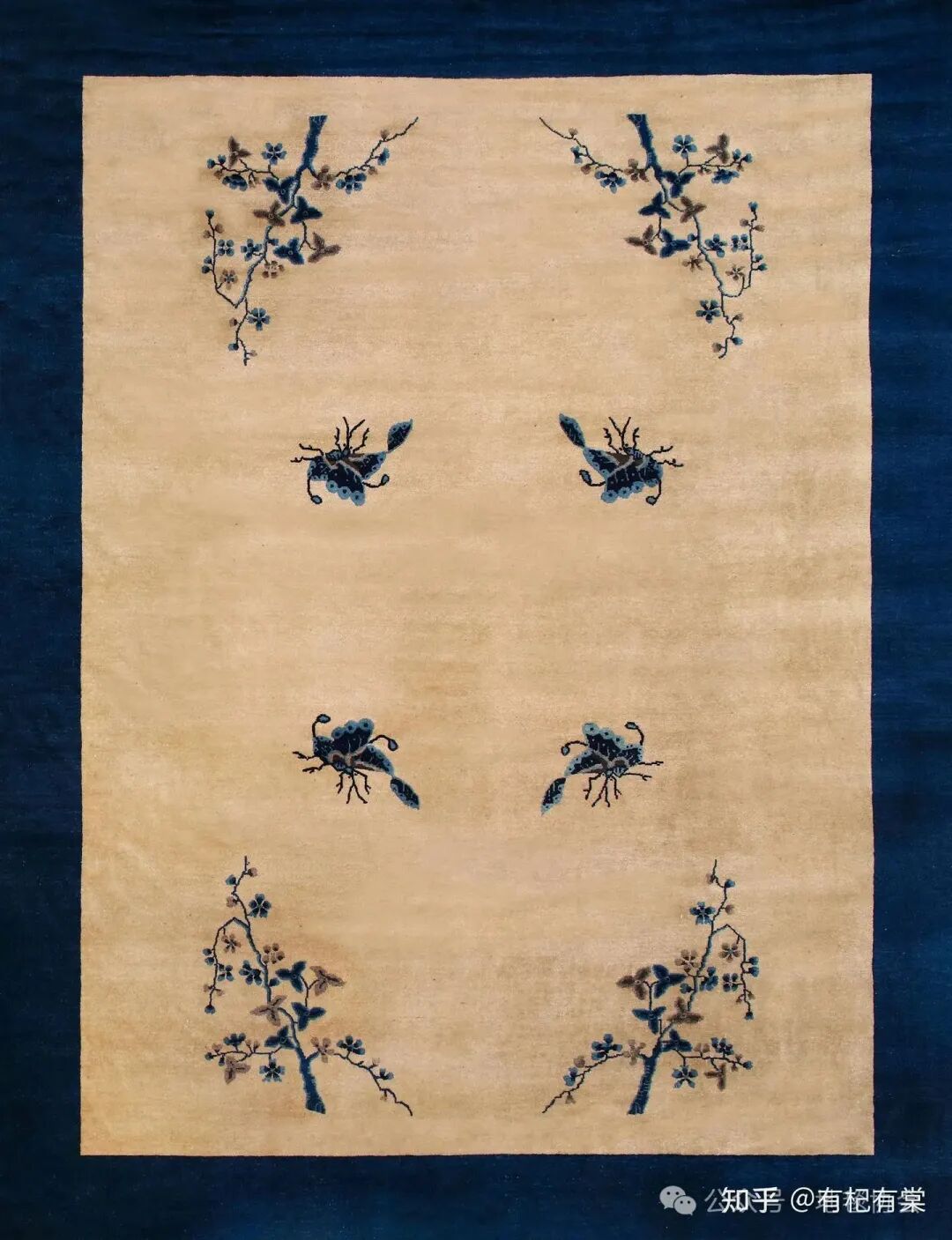
The butterfly motif is a decorative pattern depicting the form of butterflies. Butterflies, with their dazzling colors and life cycle rich in metaphorical meaning, offer boundless space for imagination.
Butterfly motifs from different periods reflect the aesthetic sensibilities of their respective eras.
Yet overall, the designs strive for symmetry and balance, with butterflies often appearing in pairs and being paired compositionally with floral patterns.
The butterfly carries diverse connotations: it can symbolize the steadfast love between men and women, and also embody auspicious wishes for happiness, longevity, and good fortune.
04/ Interlocking Lotus
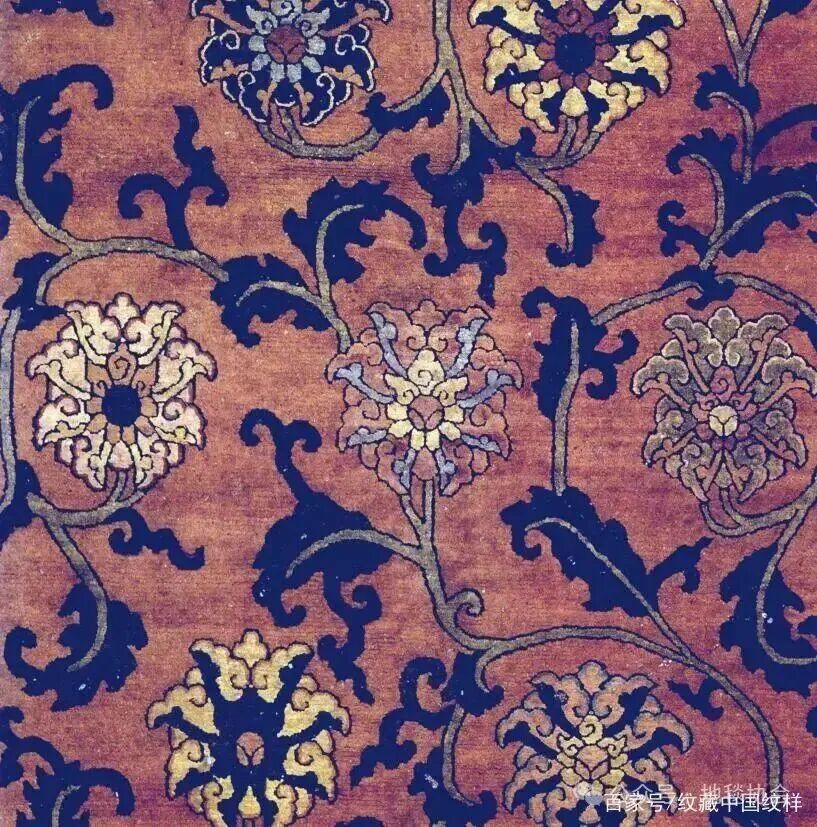
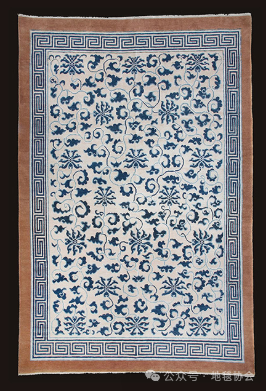
The interlocking lotus pattern, a traditional Chinese auspicious motif, features a continuous design shaped like lotus blossoms, hence the name "interlocking lotus." This pattern is also known as the "Vine of Ten Thousand Longevities," symbolizing celebration and long life. Its unbroken, continuous structure represents the concept of "endless regeneration and vitality." The interlocking scroll pattern originally evolved and refined from twisting vines and curling tendrils, displaying a graceful vitality through its winding, versatile, and dynamically flowing forms.
In the context of love, "interlocking" also symbolizes the joyful union of marriage and inseparable entanglement, while the "lotus" (*lian*) echoes the wish for "*liansheng guizi*" — the successive birth of noble sons, signifying abundant offspring and great blessings.
05/ Gourd Motif
The gourd motif primarily follows the shape of a conventional gourd, composed of two bulging, roughly circular sections — one above, one below — with an indentation at the middle. The upper section is generally smaller than the lower one.
The gourd motif is characterized by bilateral symmetry, balanced composition, and a full, plump appearance.
Its quality of being simple yet possessing a solid, substantial charm endears it to many.
A folk saying holds that "gourd (*hulu*) means *fu* (fortune) and *lu* (prosperity)." The intertwining vines of the gourd symbolize abundant fruitfulness with deep roots.
Furthermore, the word *hulu* is a homophone for *fulu* (fortune and prosperity) or *hulu* (to protect one's fortune), which is why many people hold it in special affection.
The gourd motif thus represents the wish for many sons and abundant blessings, and for this reason it is frequently employed in the joyous setting of weddings.
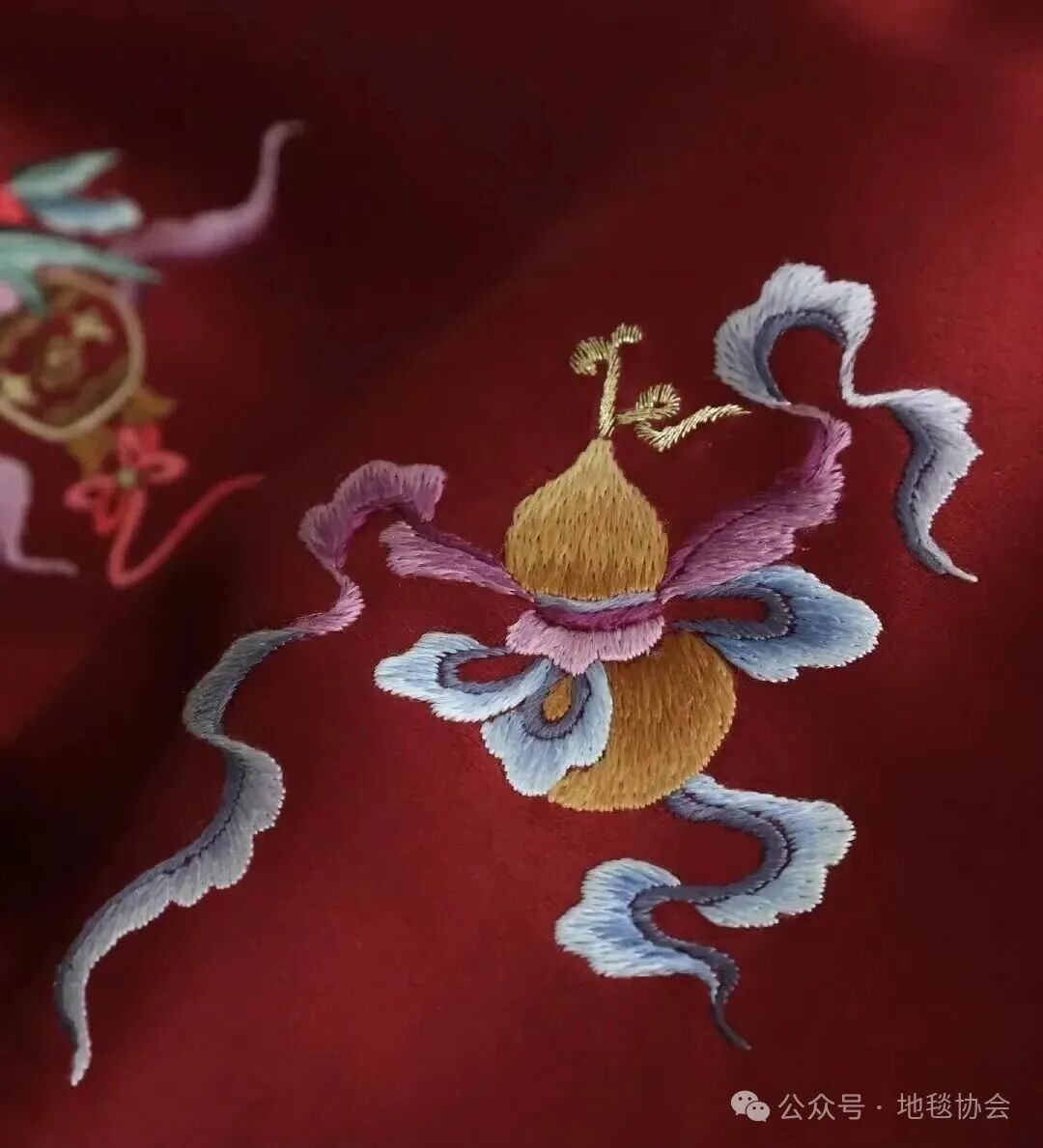
During the *hejin* rite (the nuptial wine-drinking ceremony) of the Qing emperors' weddings, a round ceremonial kneeling cushion embroidered with red silk, dragons, phoenixes, and the "囍" character would bear gourd patterns stitched upon it, both to wish the emperor an early arrival of sons and to celebrate the imperial marriage!